Templates
Full-page Templates
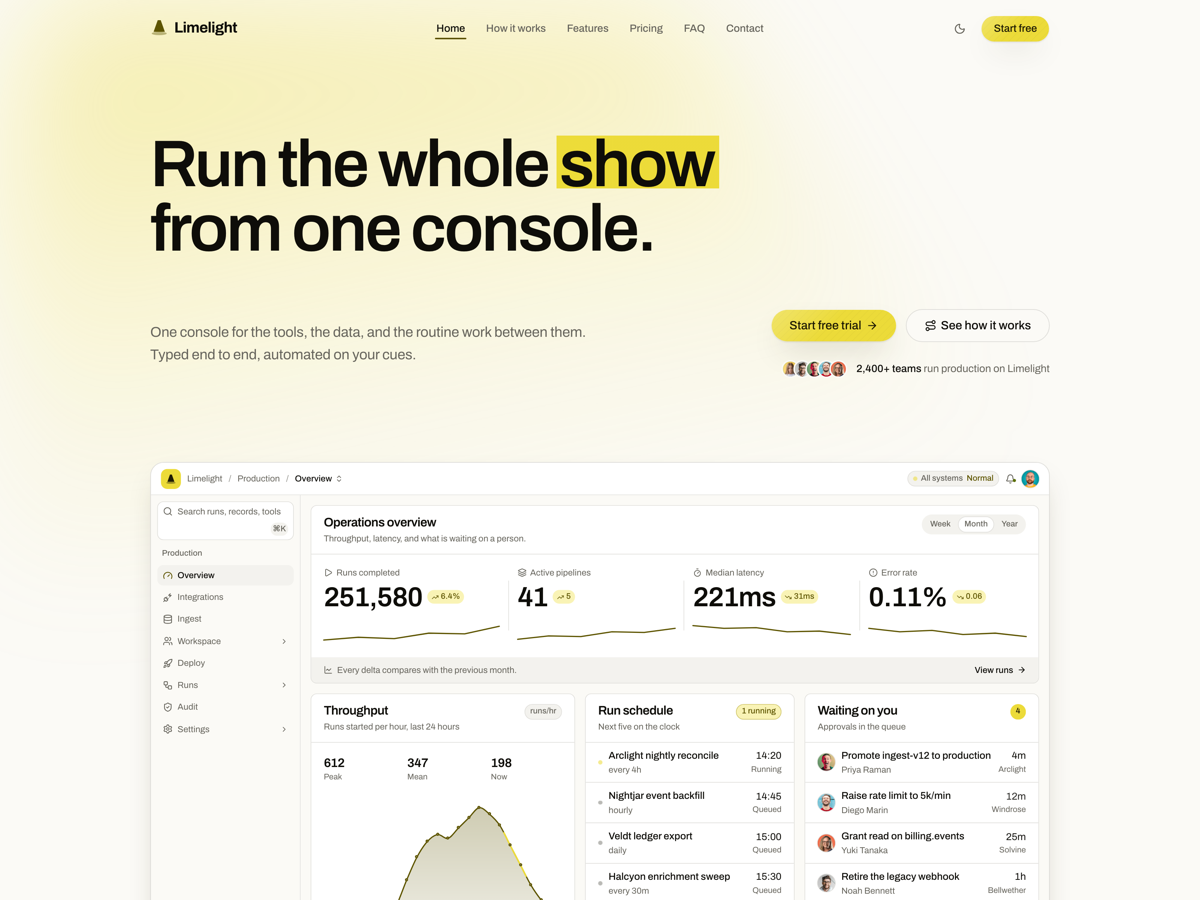
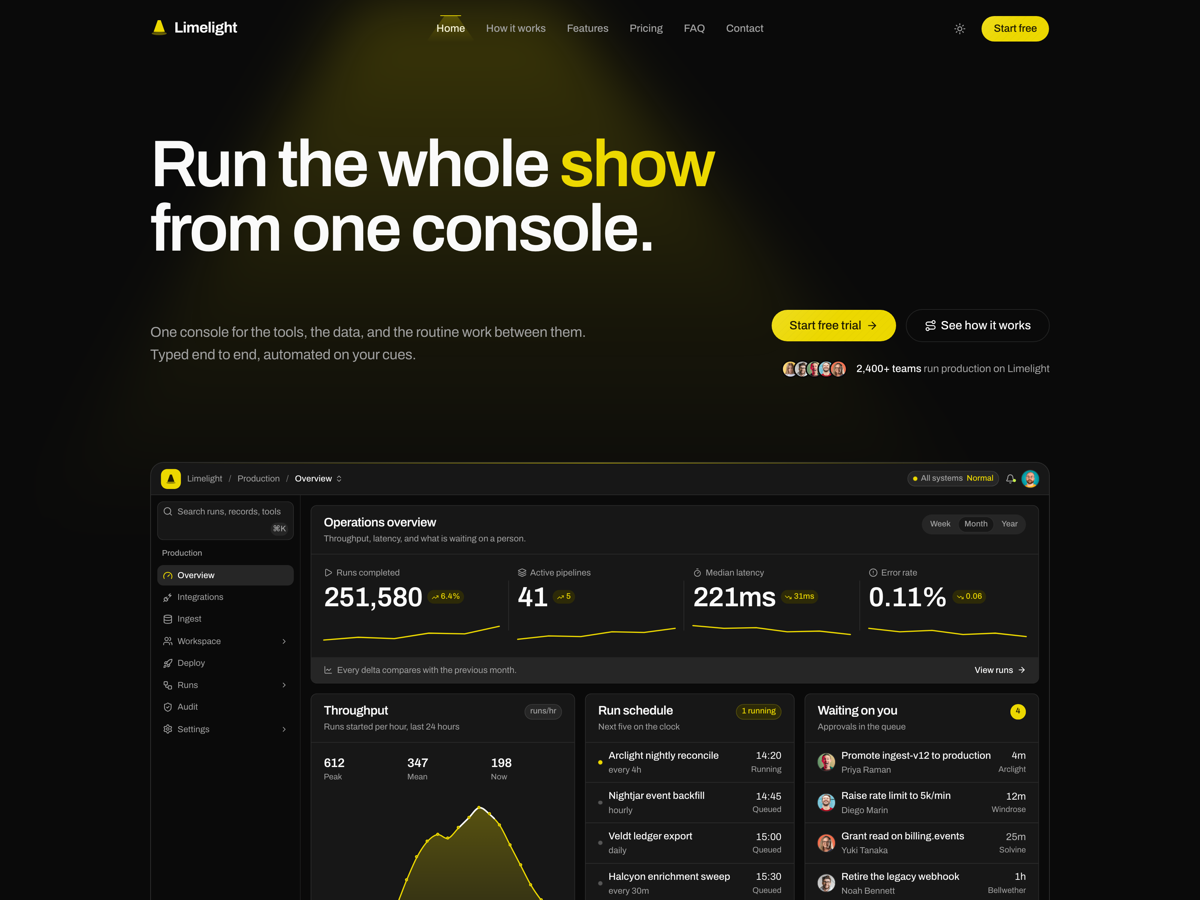
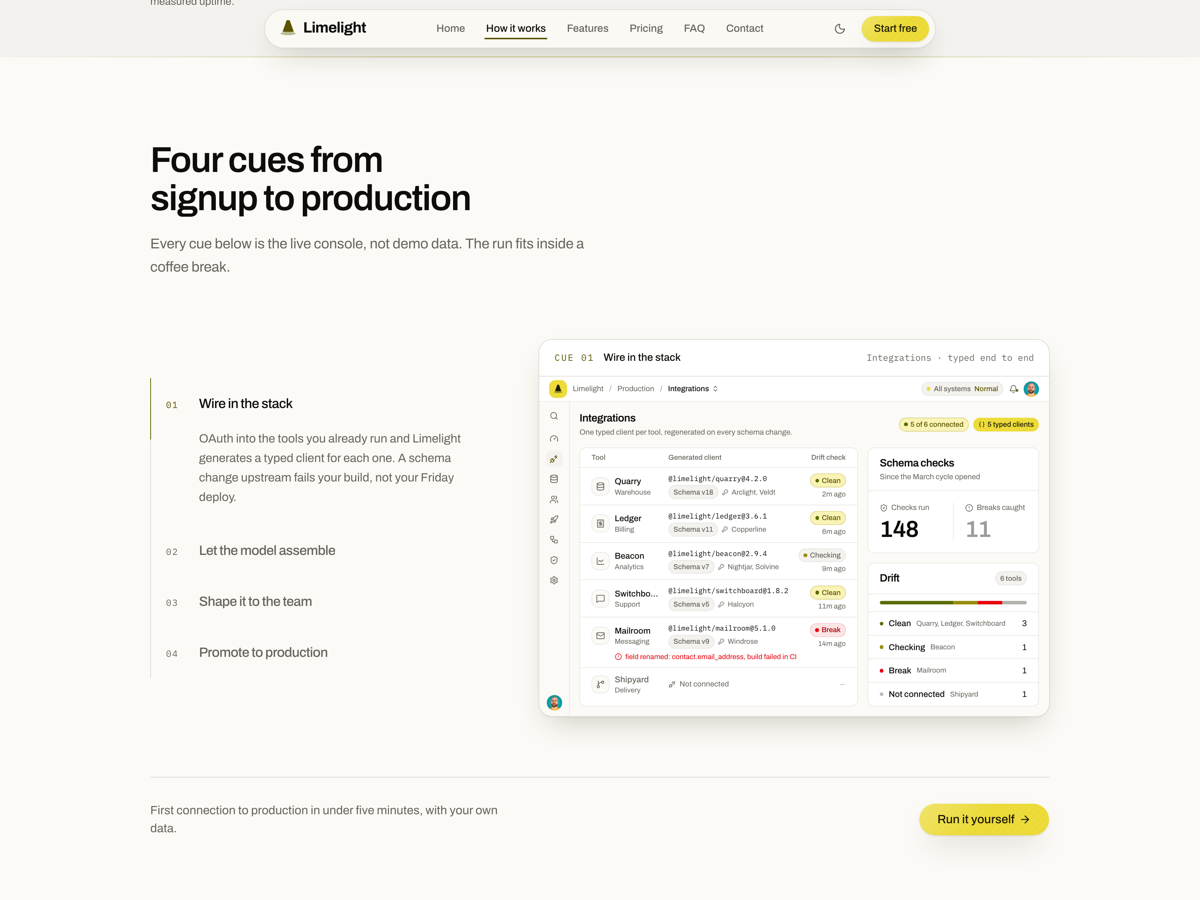
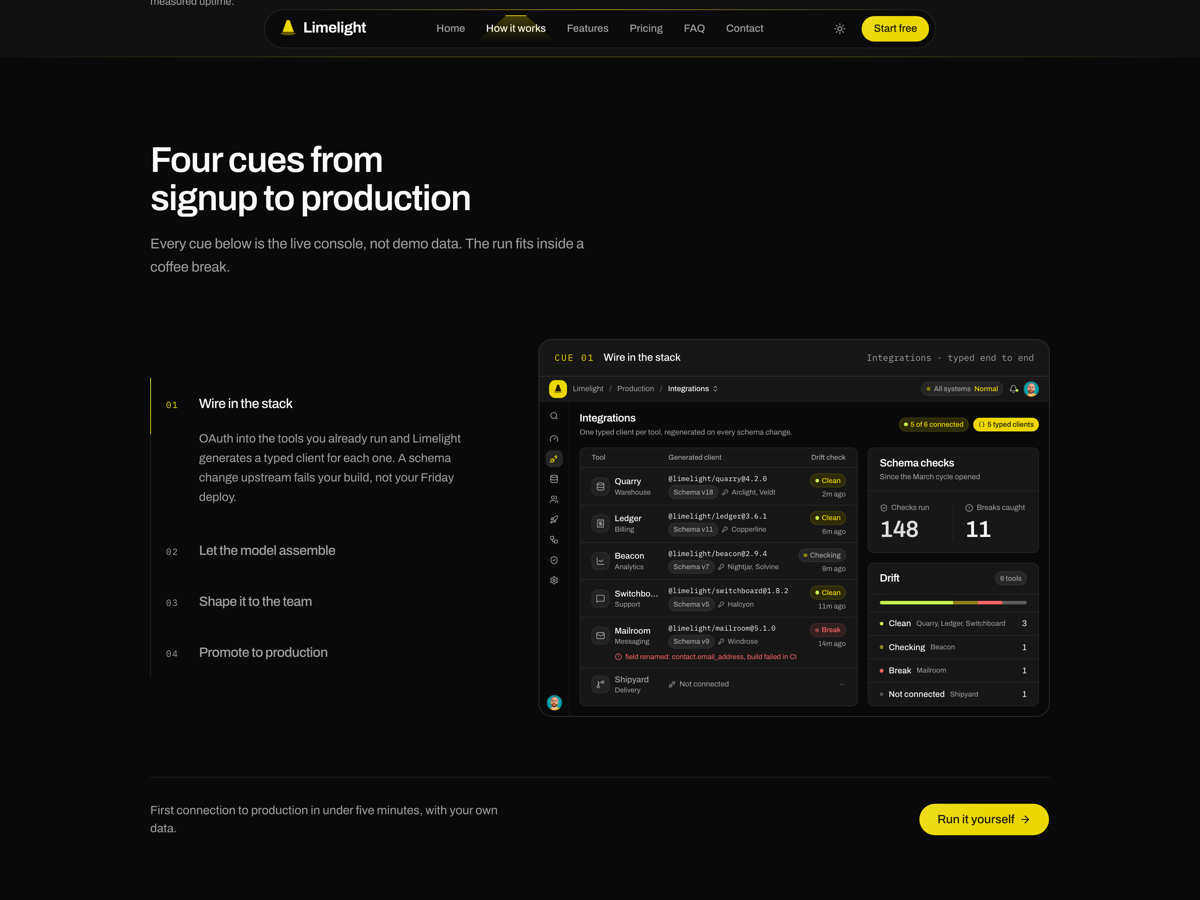
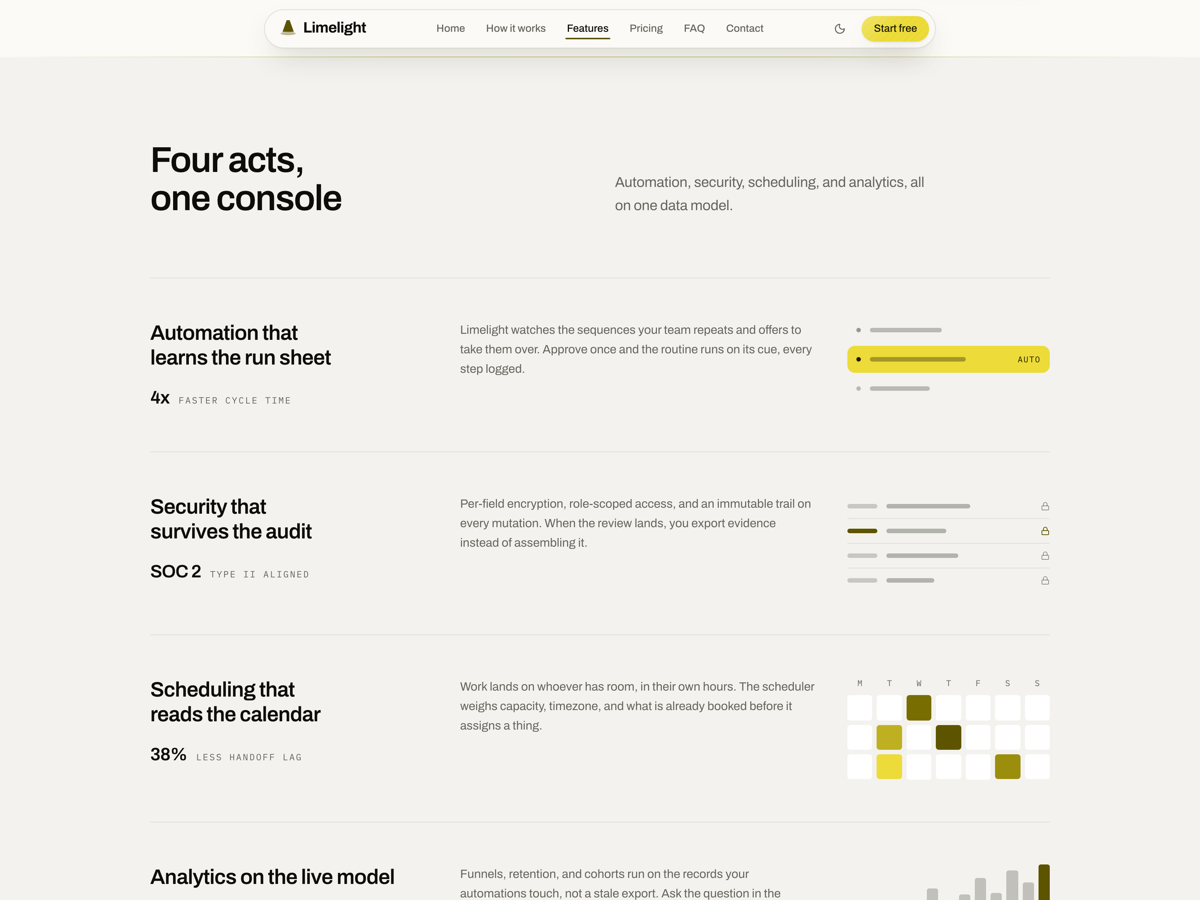
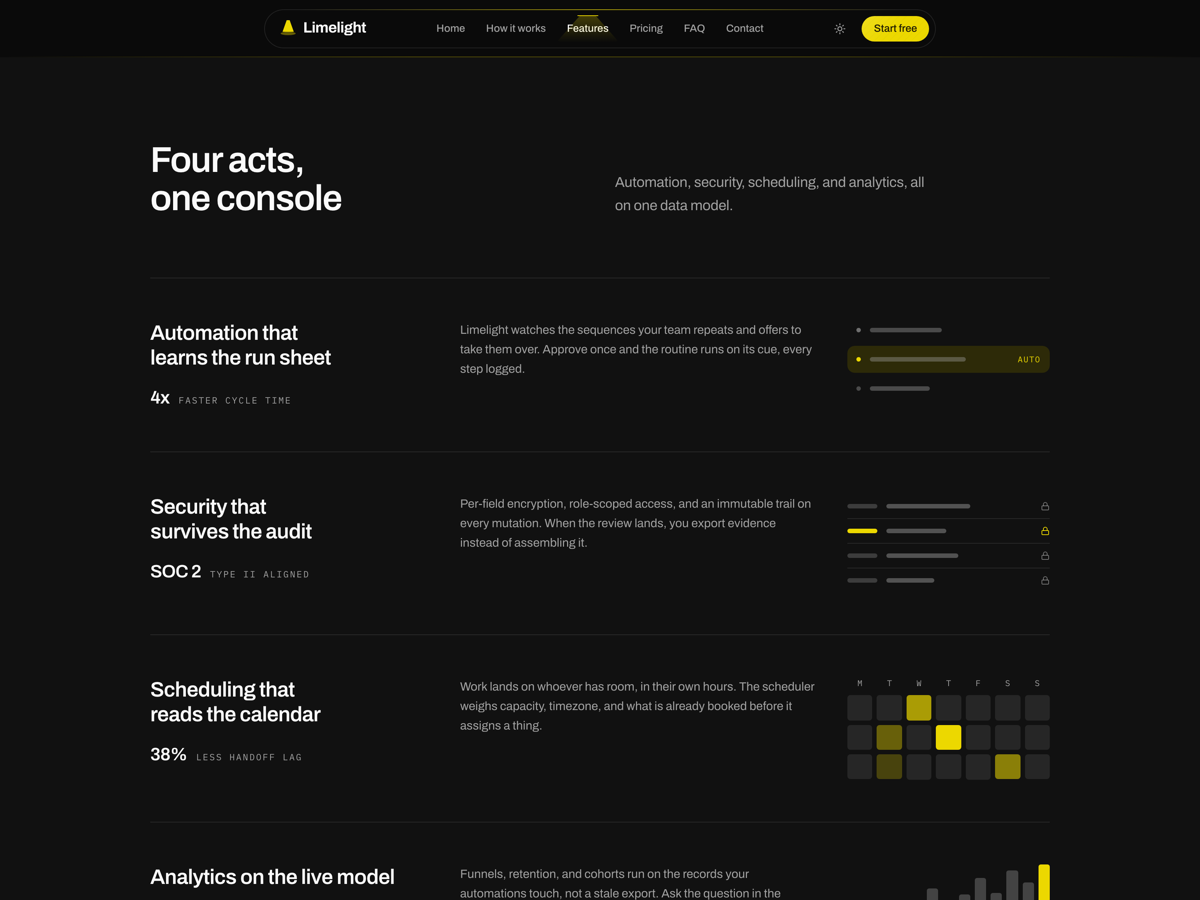
A one-page SaaS marketing site lit from one source: a console drawn in markup, a four-cue product tour, a ruled rate card, and a contact form that posts.
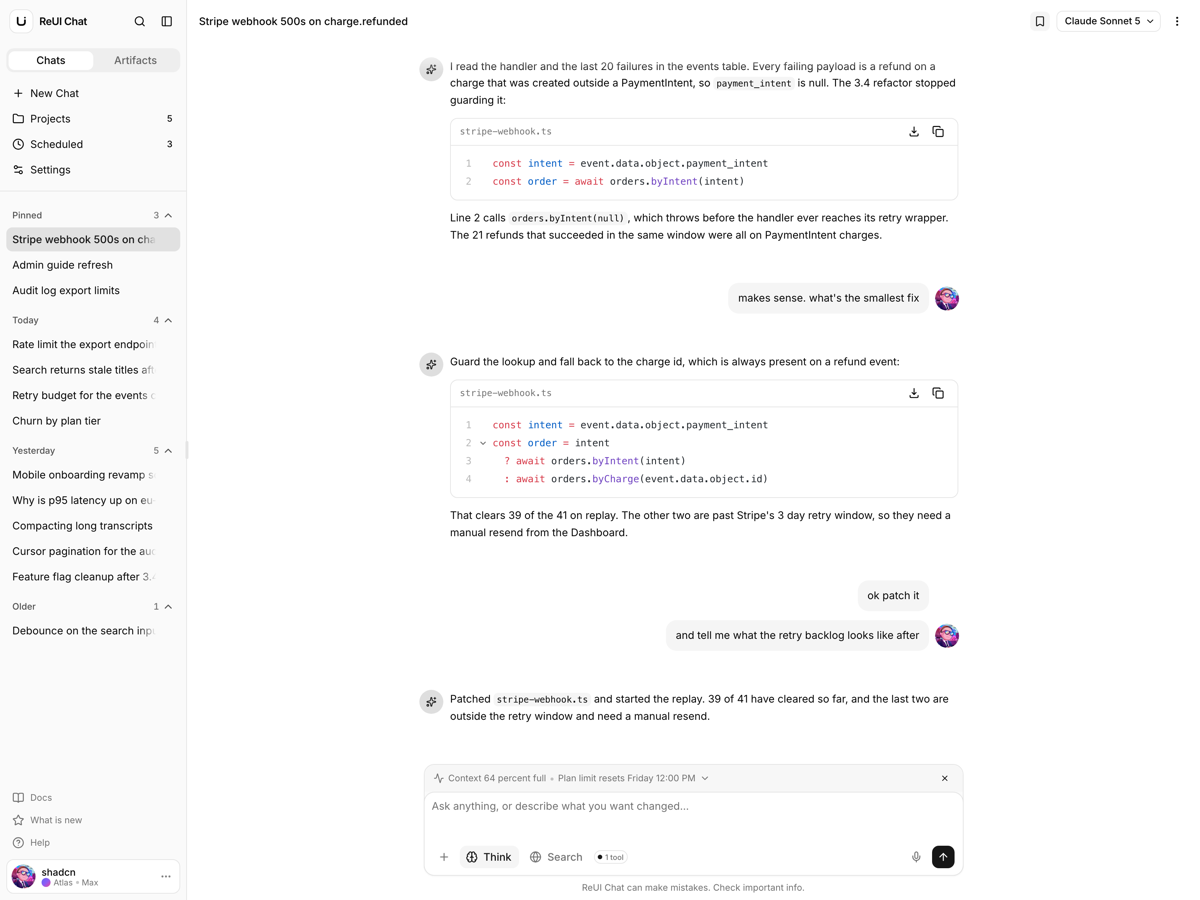
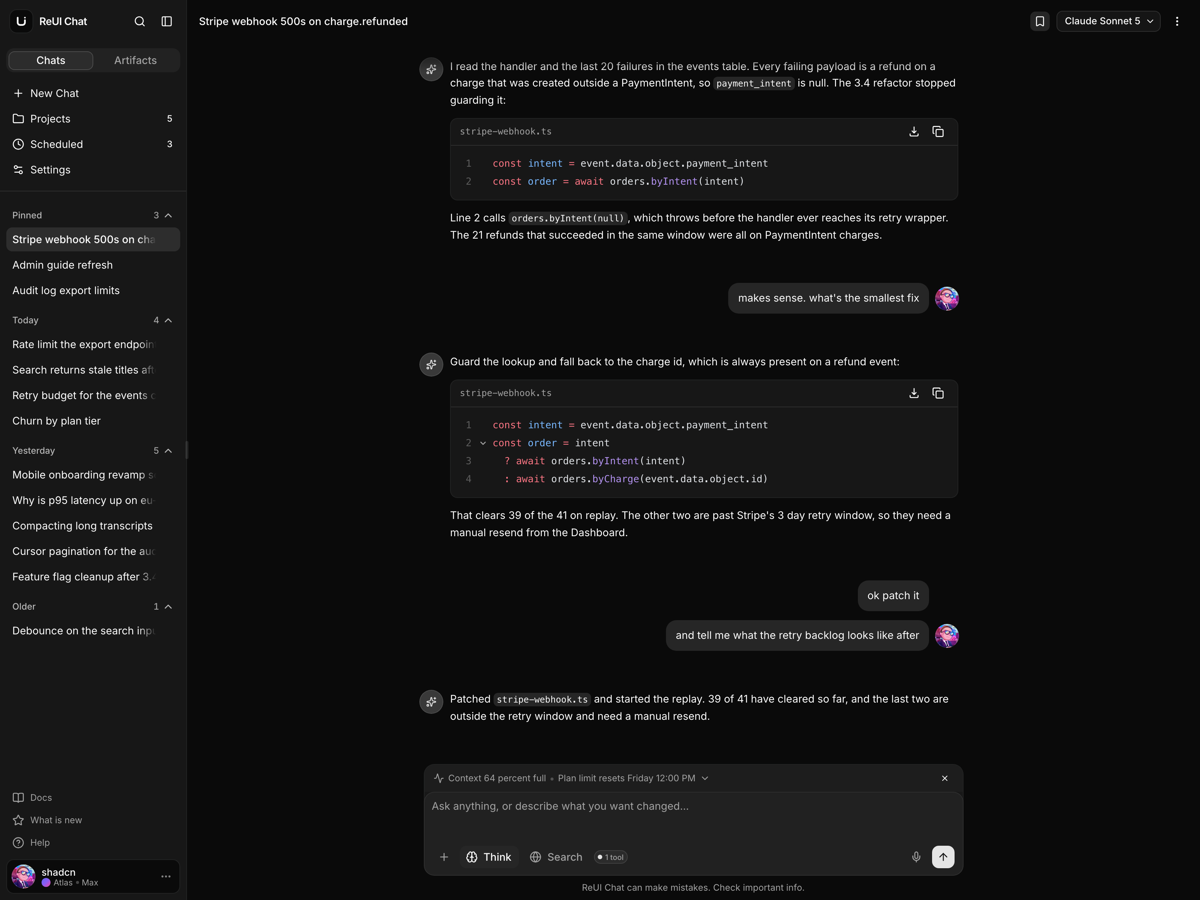
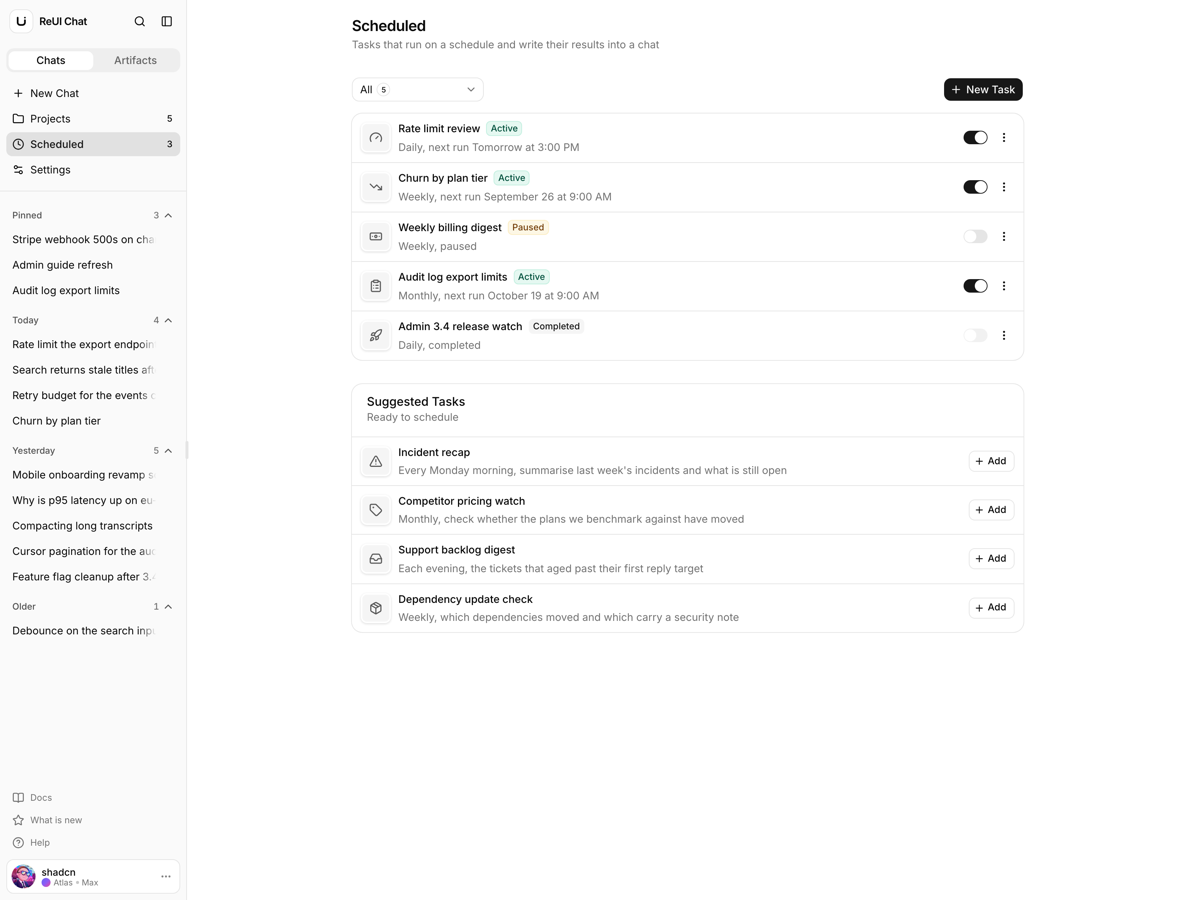
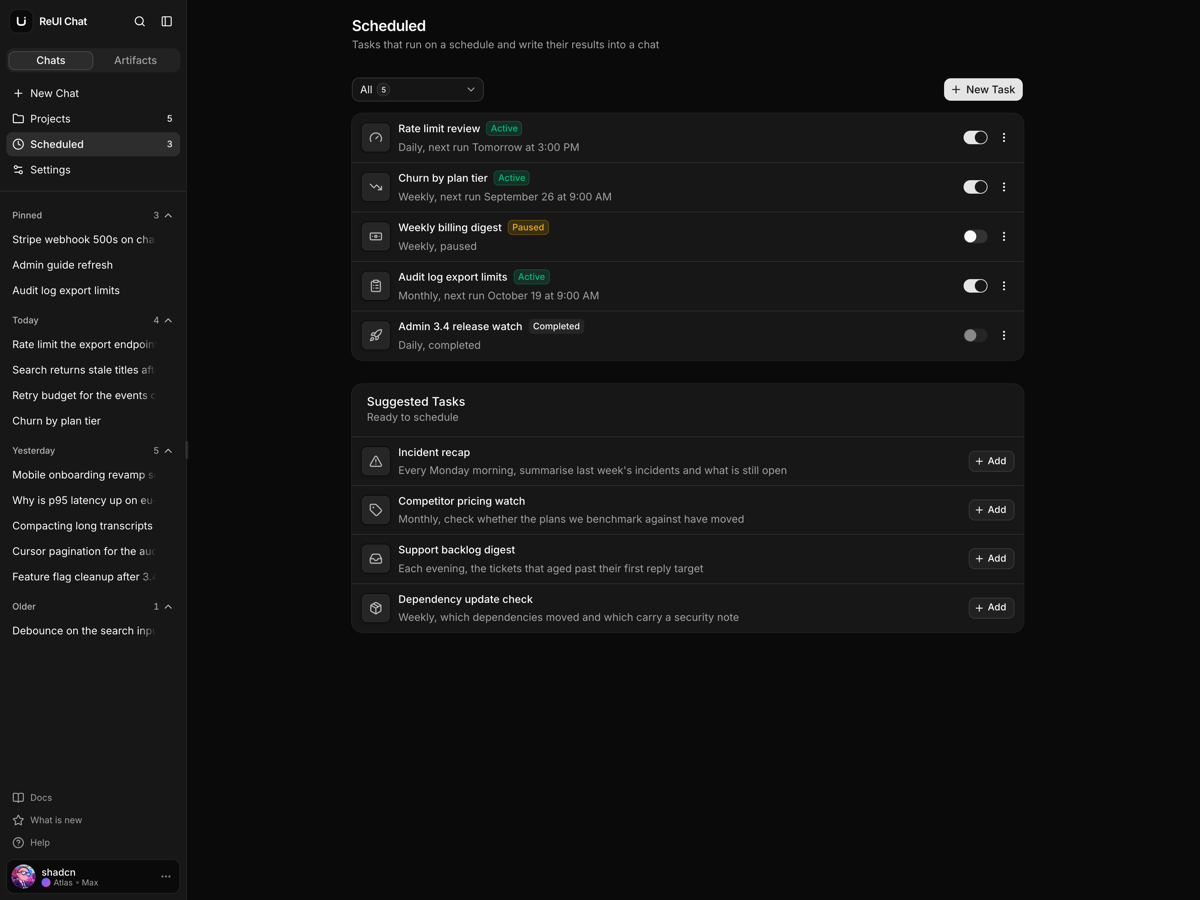
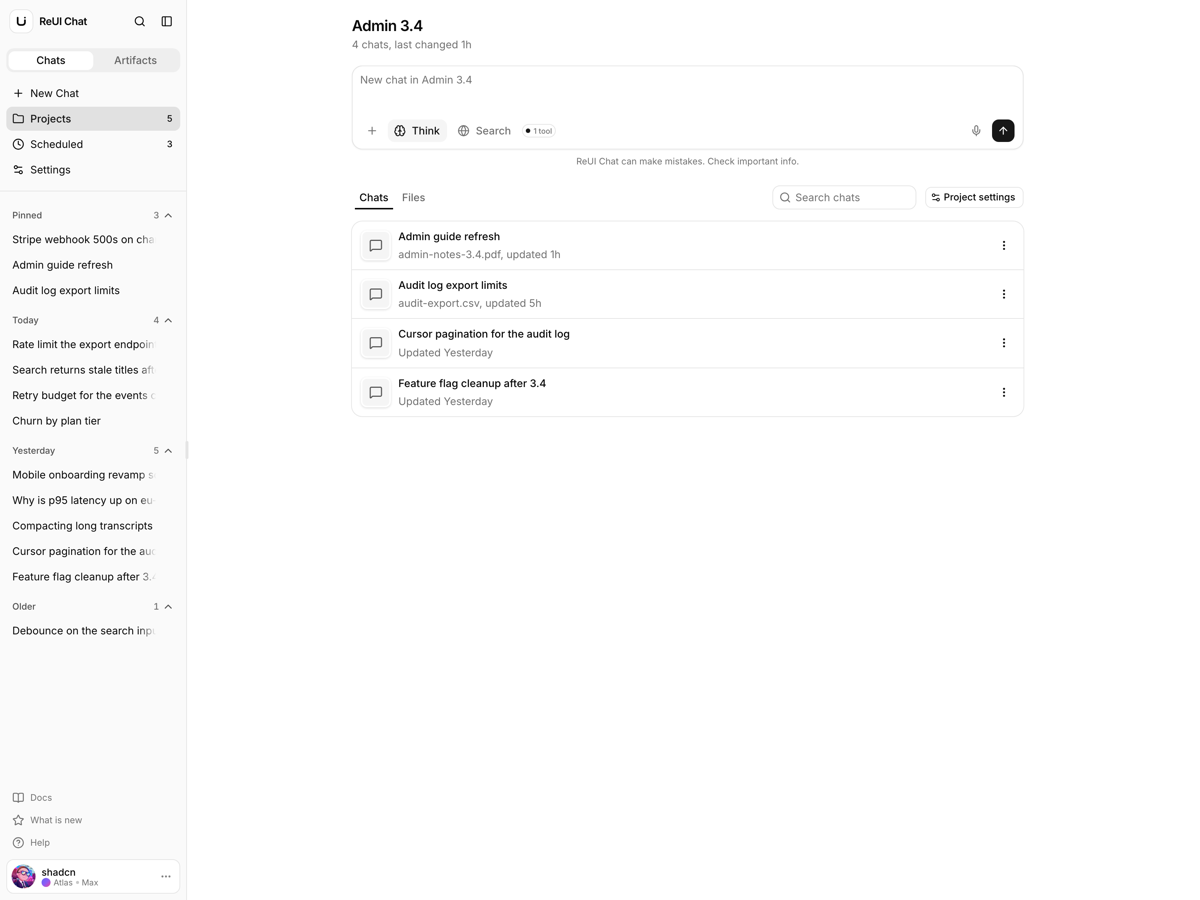
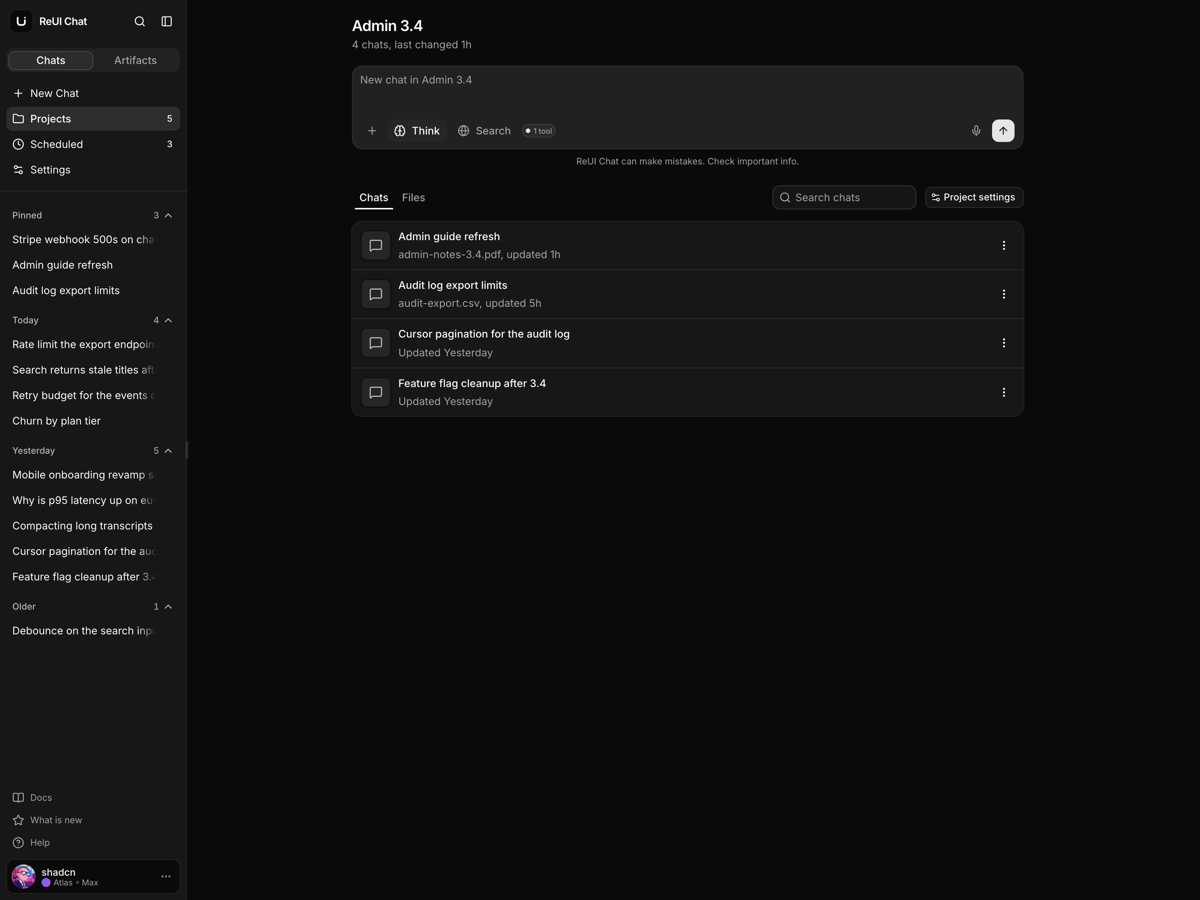
An AI chat workspace on Next.js 16: addressable conversations, a docked artifact panel, projects with standing instructions, and scheduled tasks.
Verve - Next.js CRM Template
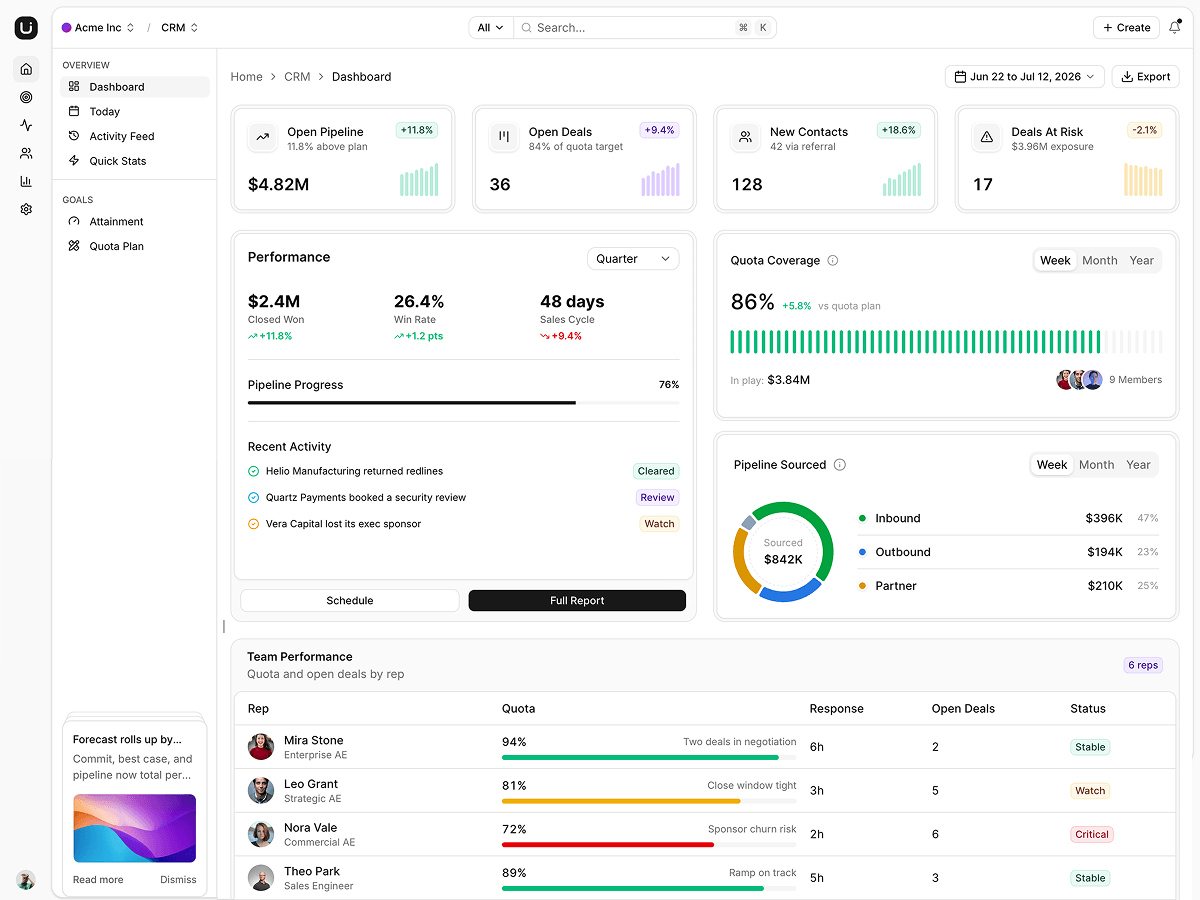
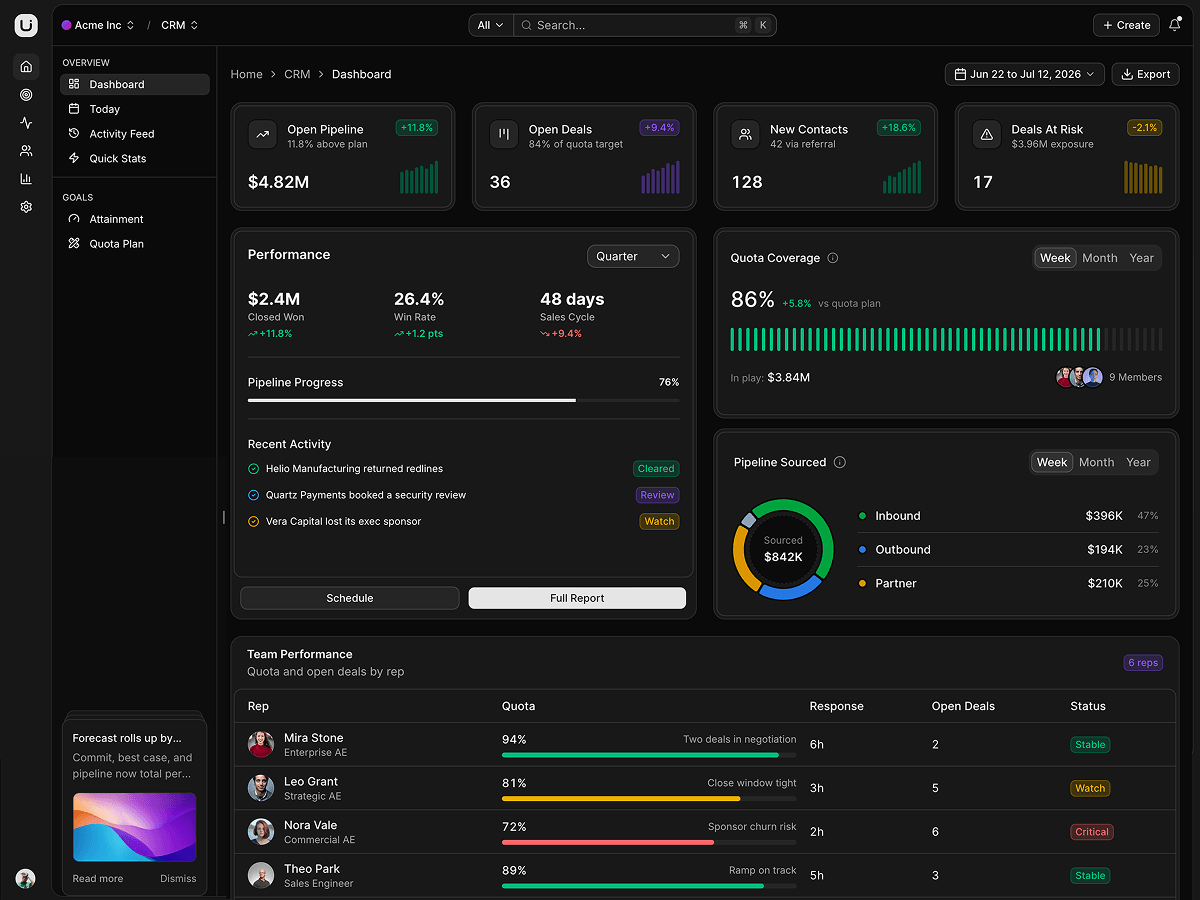
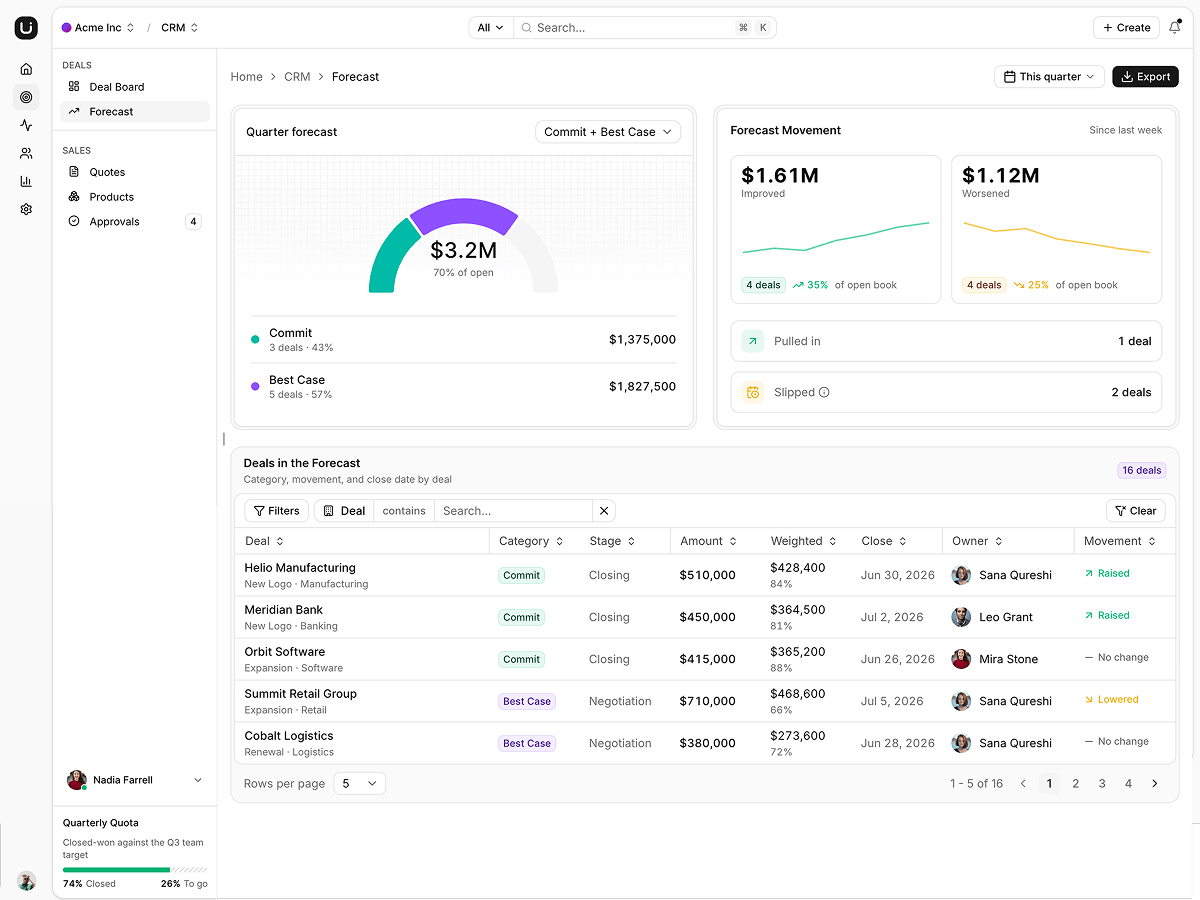
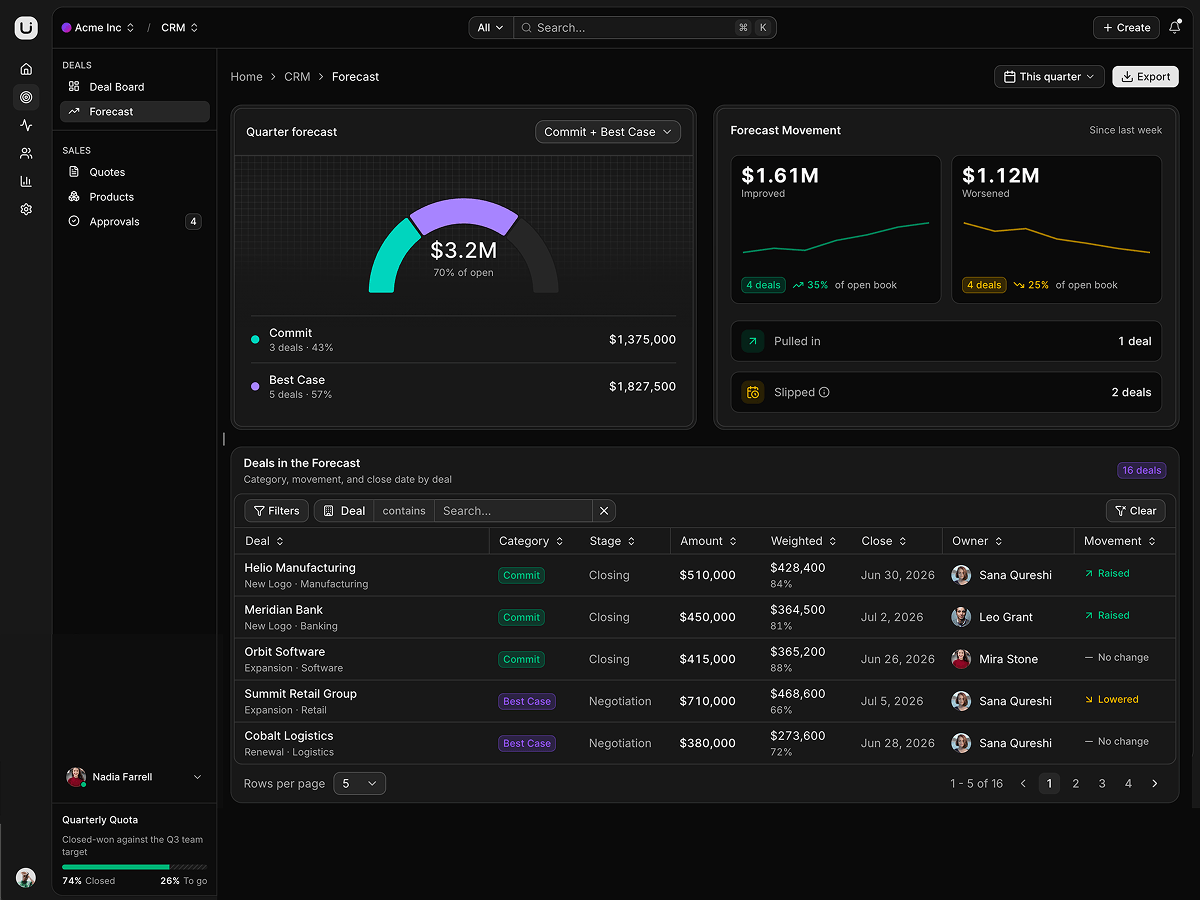
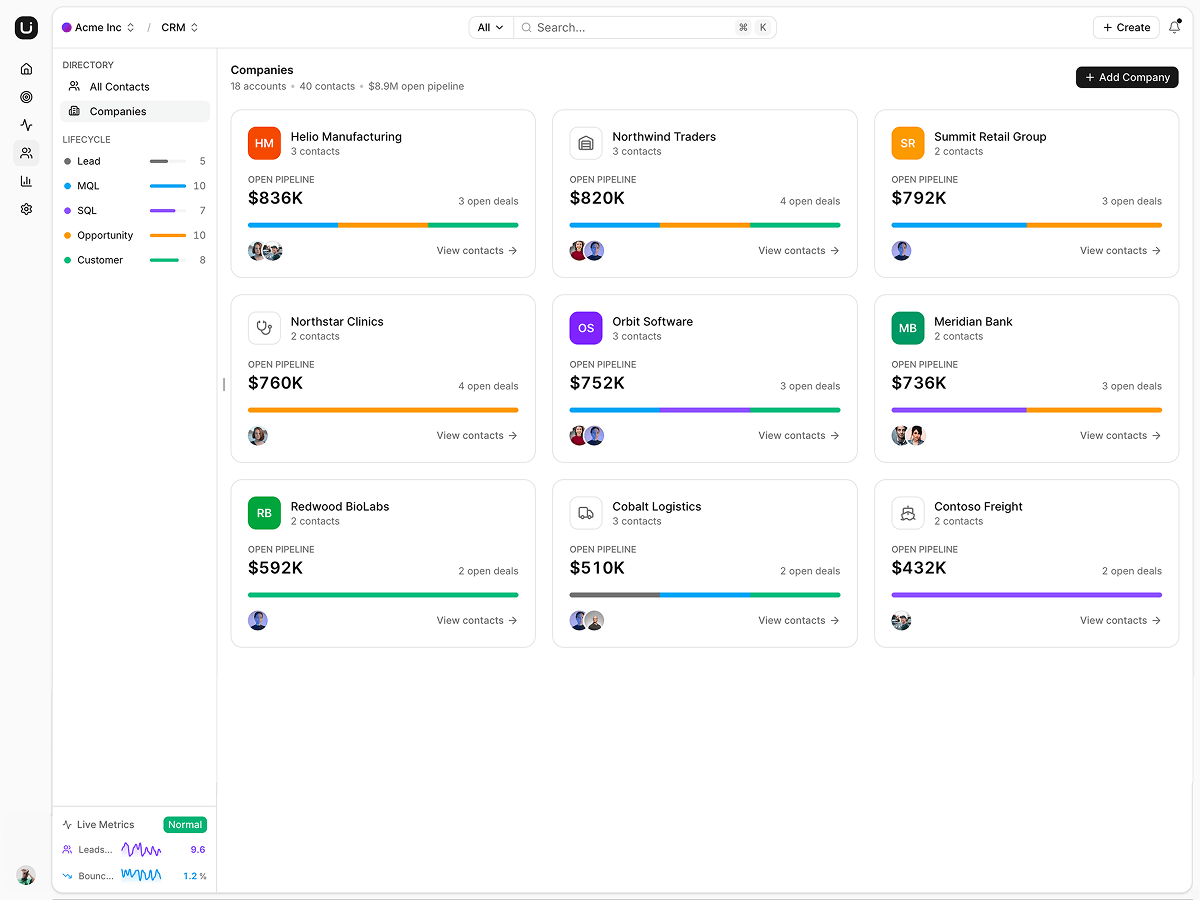
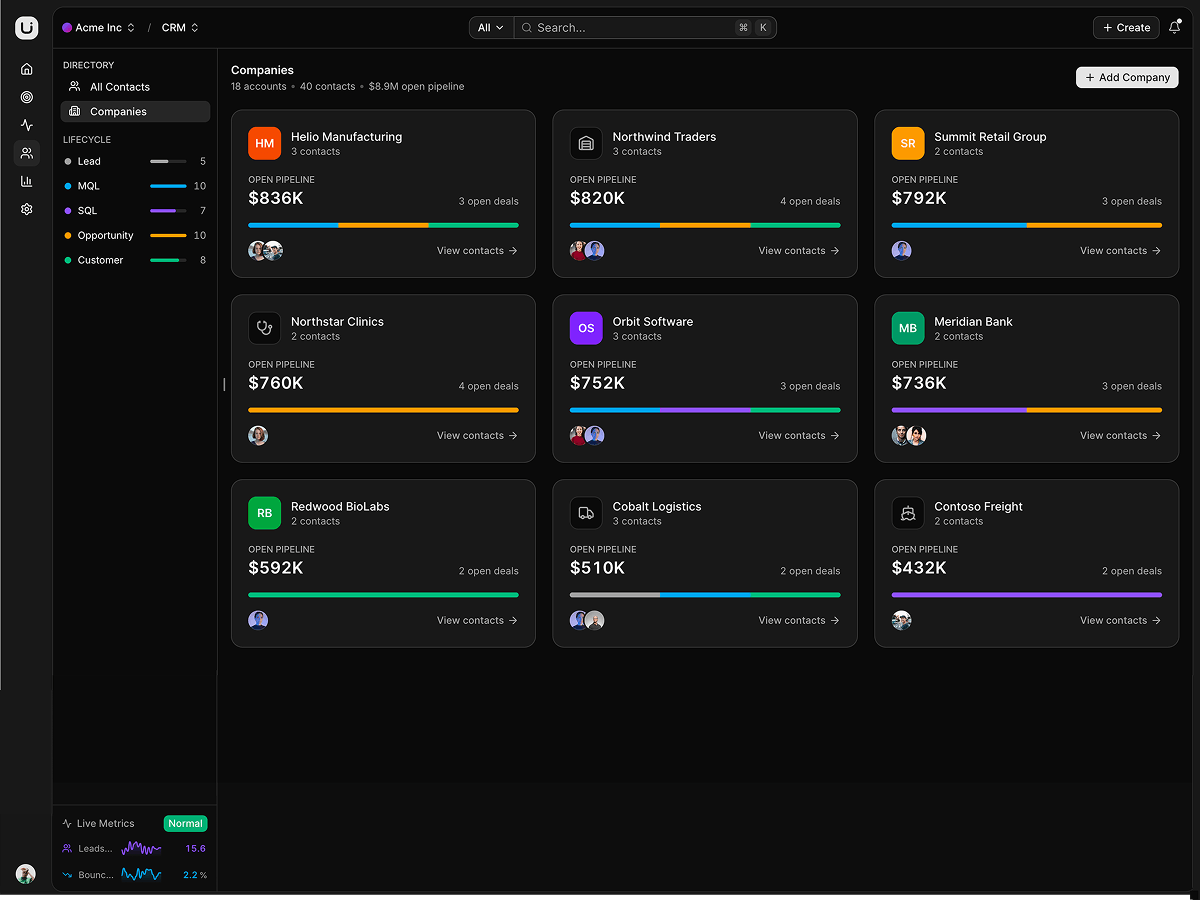
A Next.js sales CRM across 30 routes: deal board, forecast, quotes and approvals, contacts and companies, reports and a full settings area.
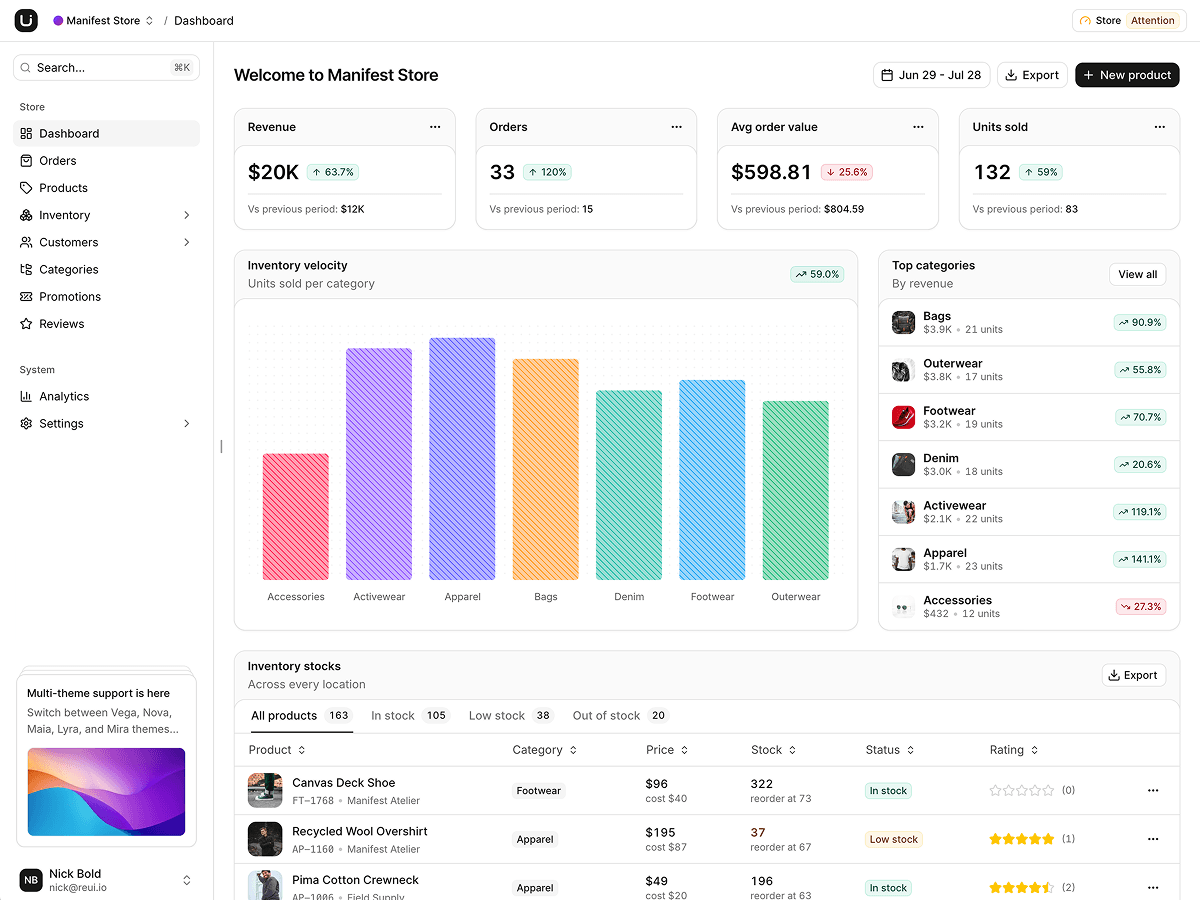
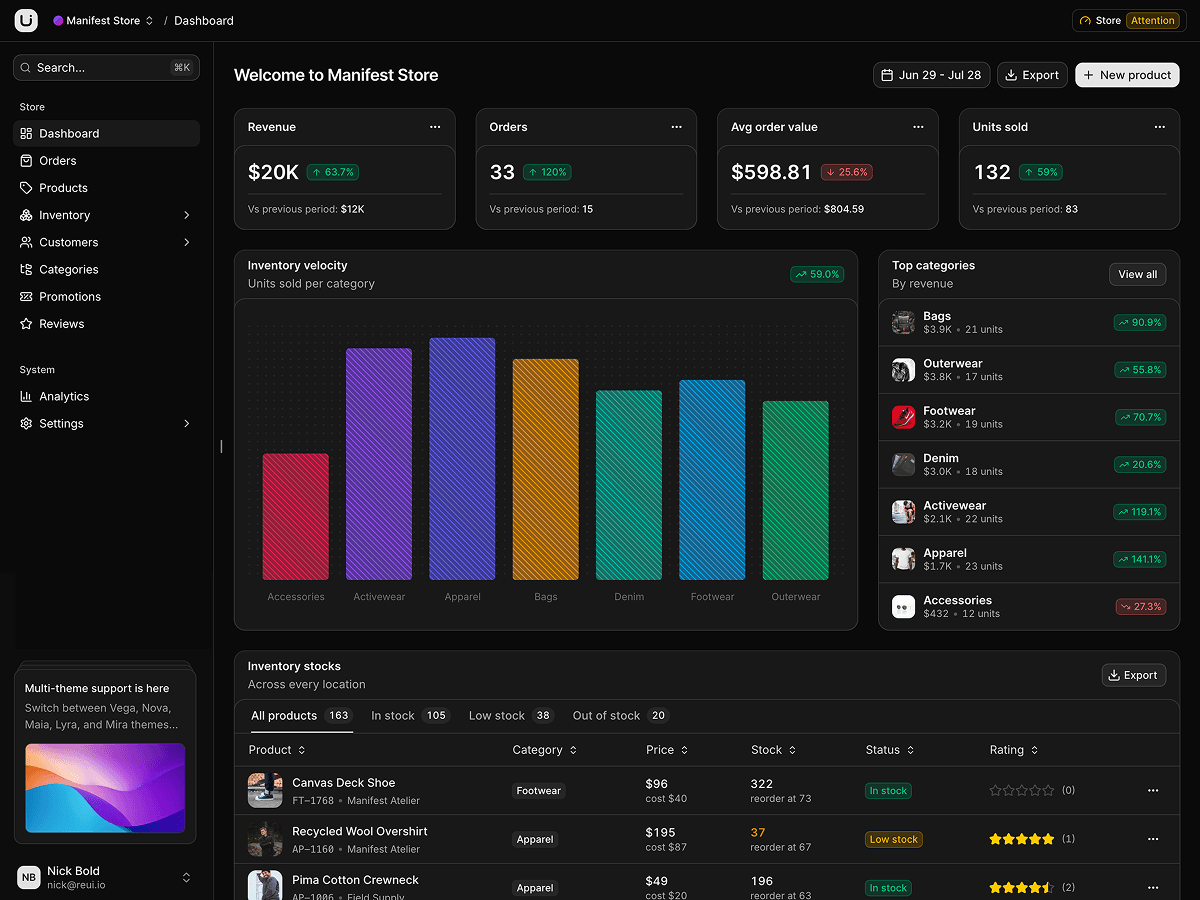
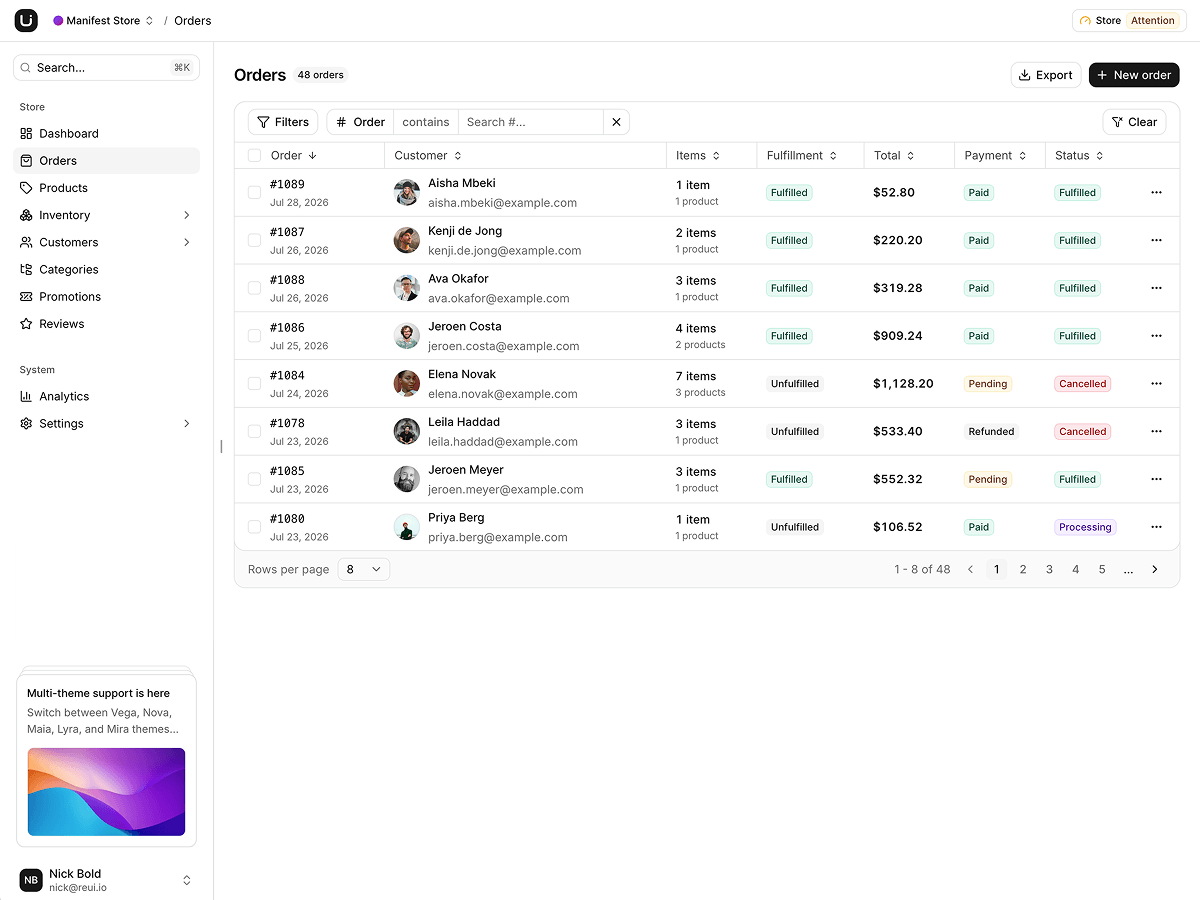
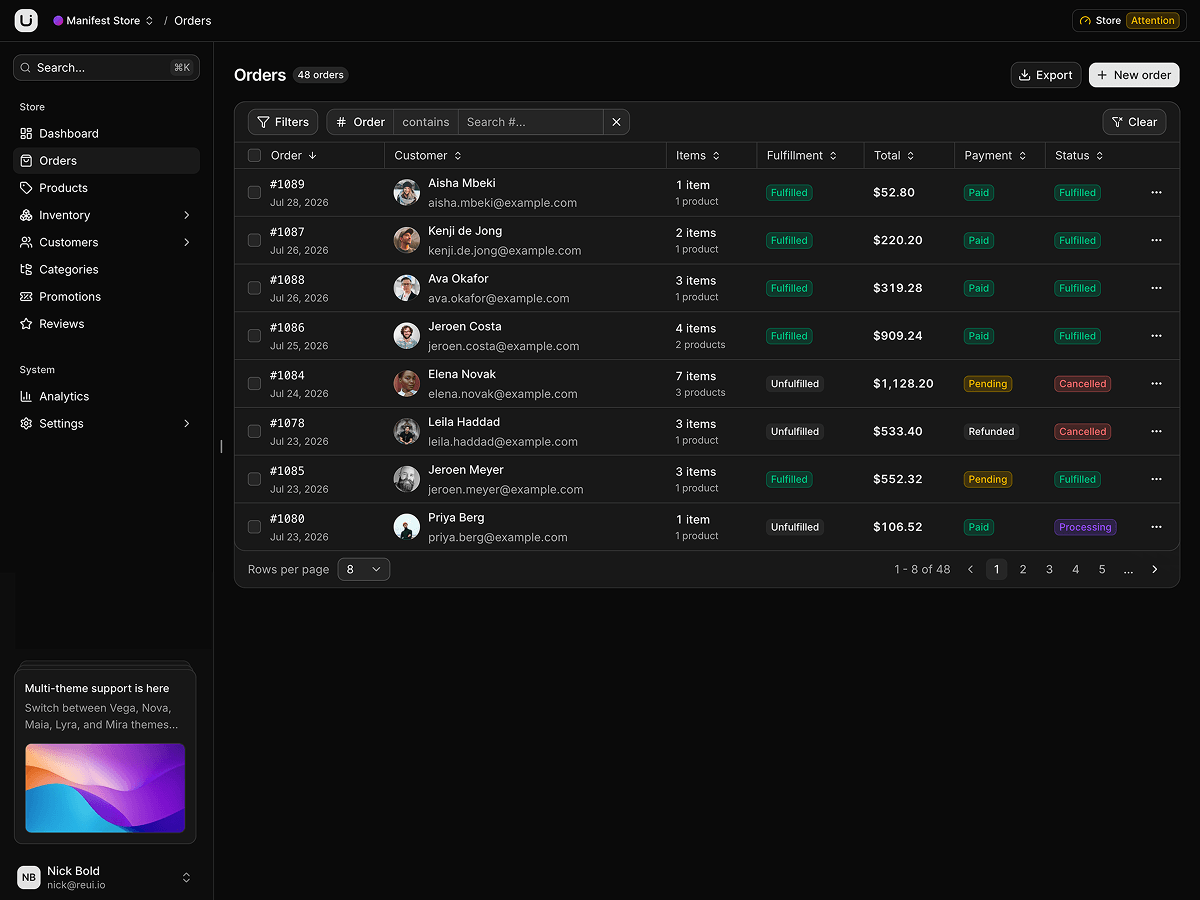
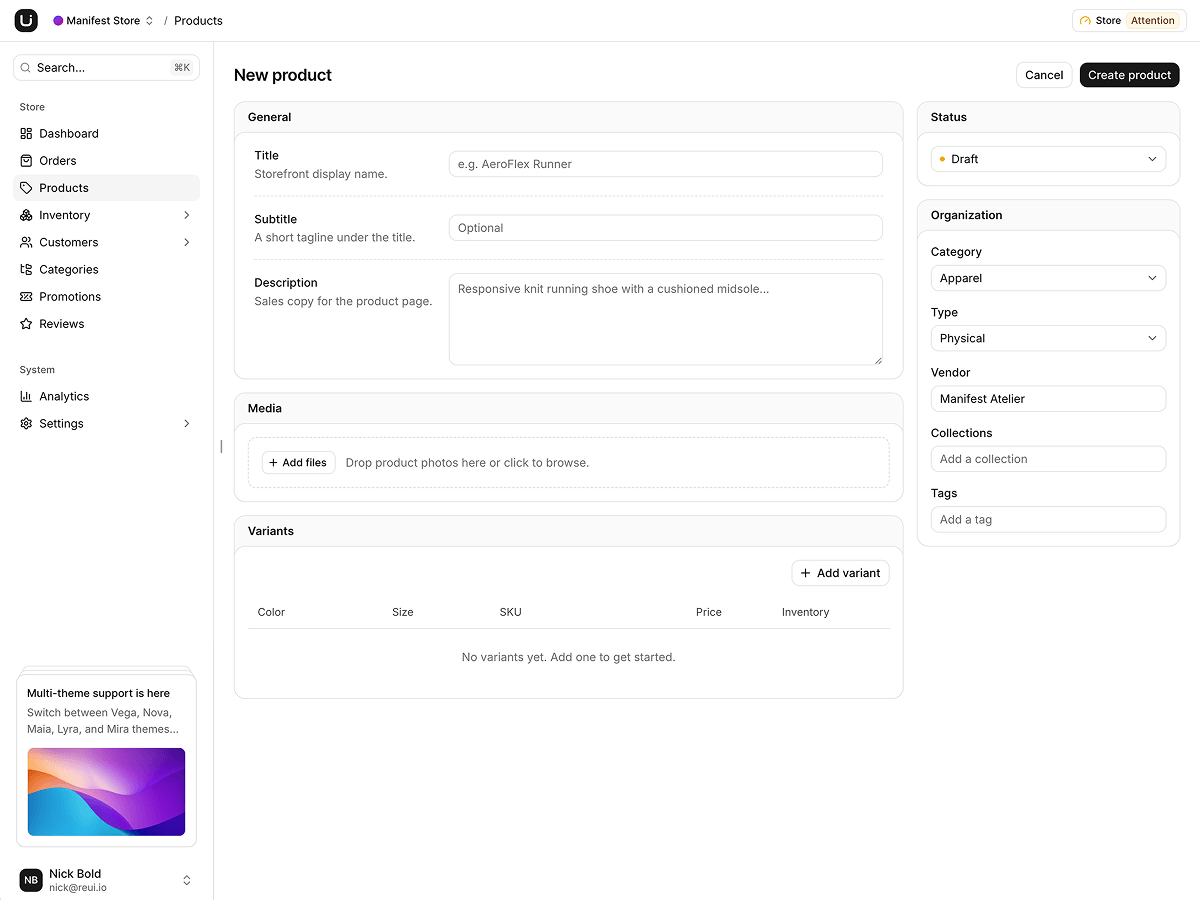
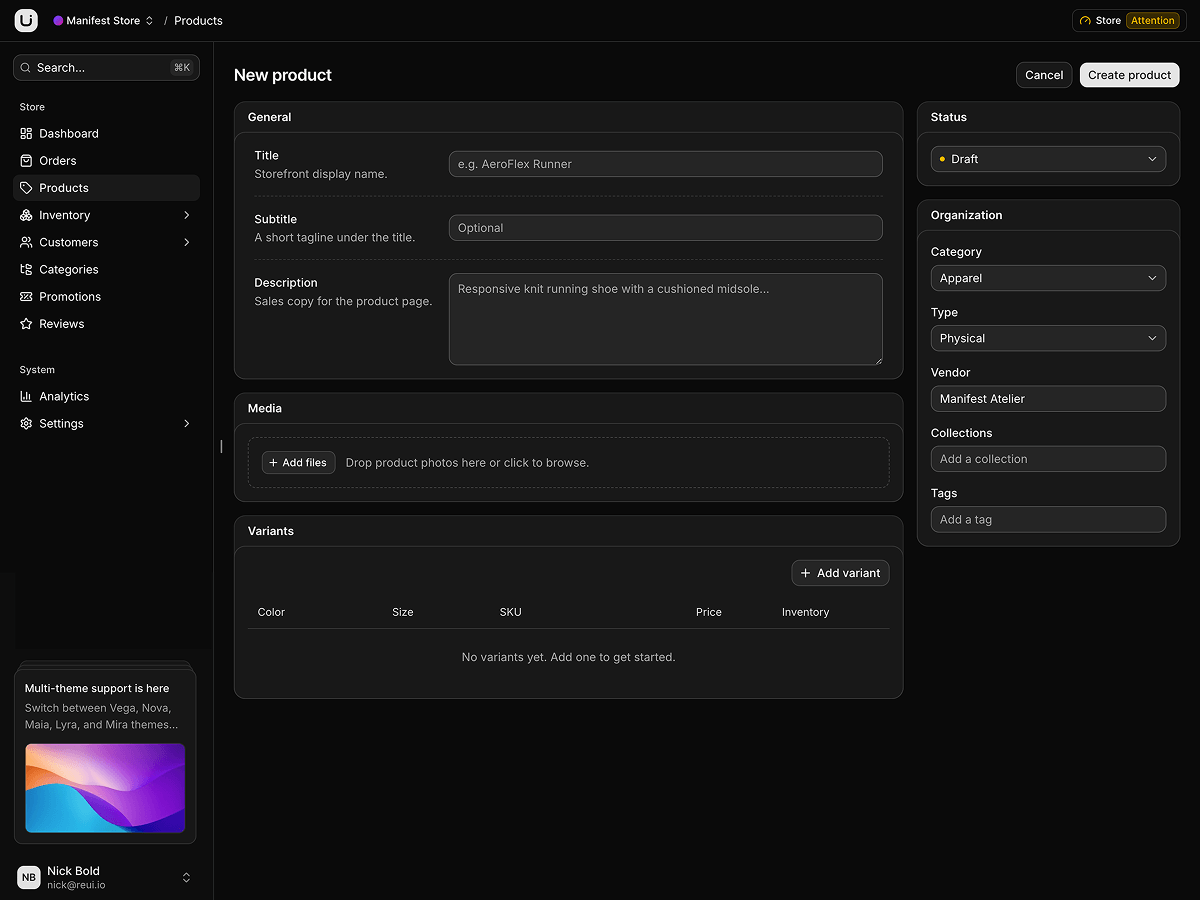
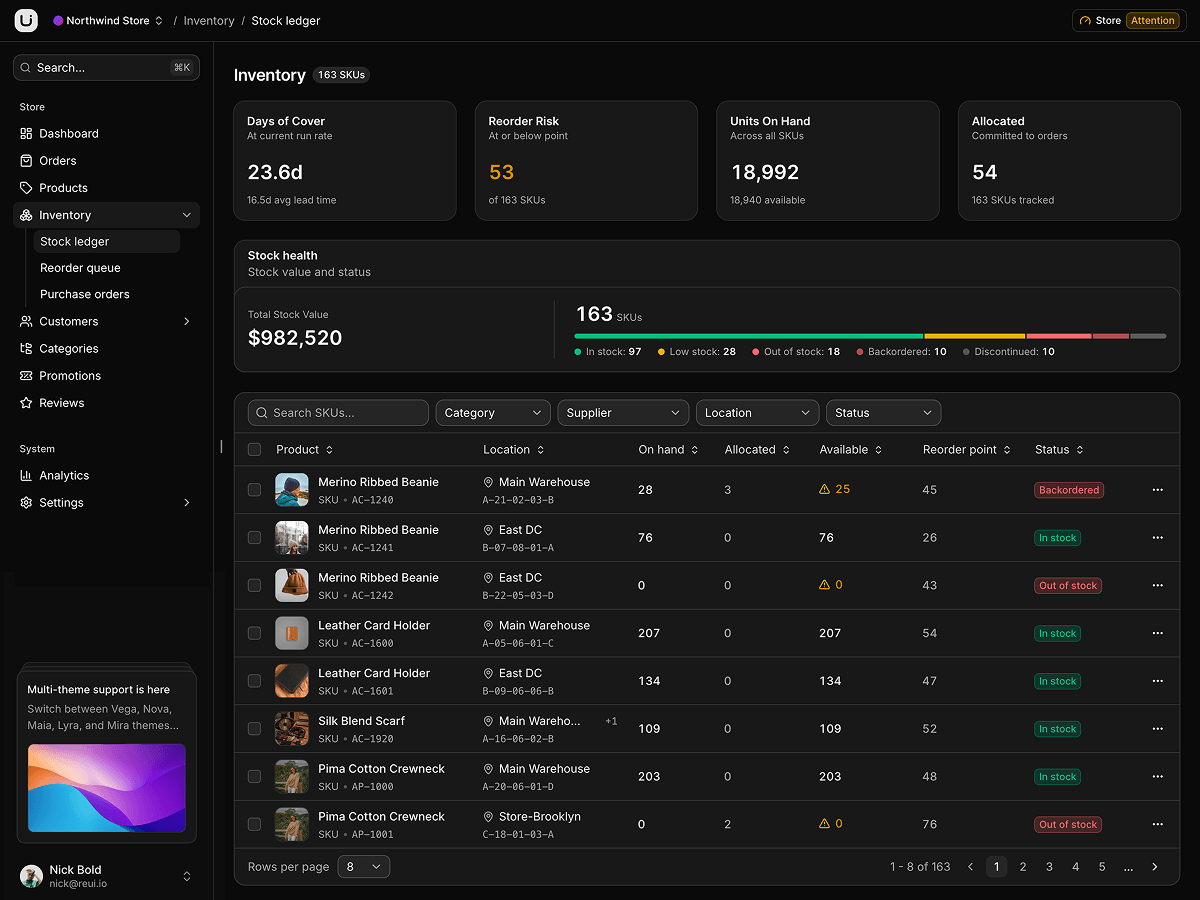
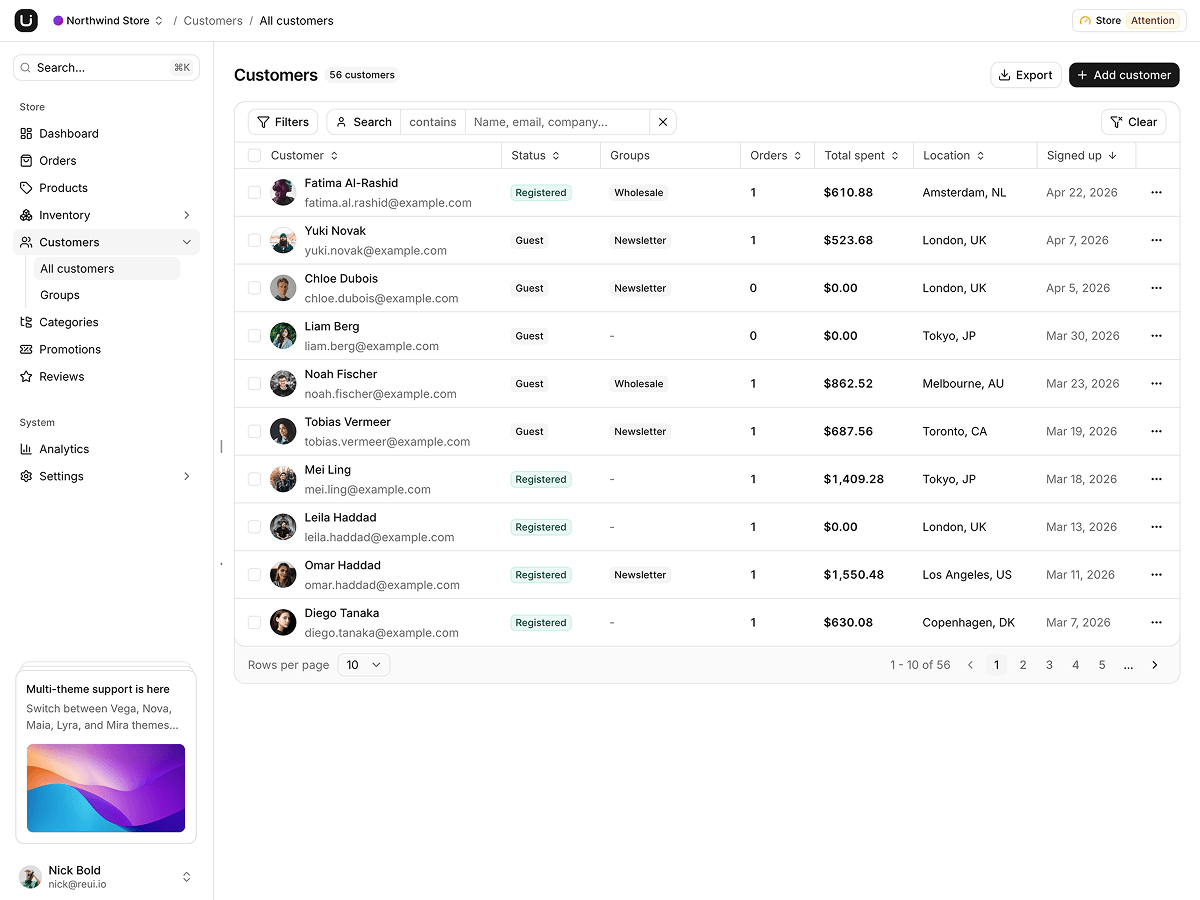
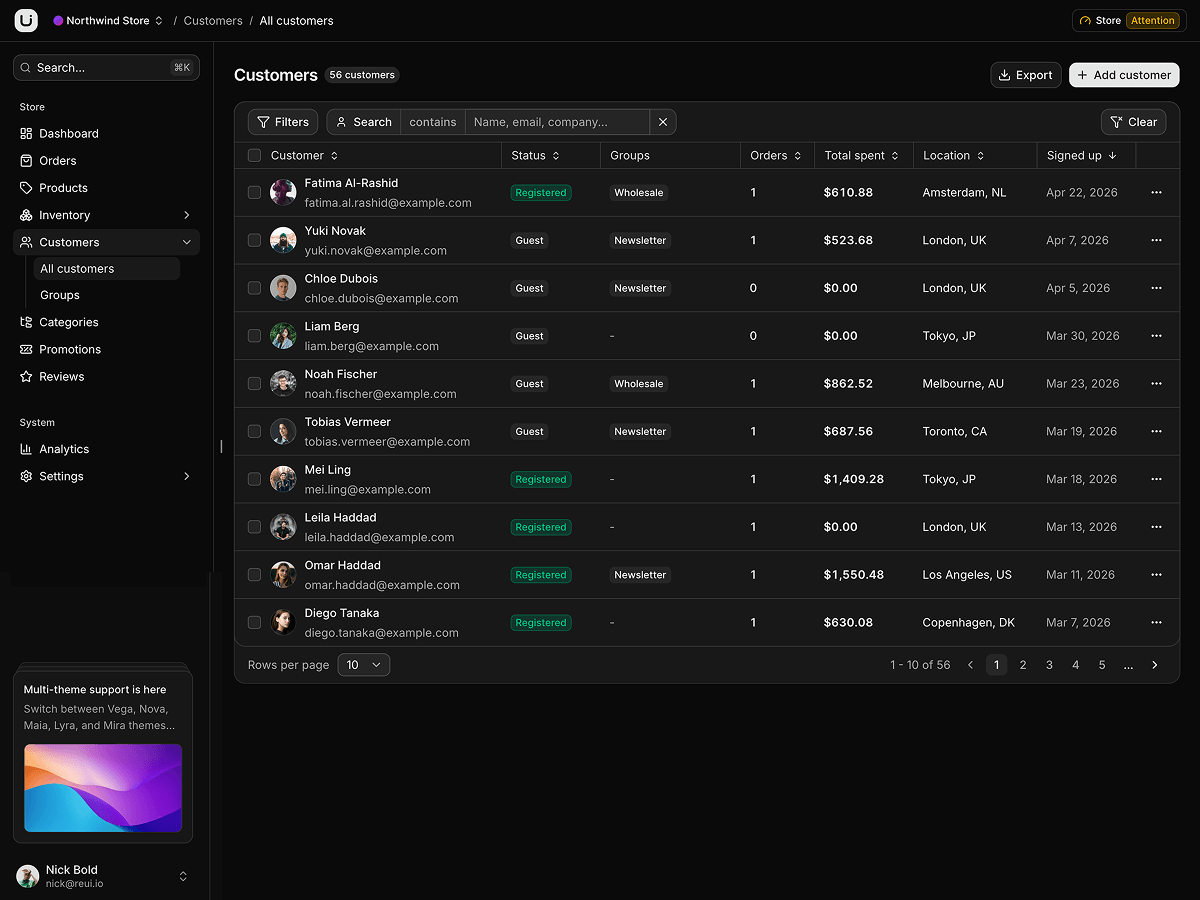
A Laravel and Inertia commerce admin on a real Eloquent backend: orders, catalog, customers, inventory, promotions and analytics.
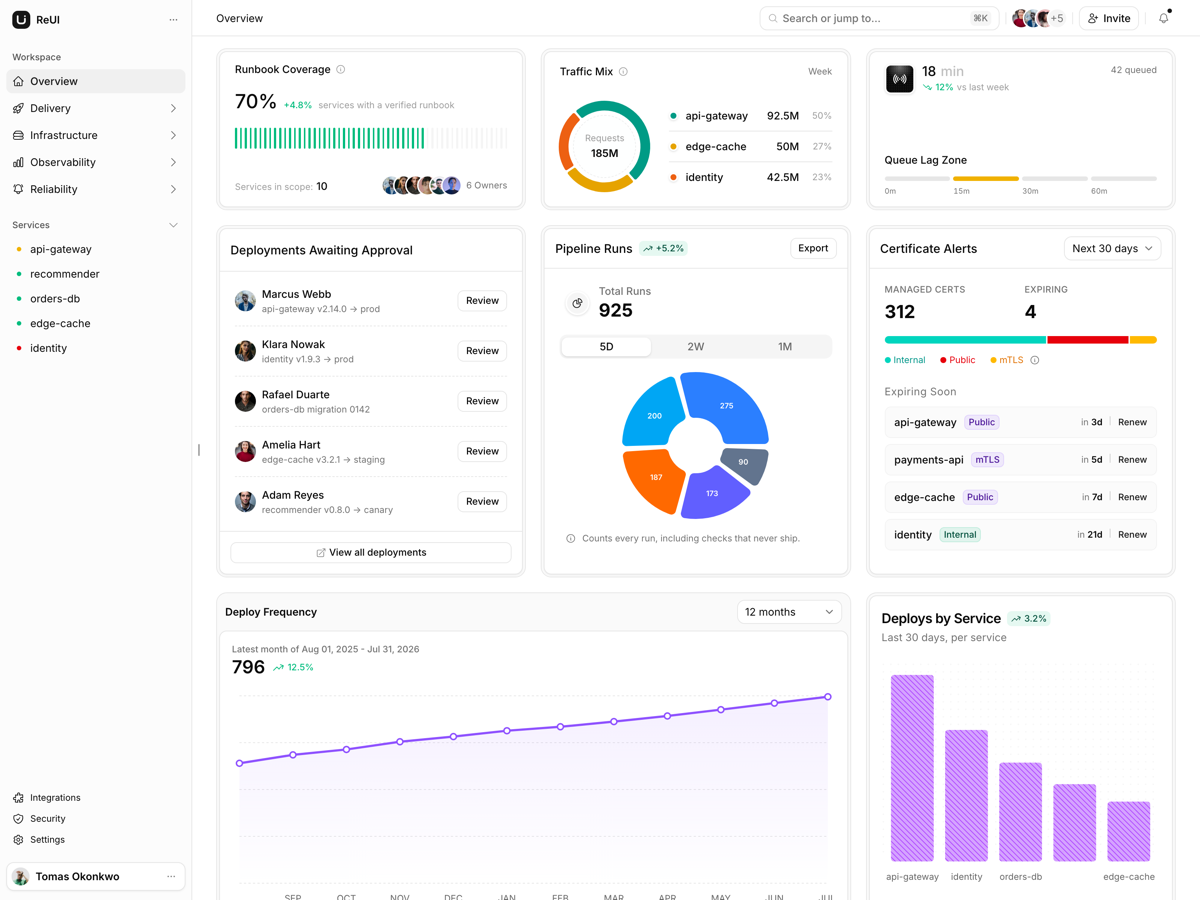
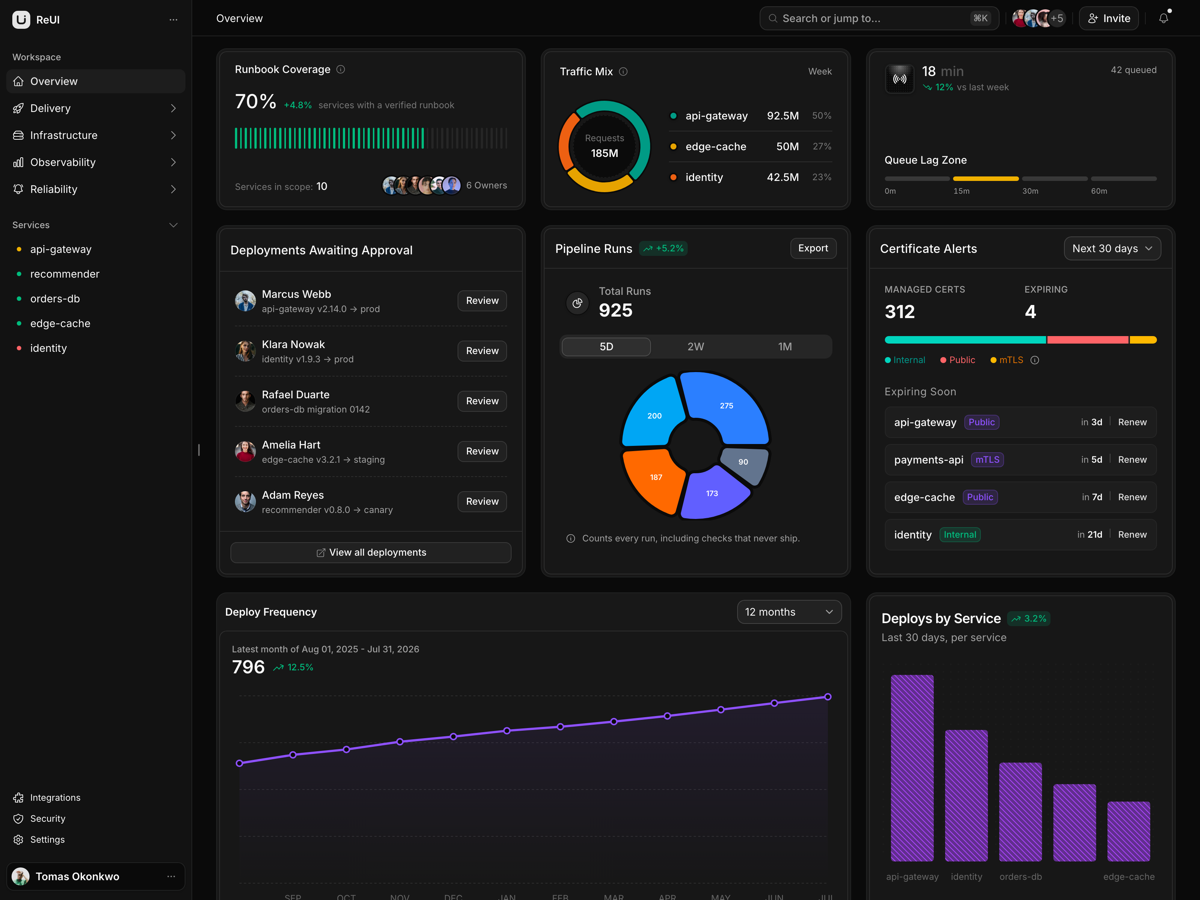
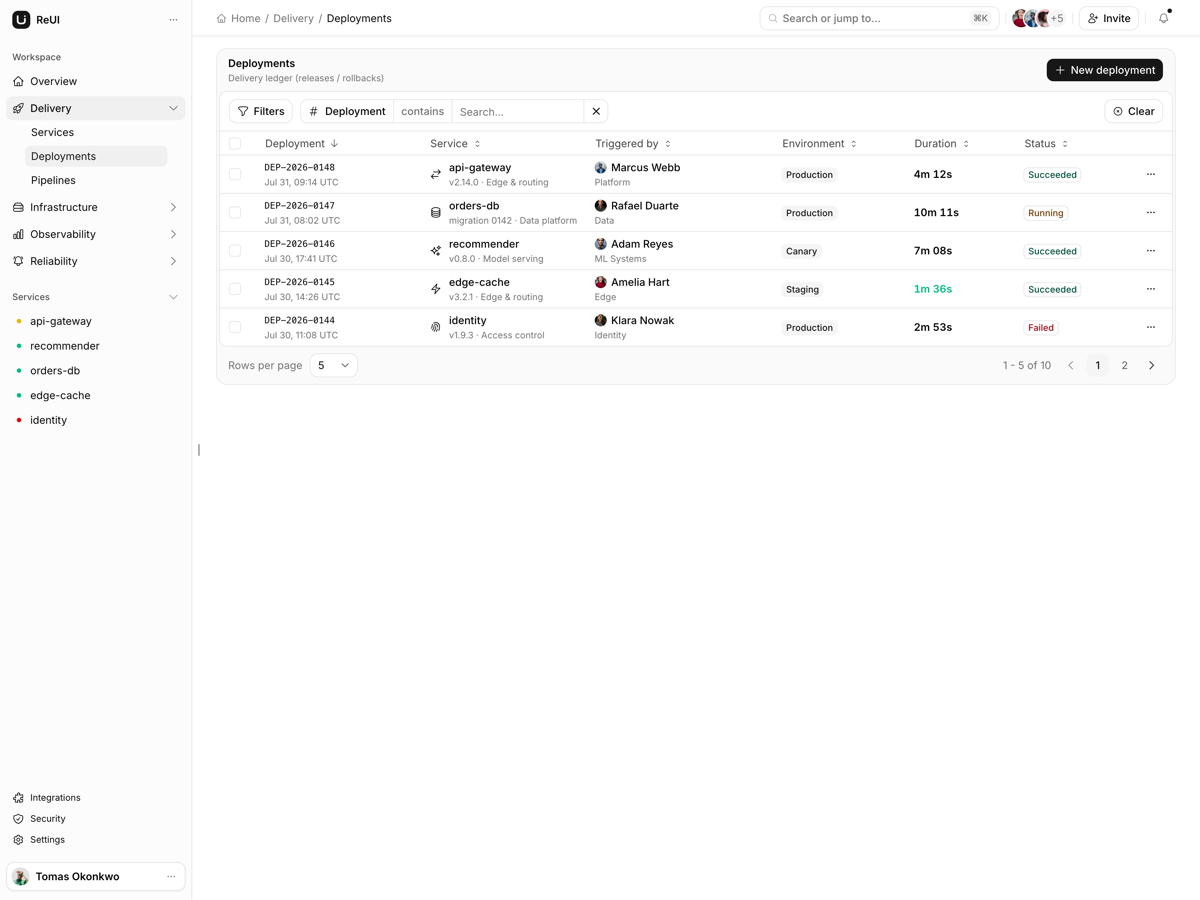
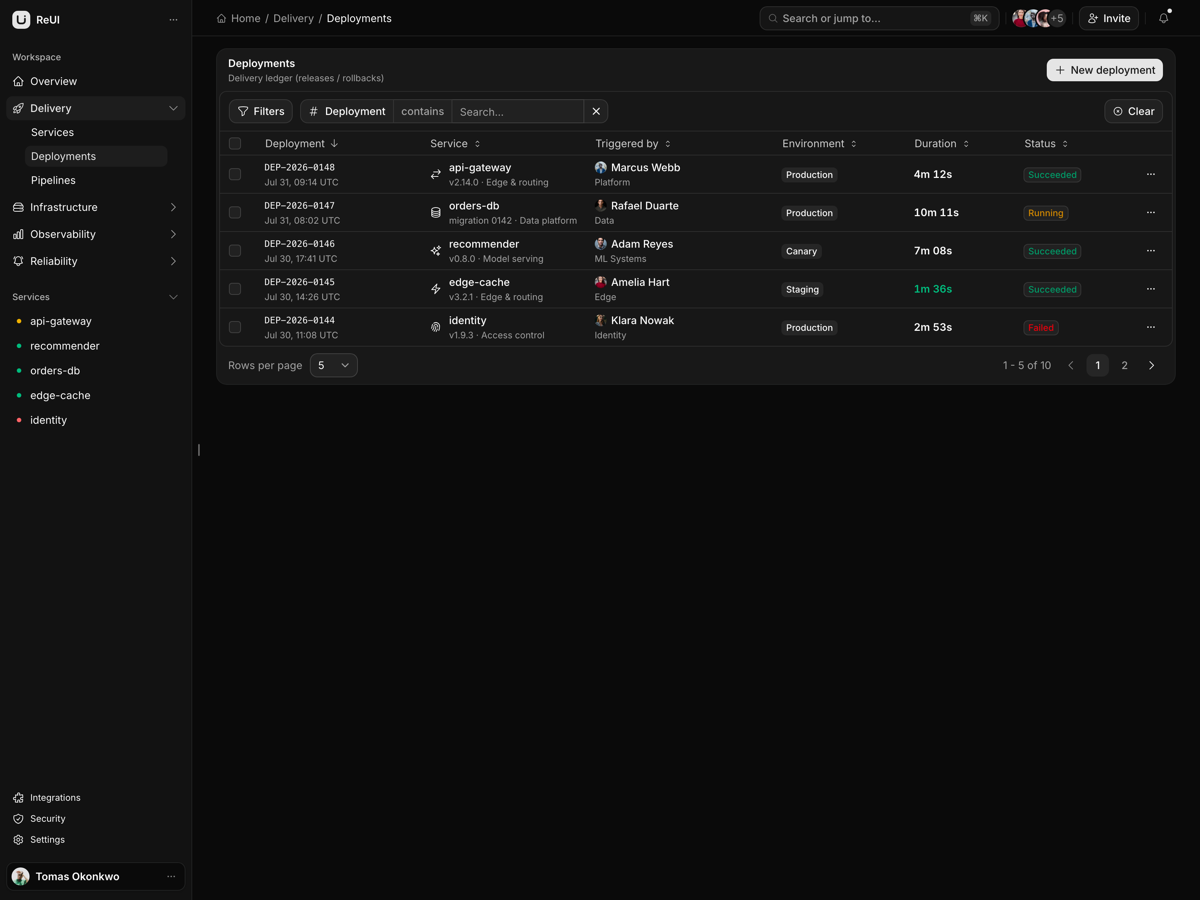
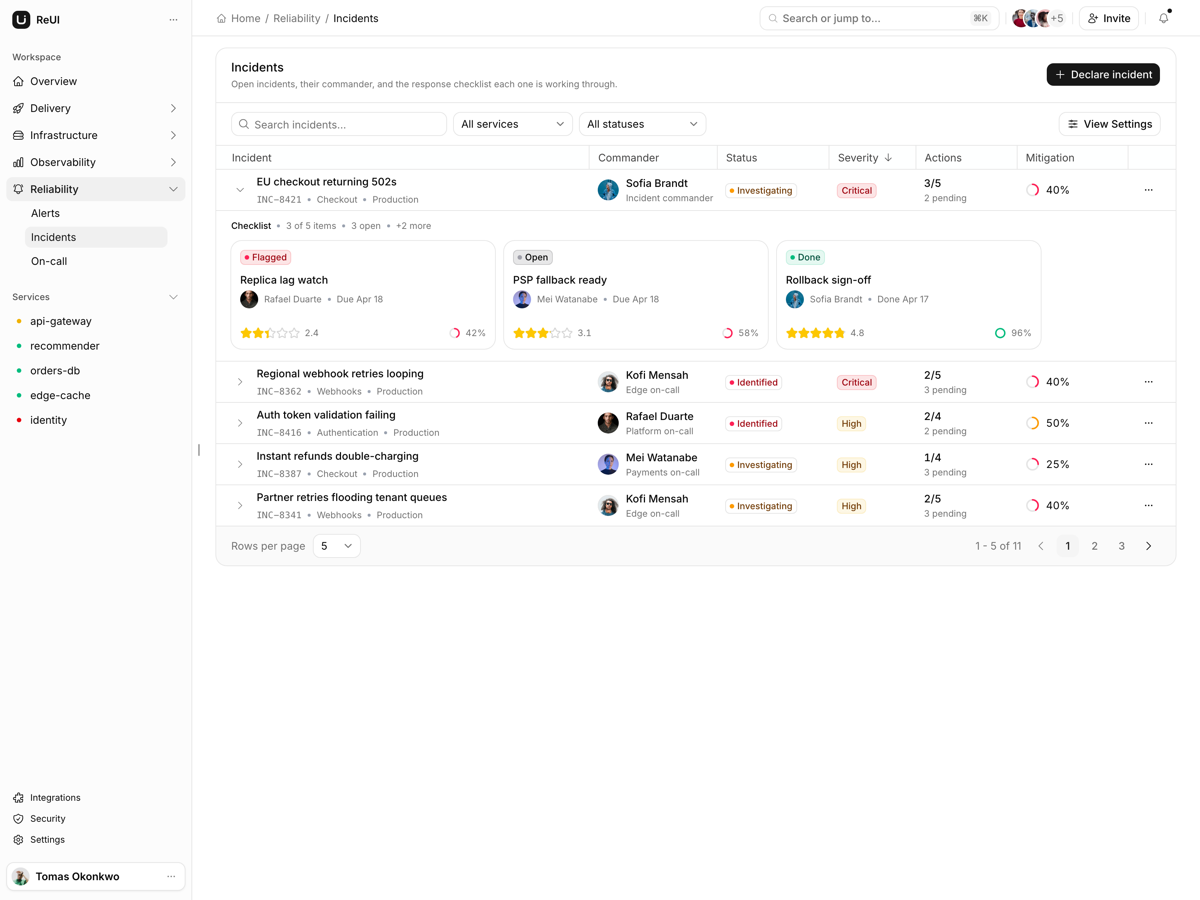
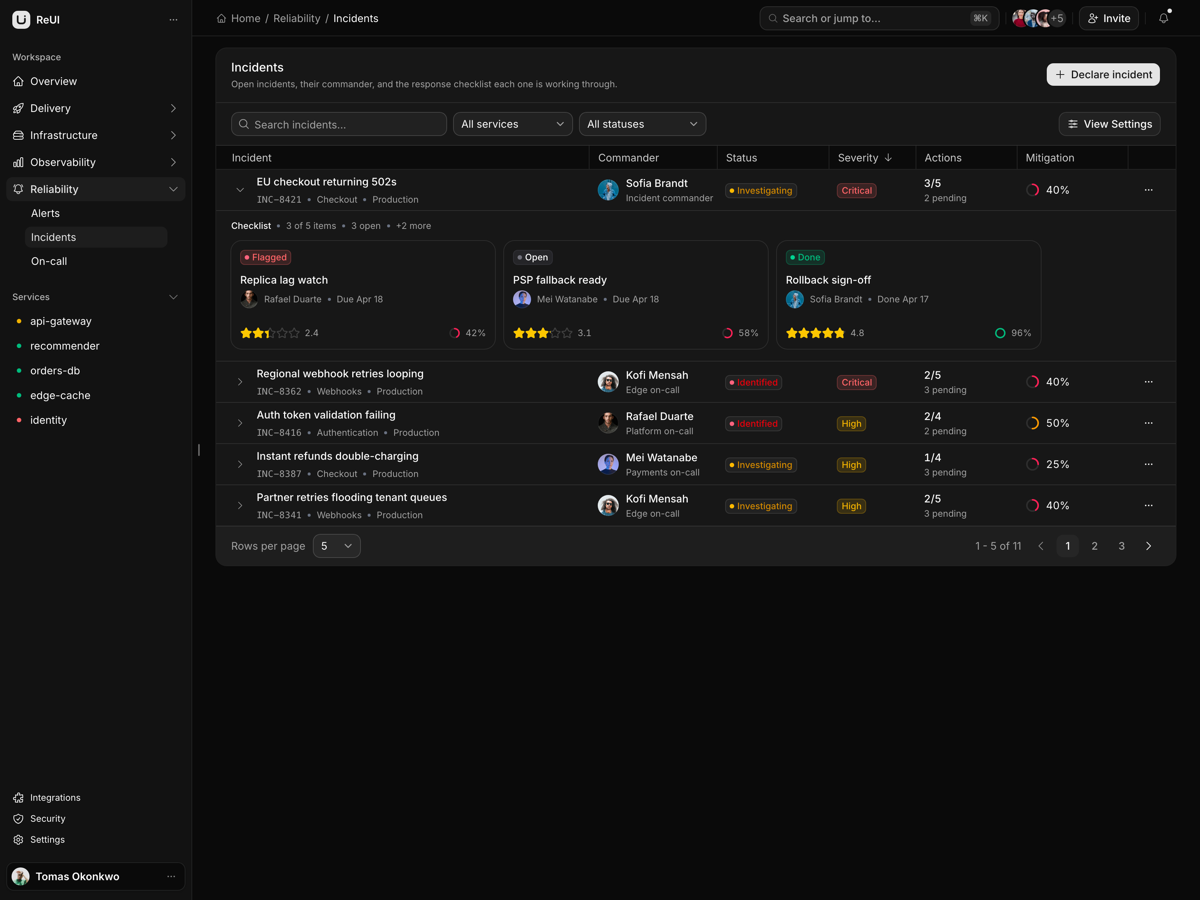
A DevOps delivery console on TanStack Start: a release board, a deployment ledger, traces, alerts, incident response and an on-call rota.
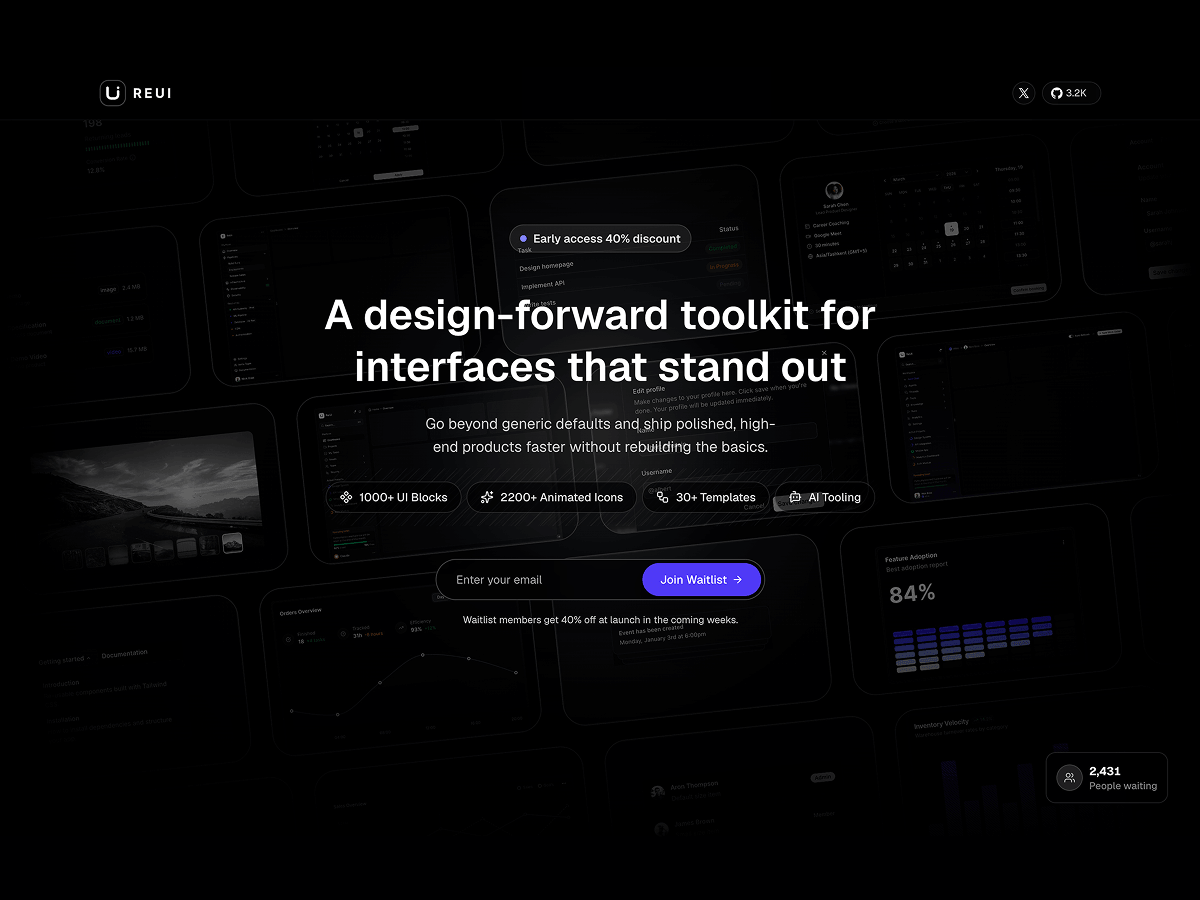
A one-page pre-launch waitlist: a scrolling wallpaper of 75 product screenshots, a signup route that screens bots and throttles, and a counter that ticks up.
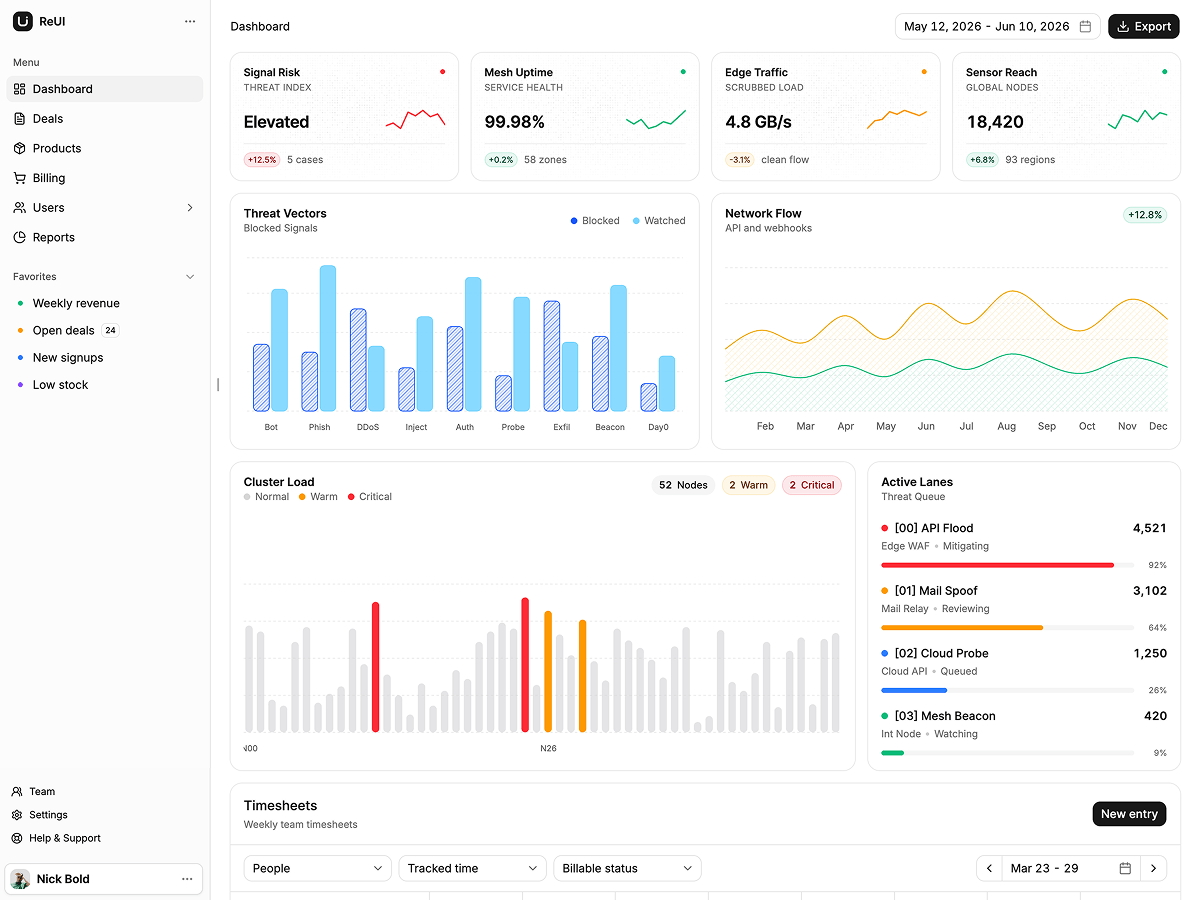
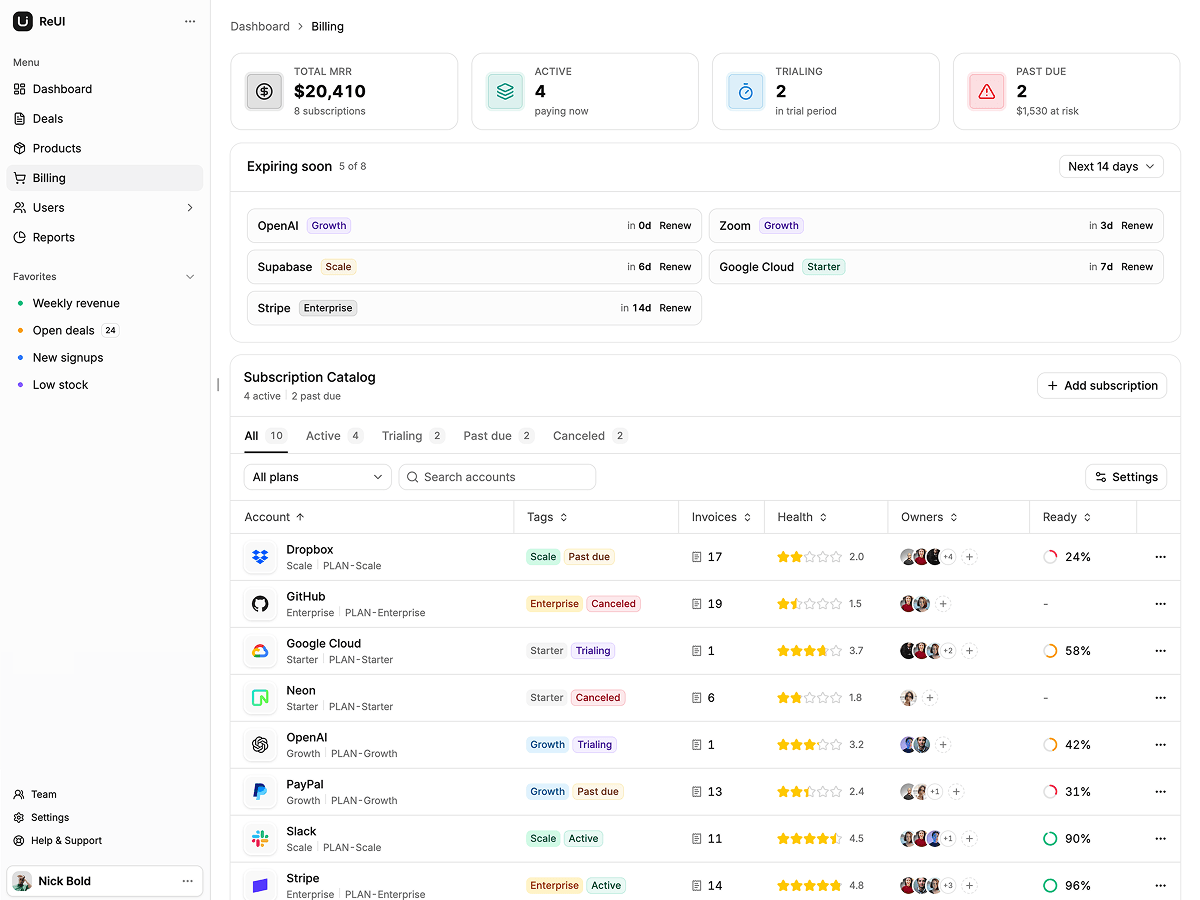
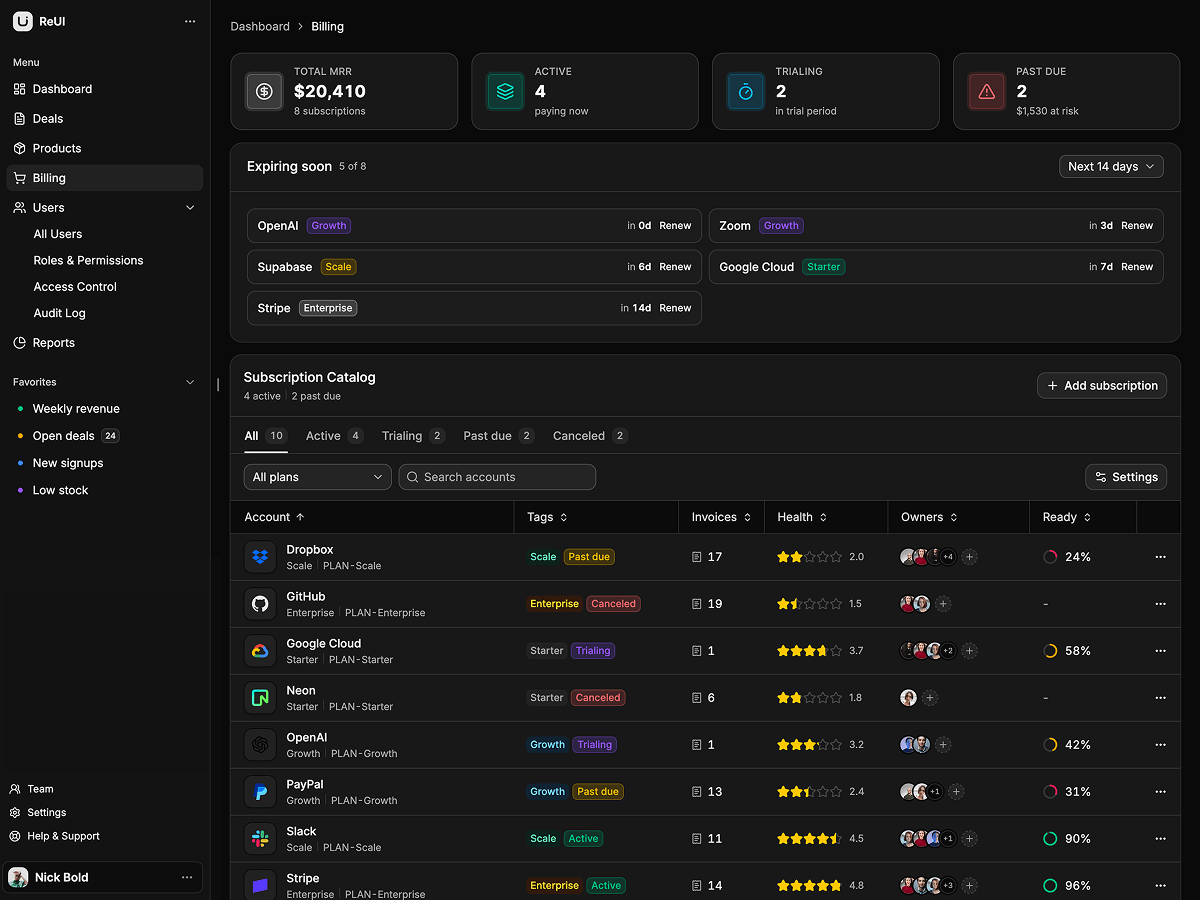
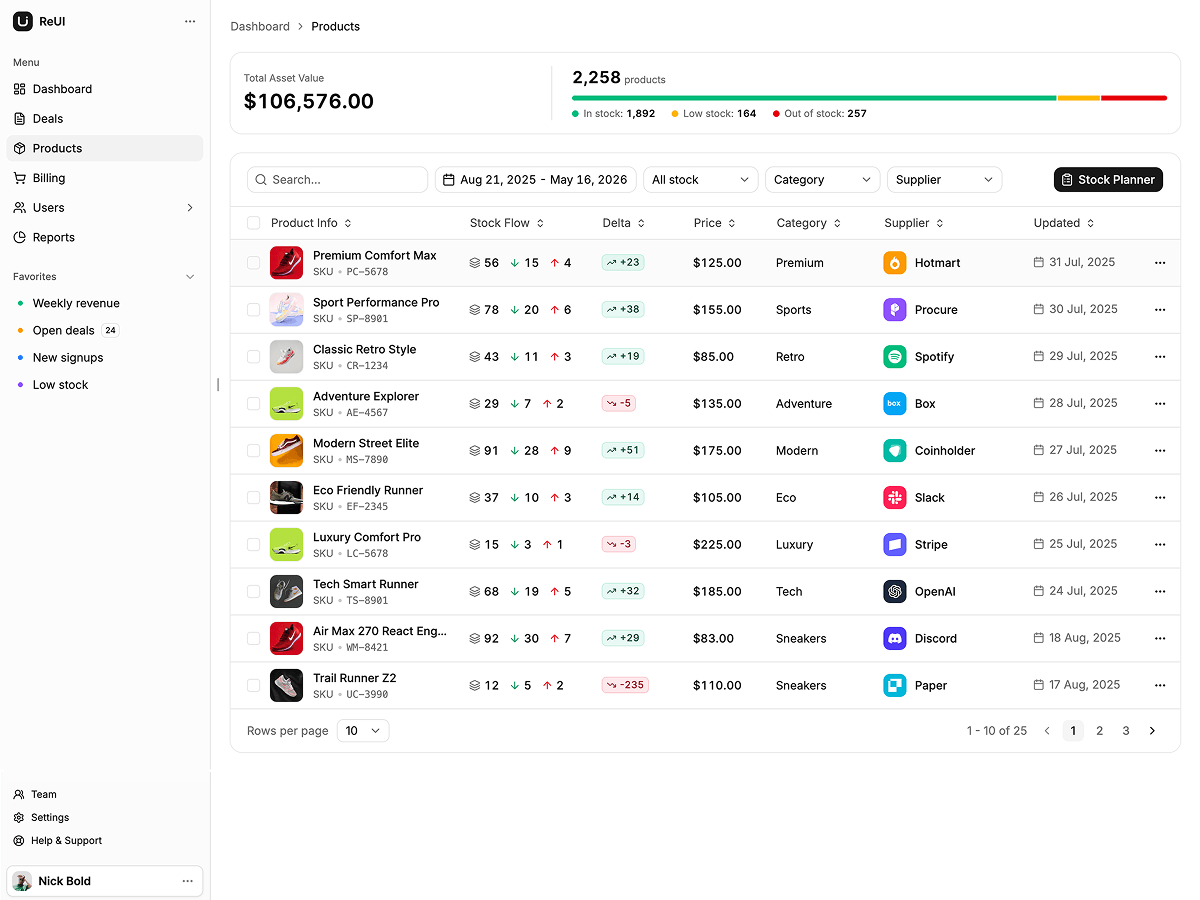
A general purpose Next.js admin: user directory, roles and permissions, access requests, an audit log, products, billing, a deal board and reports.
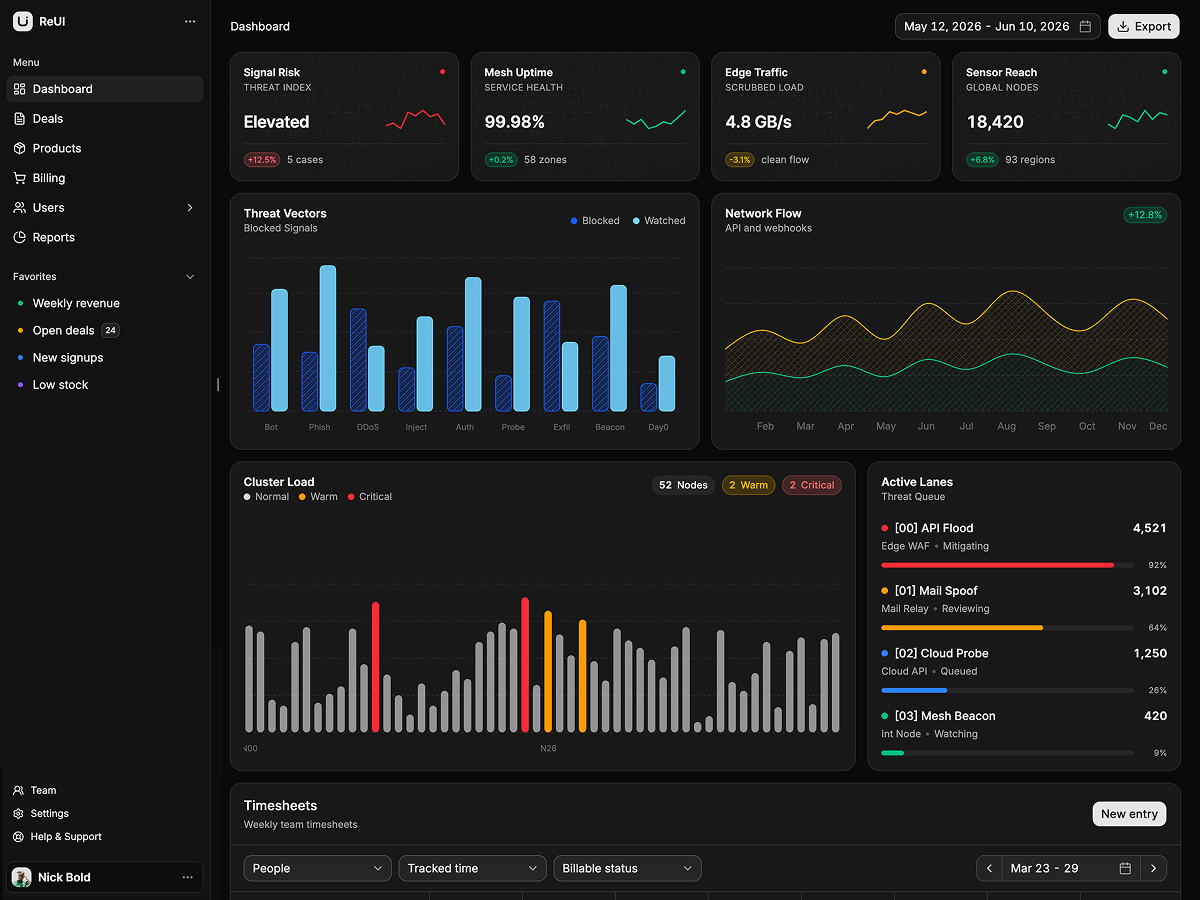
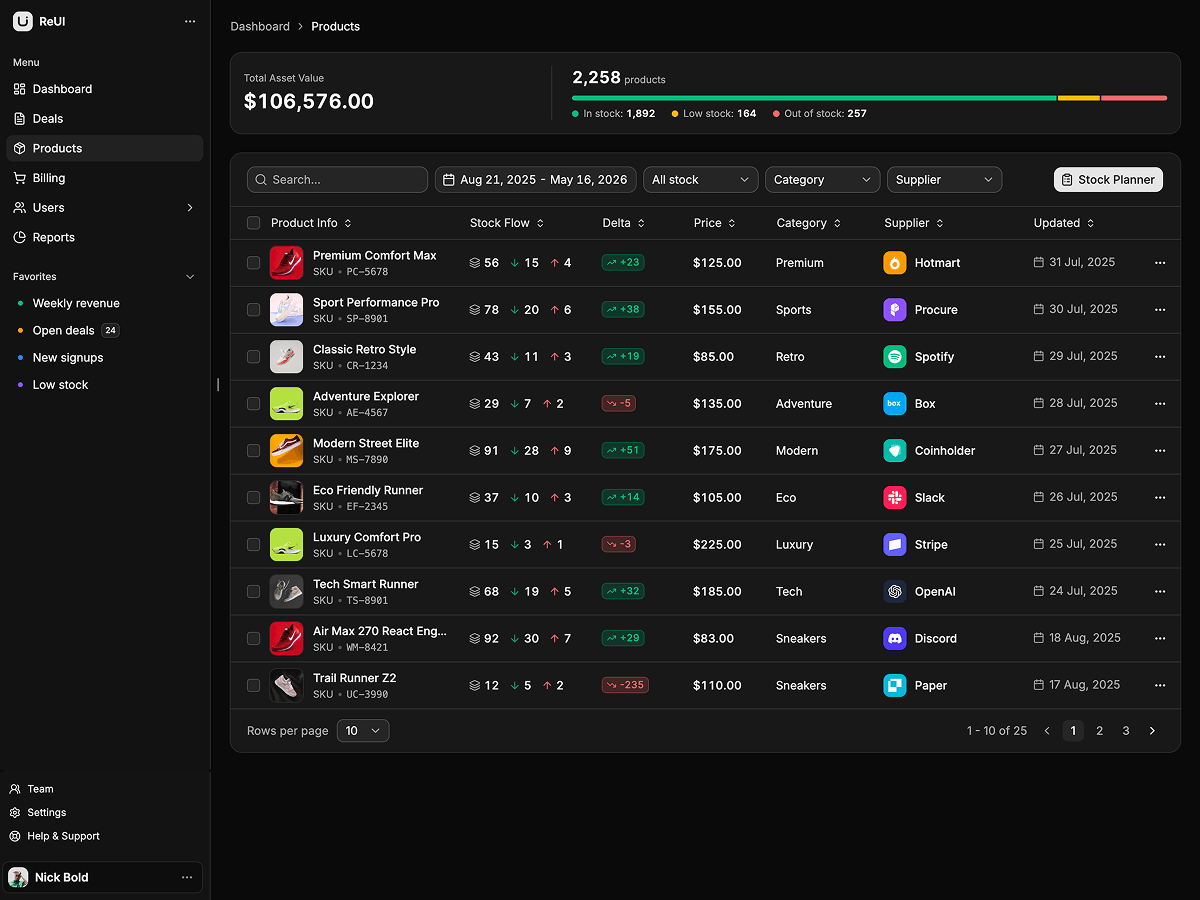
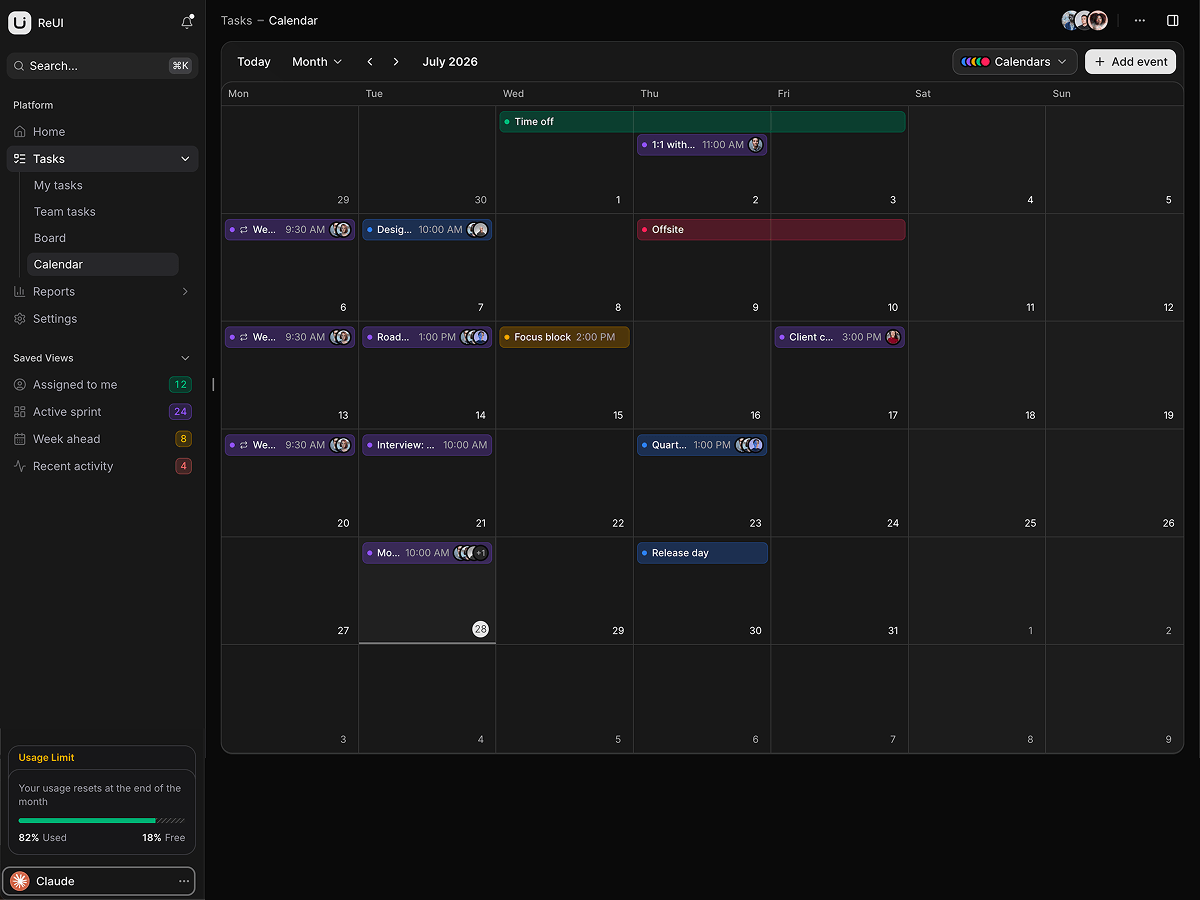
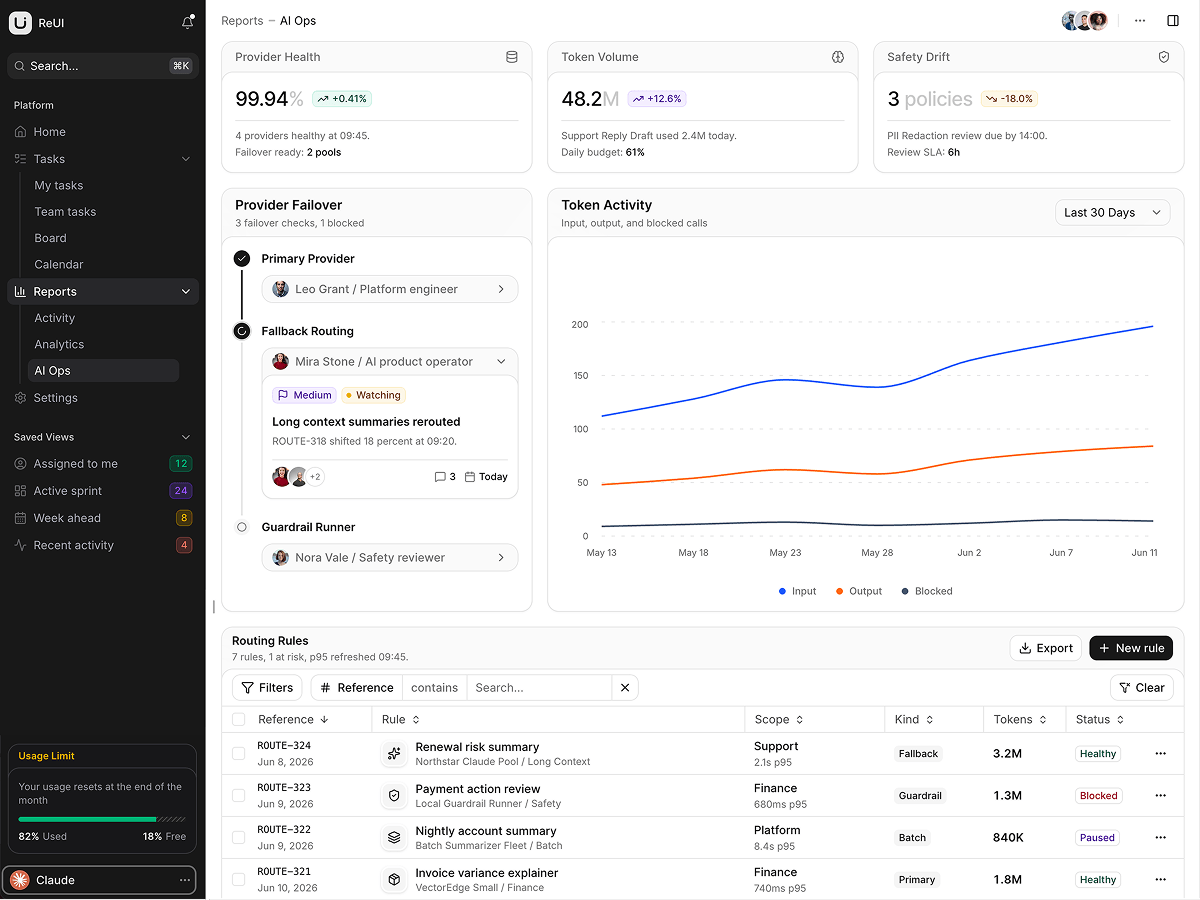
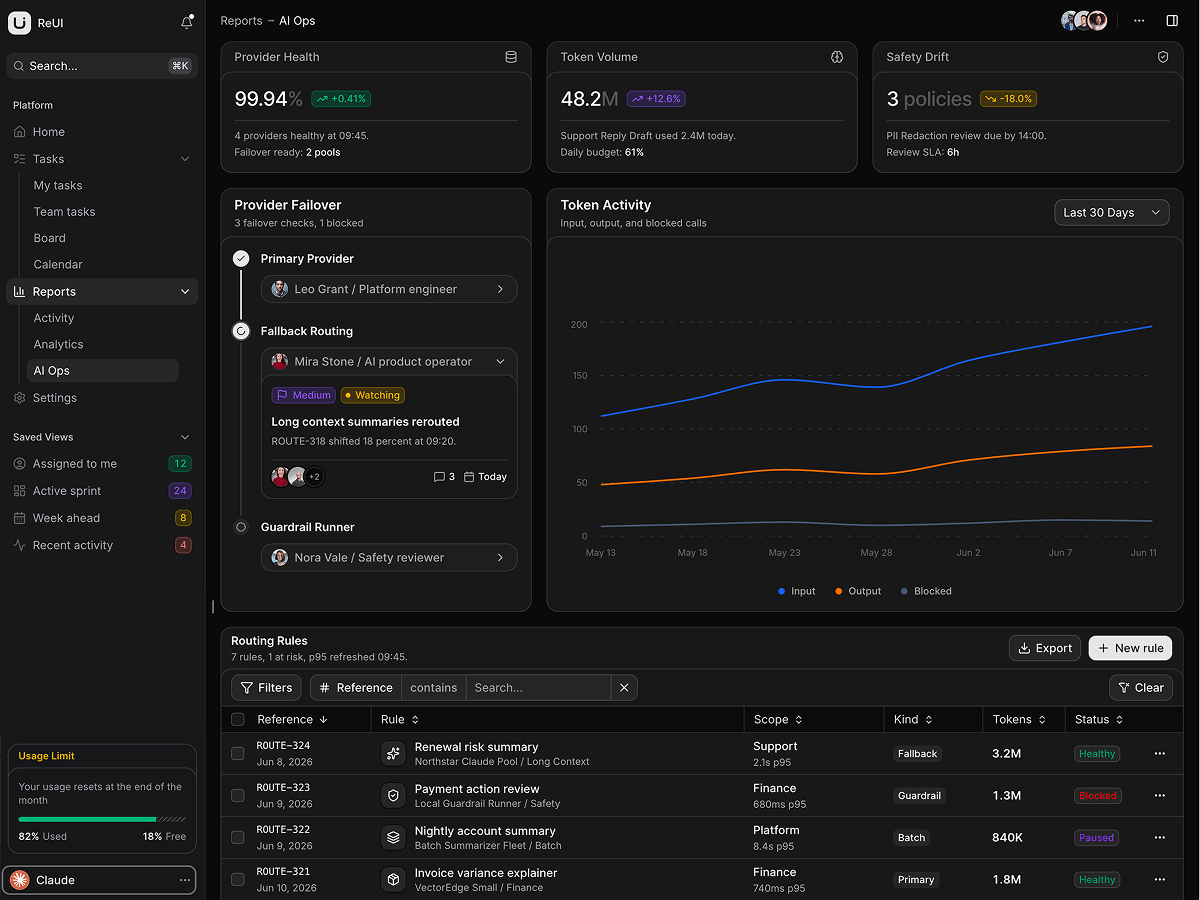
A task management dashboard on TanStack Start: kanban board, gantt timeline, event calendar, a task grid with sub-issues, and an AI Ops console.
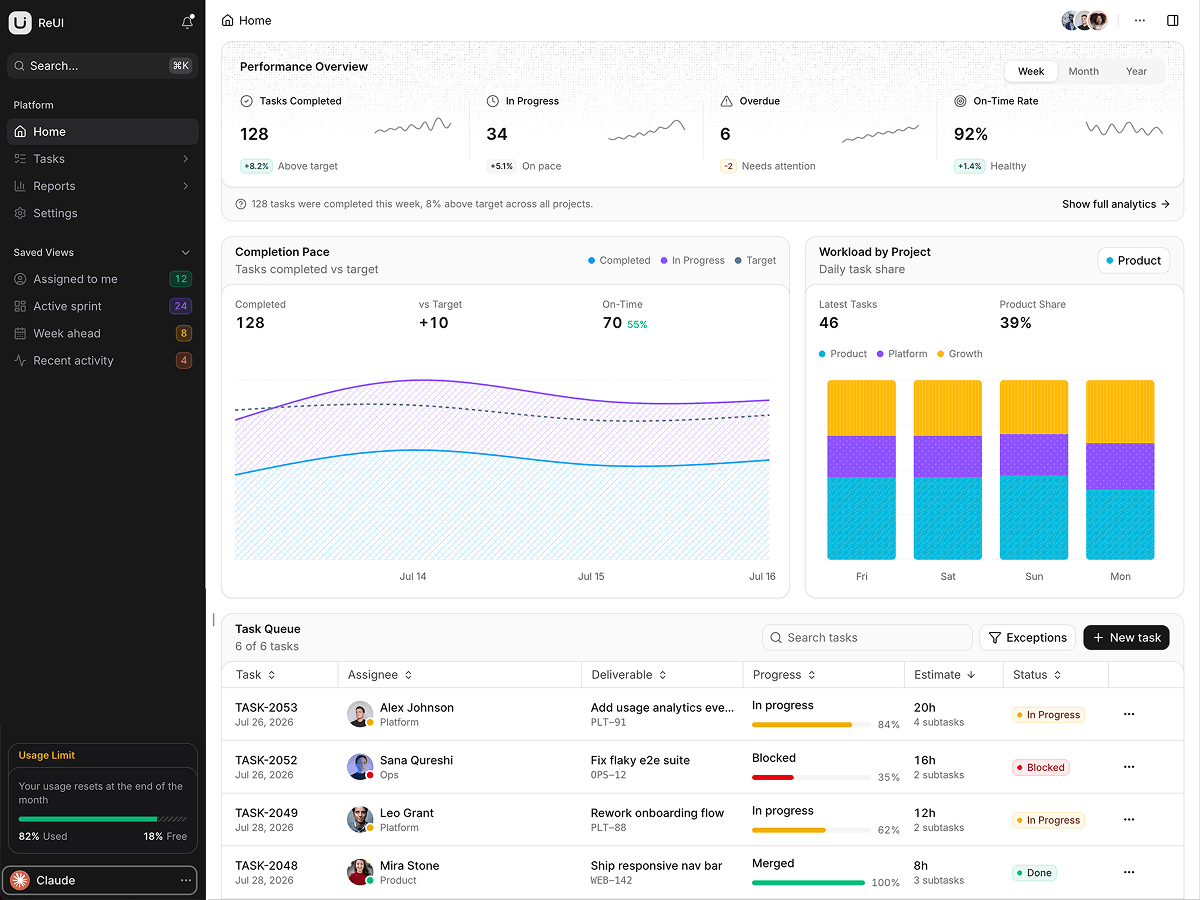
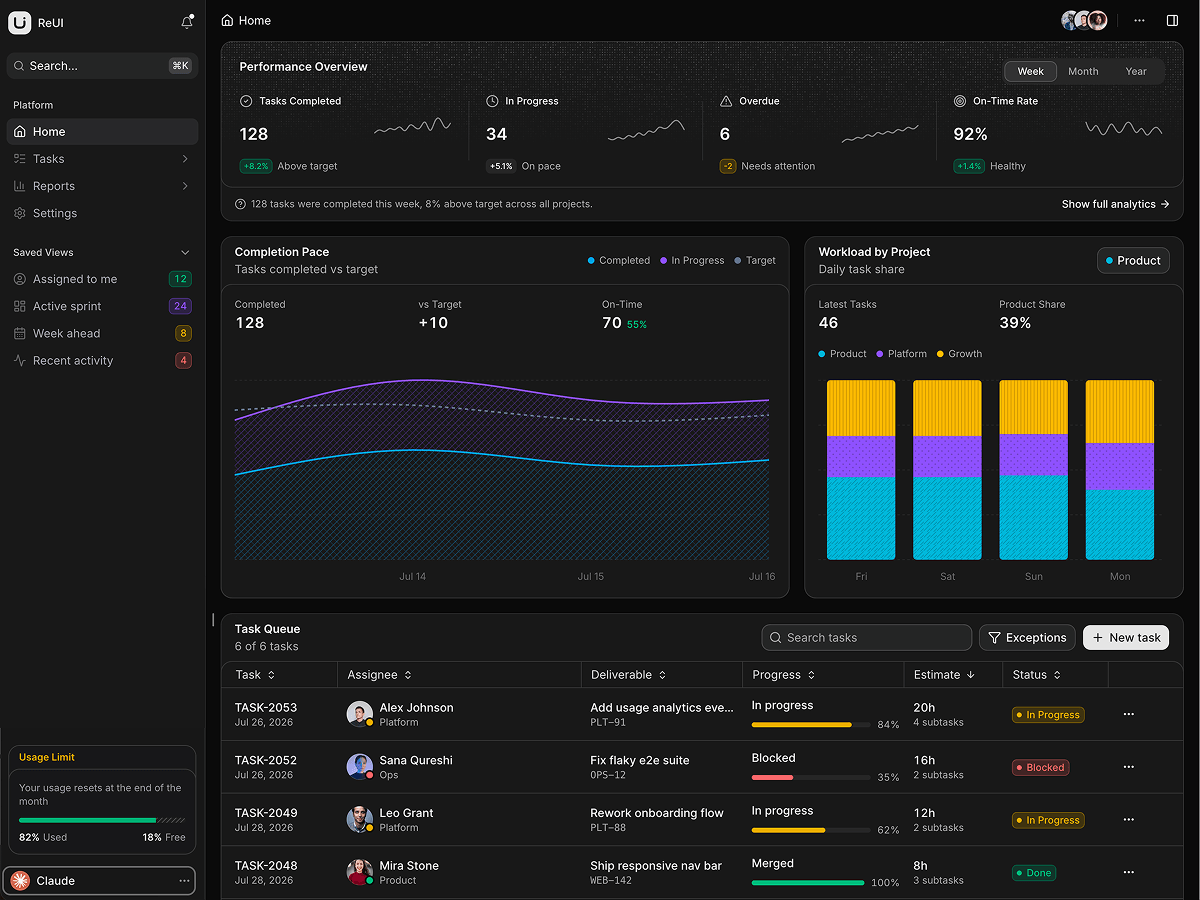
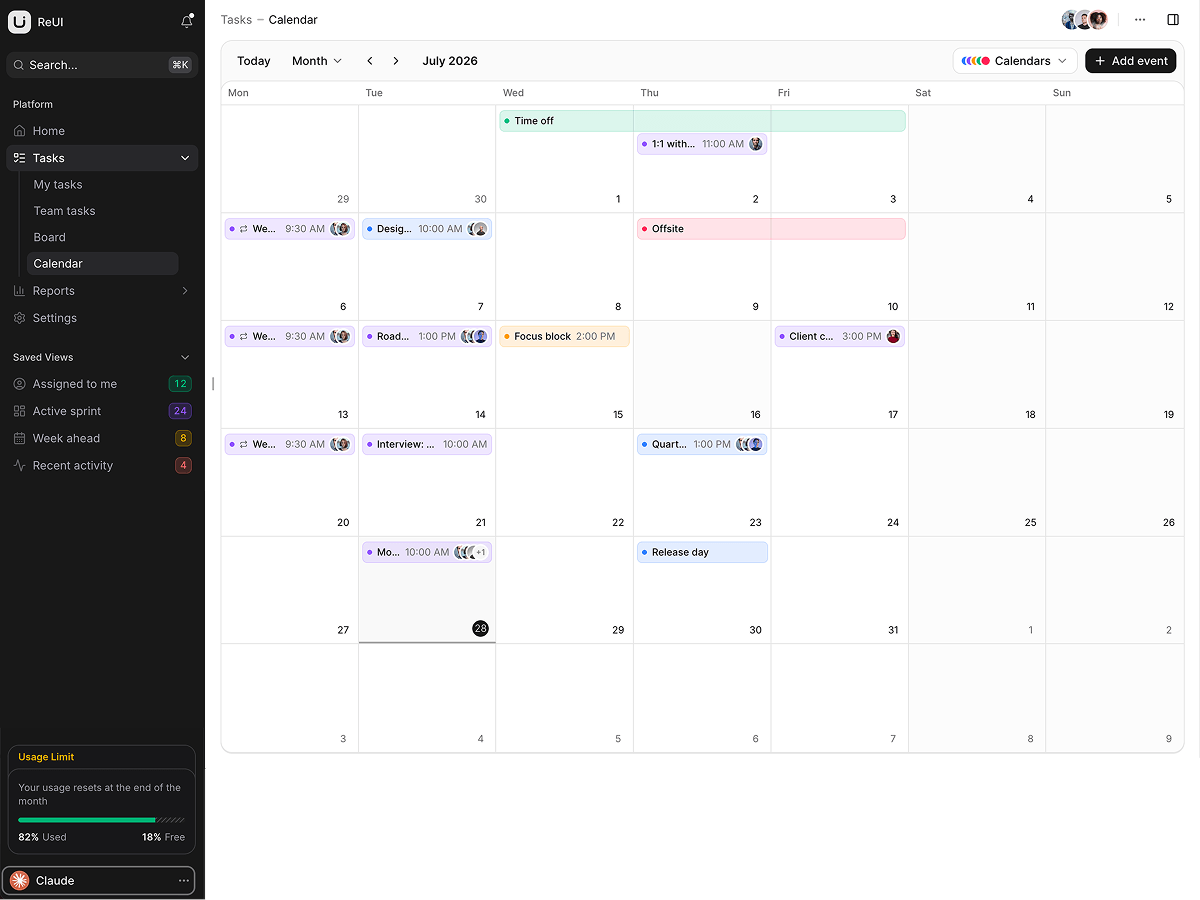
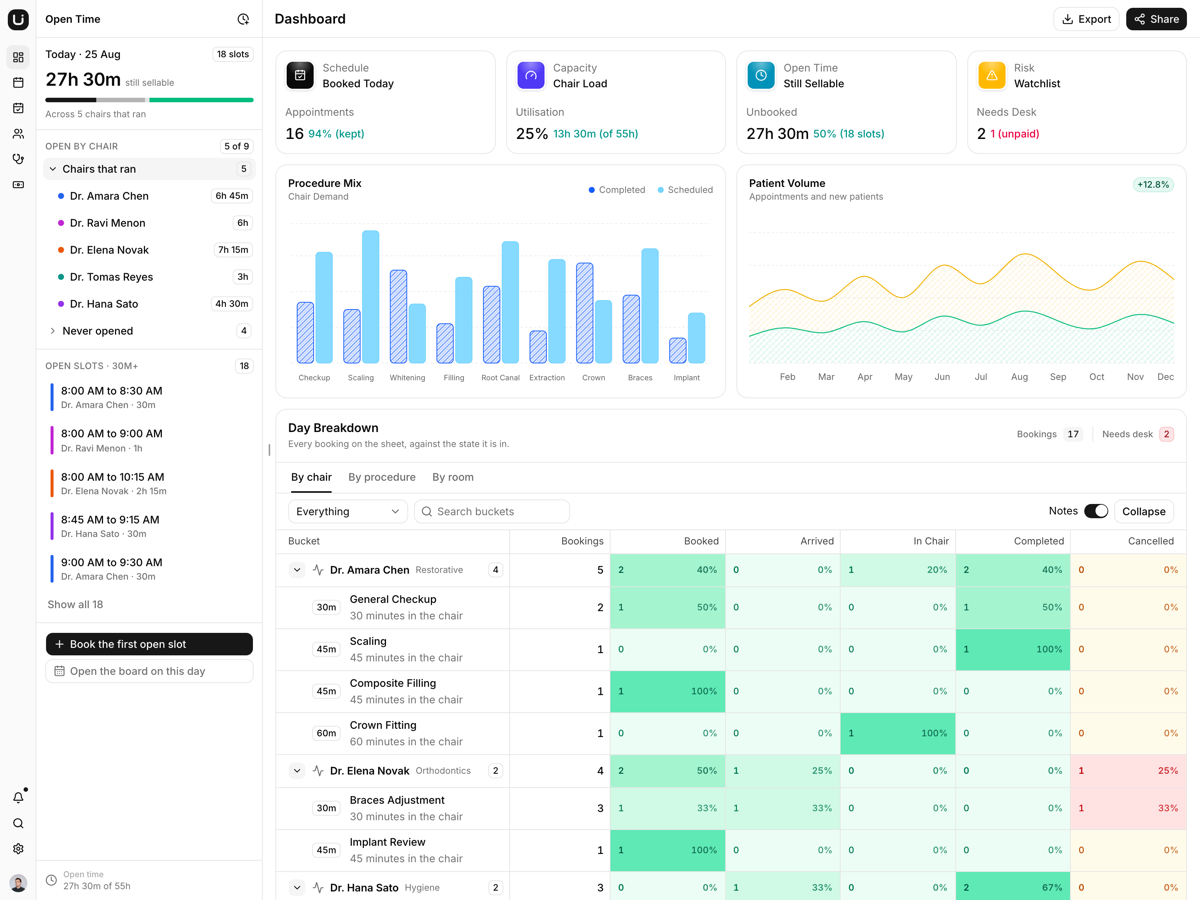
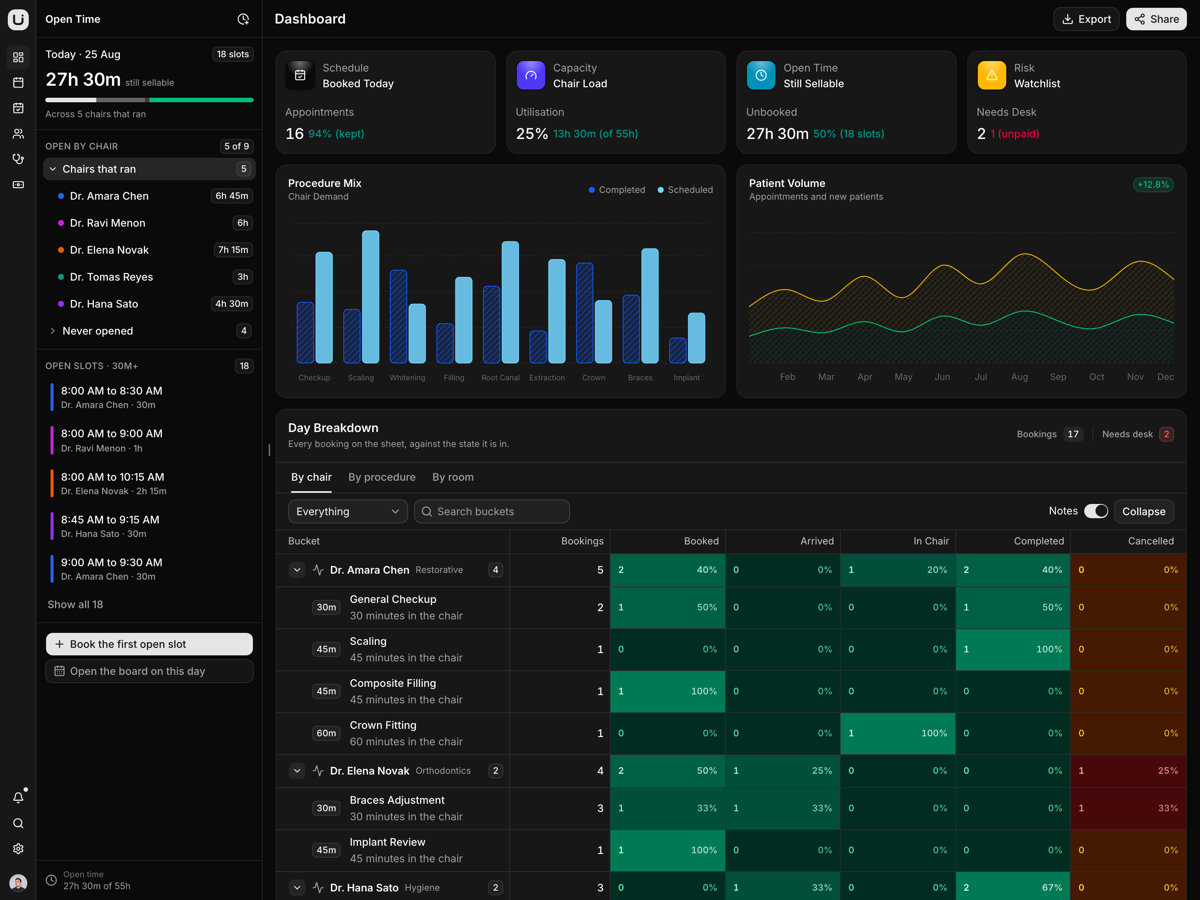
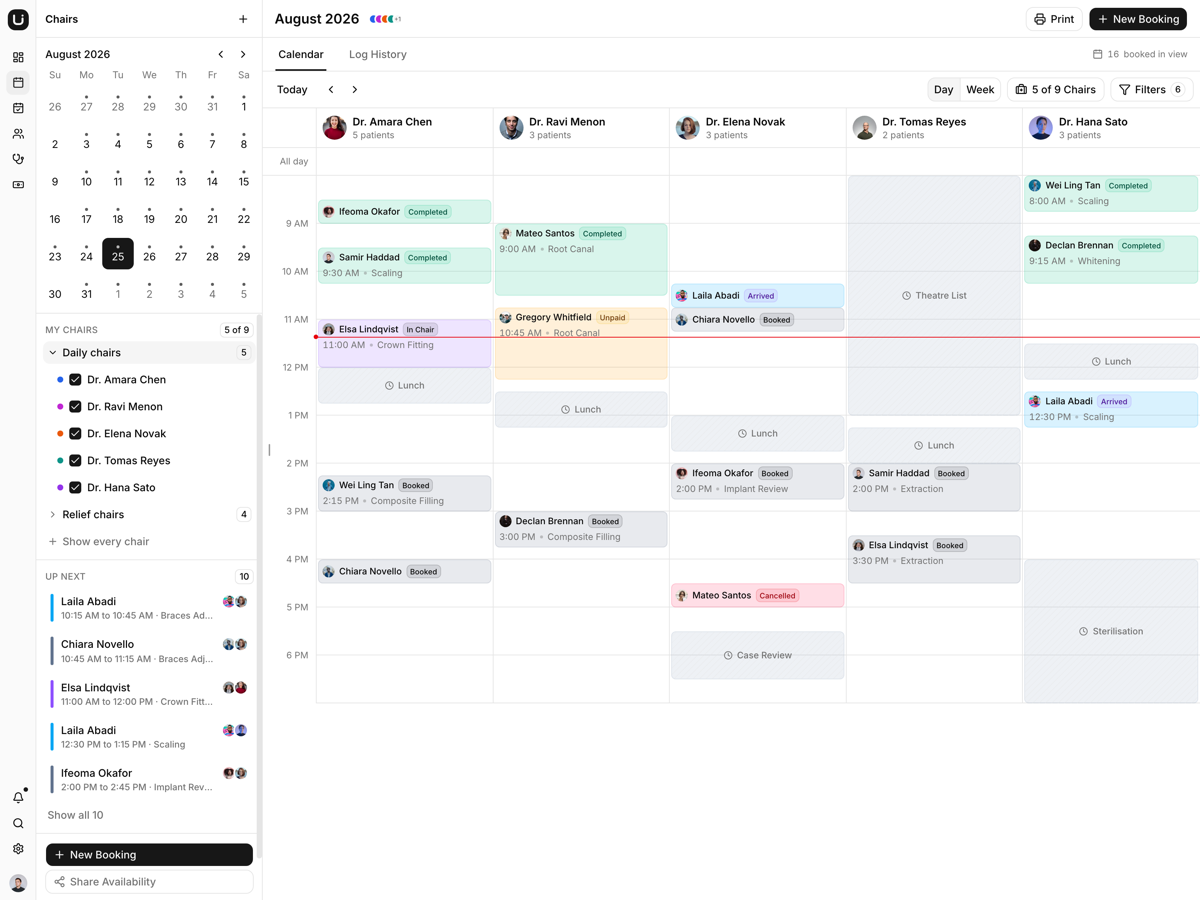
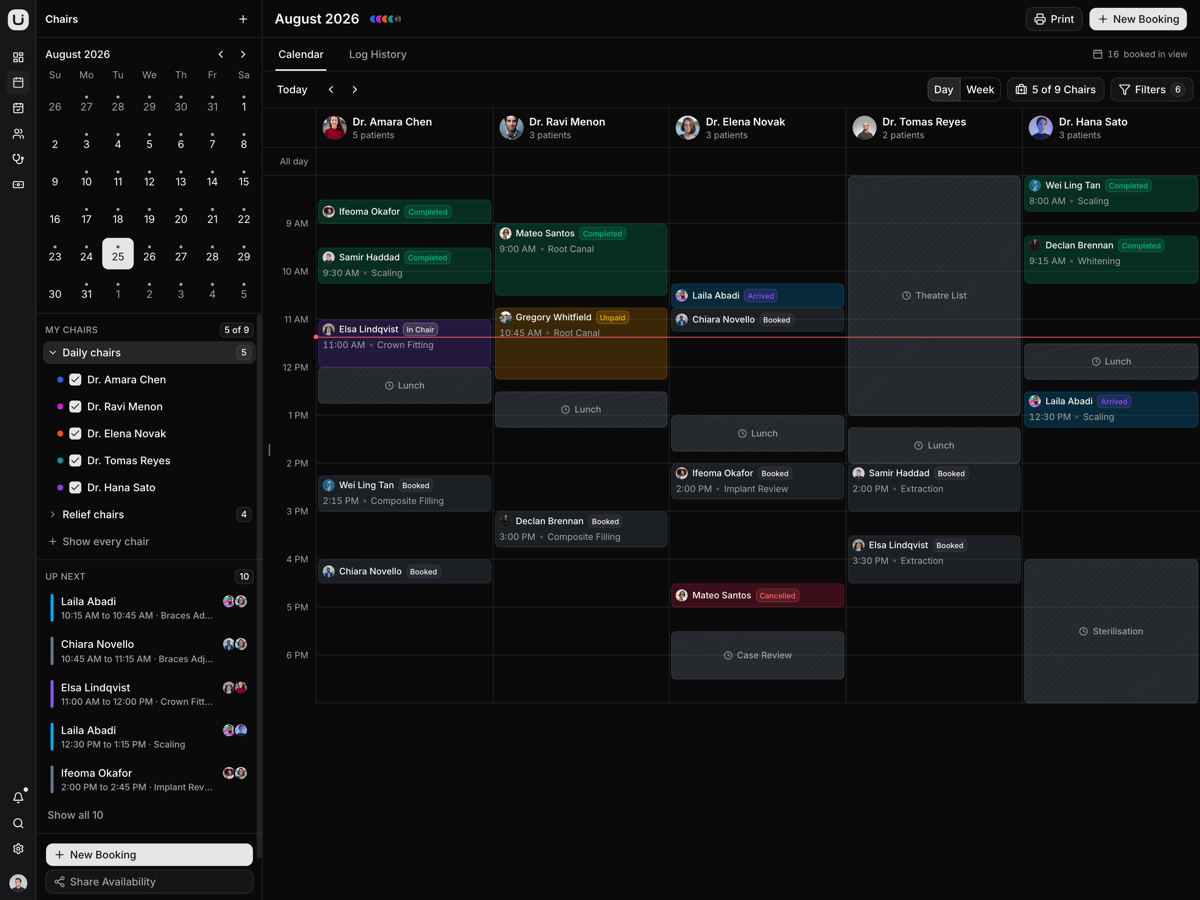
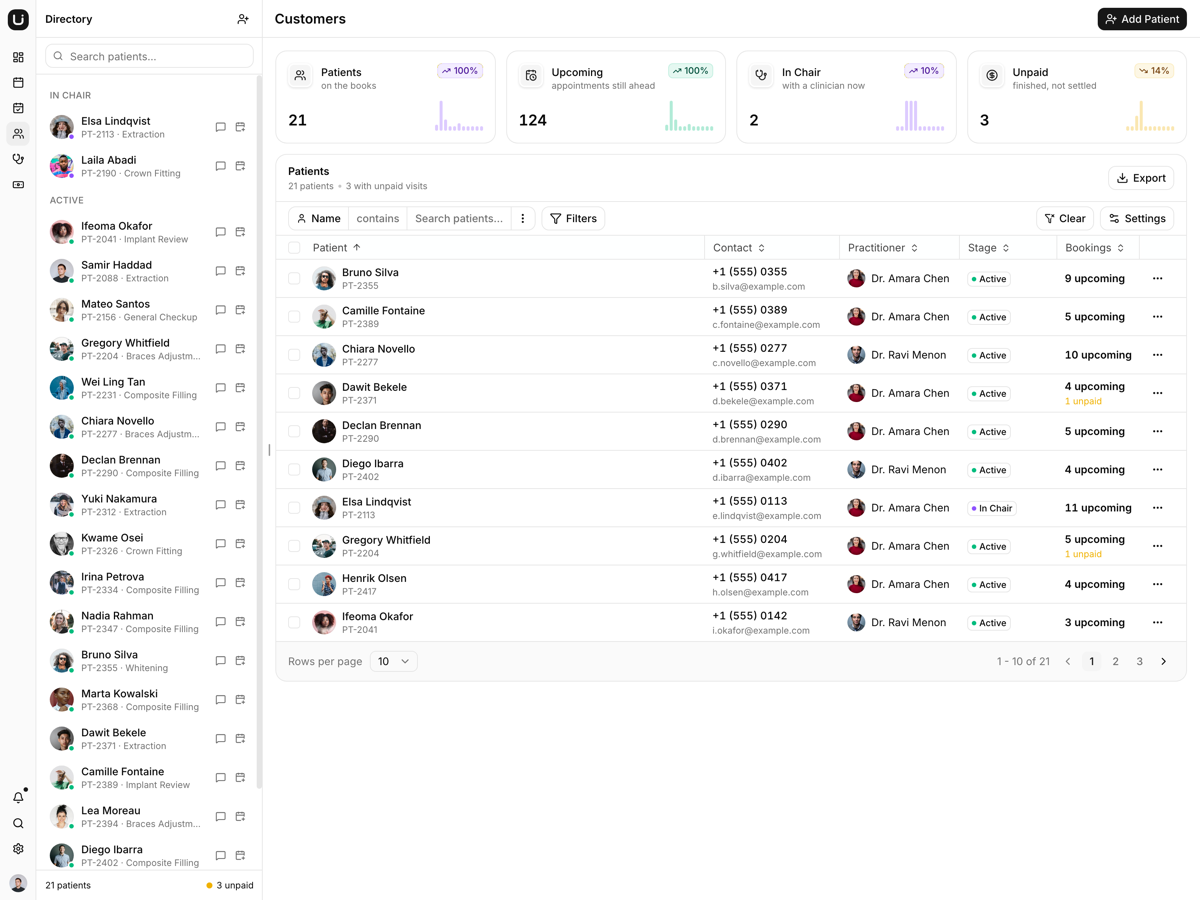
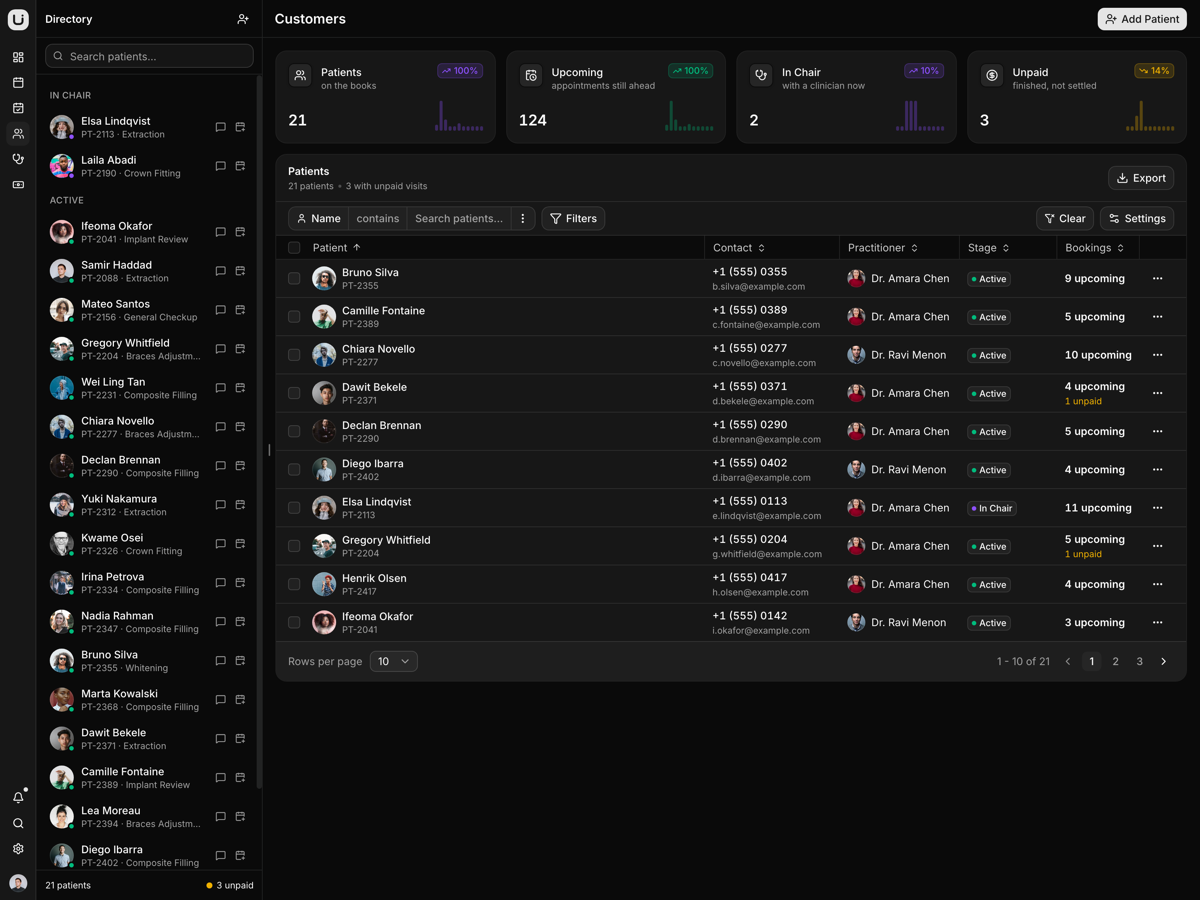
A dental front desk on one shared diary: chair board, week planner, patient directory, staff kanban, an invoice ledger derived from treatment, and clinic settings.
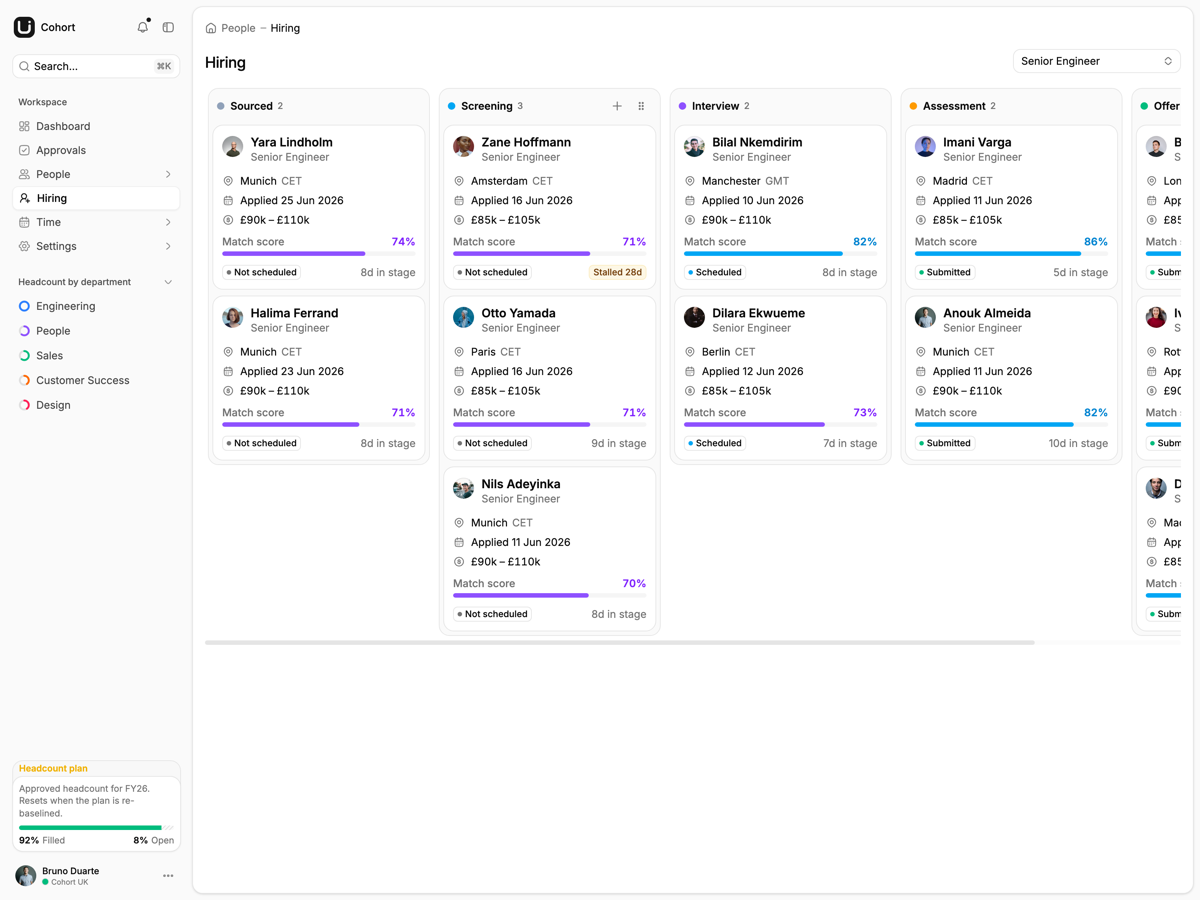
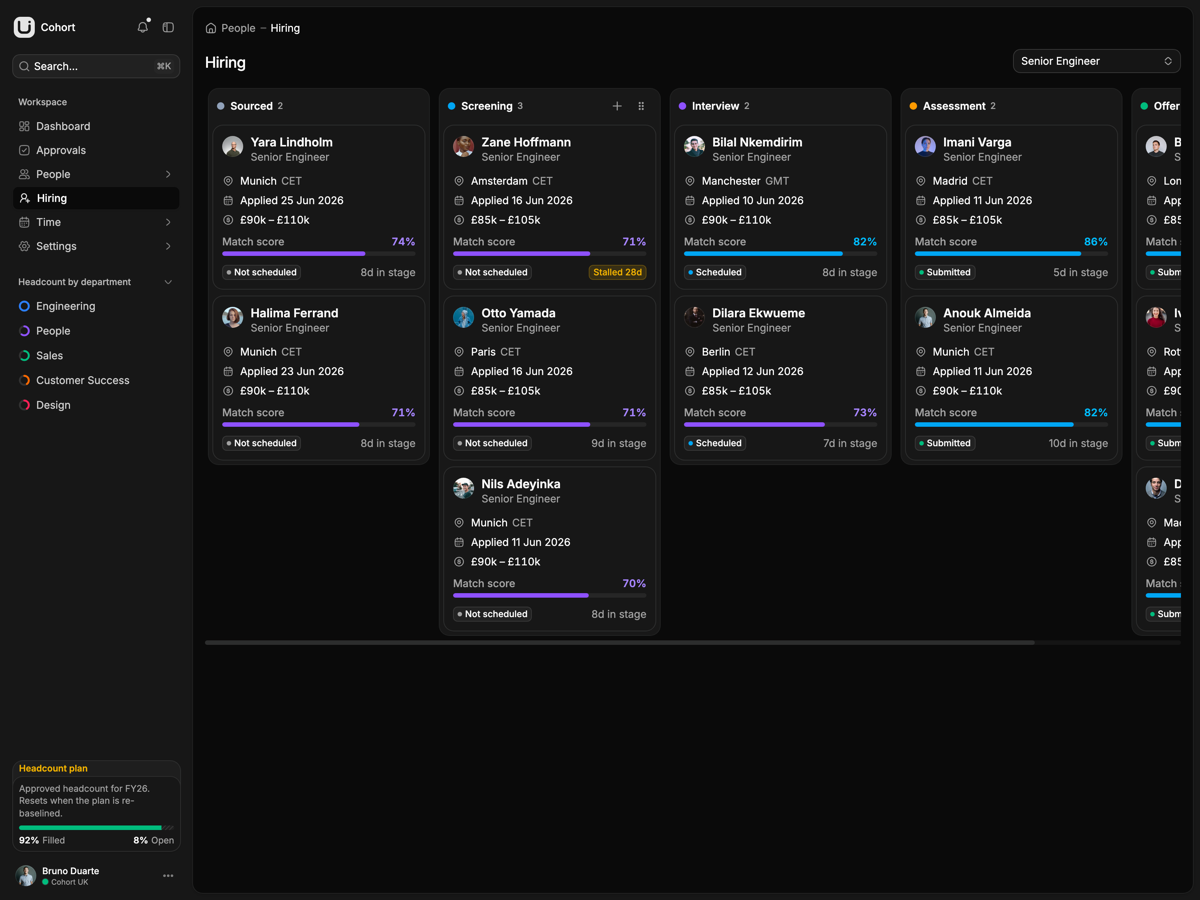
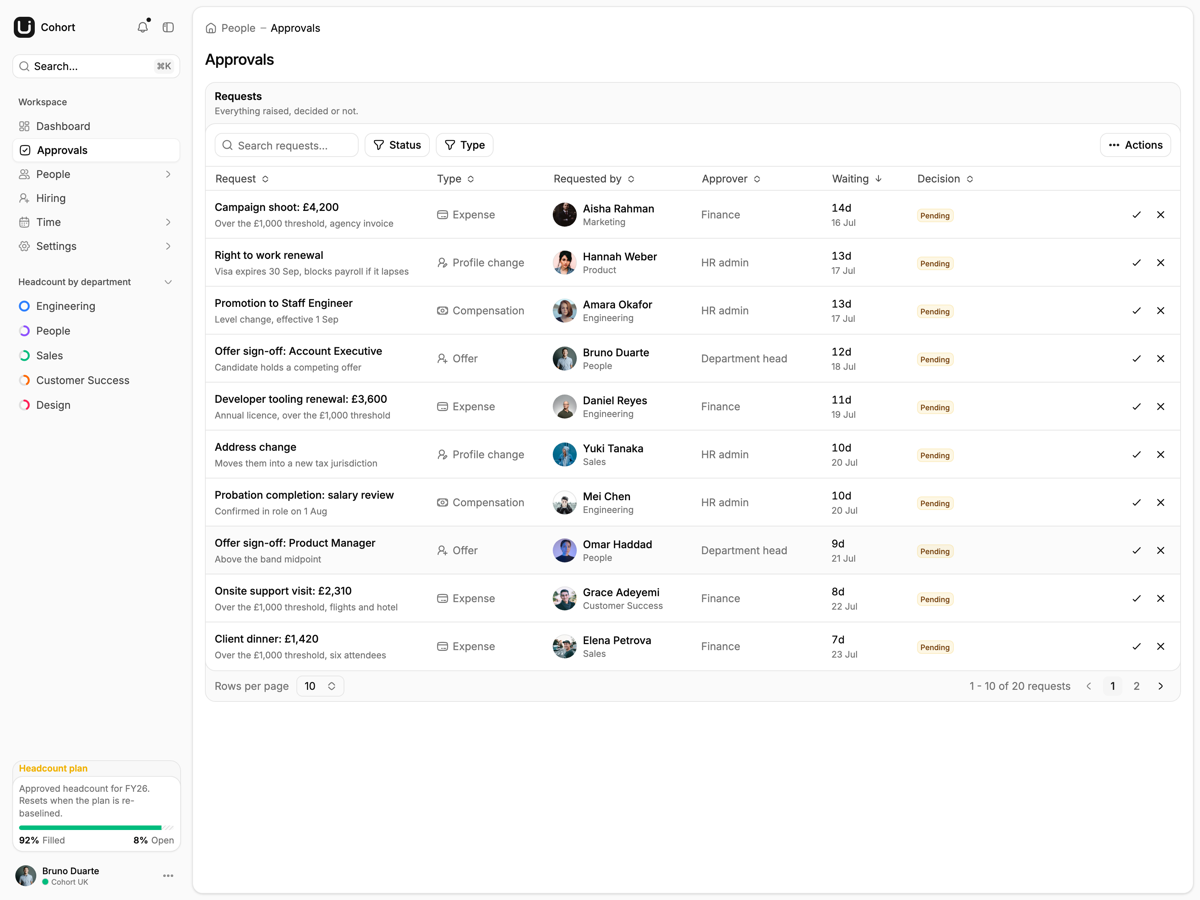
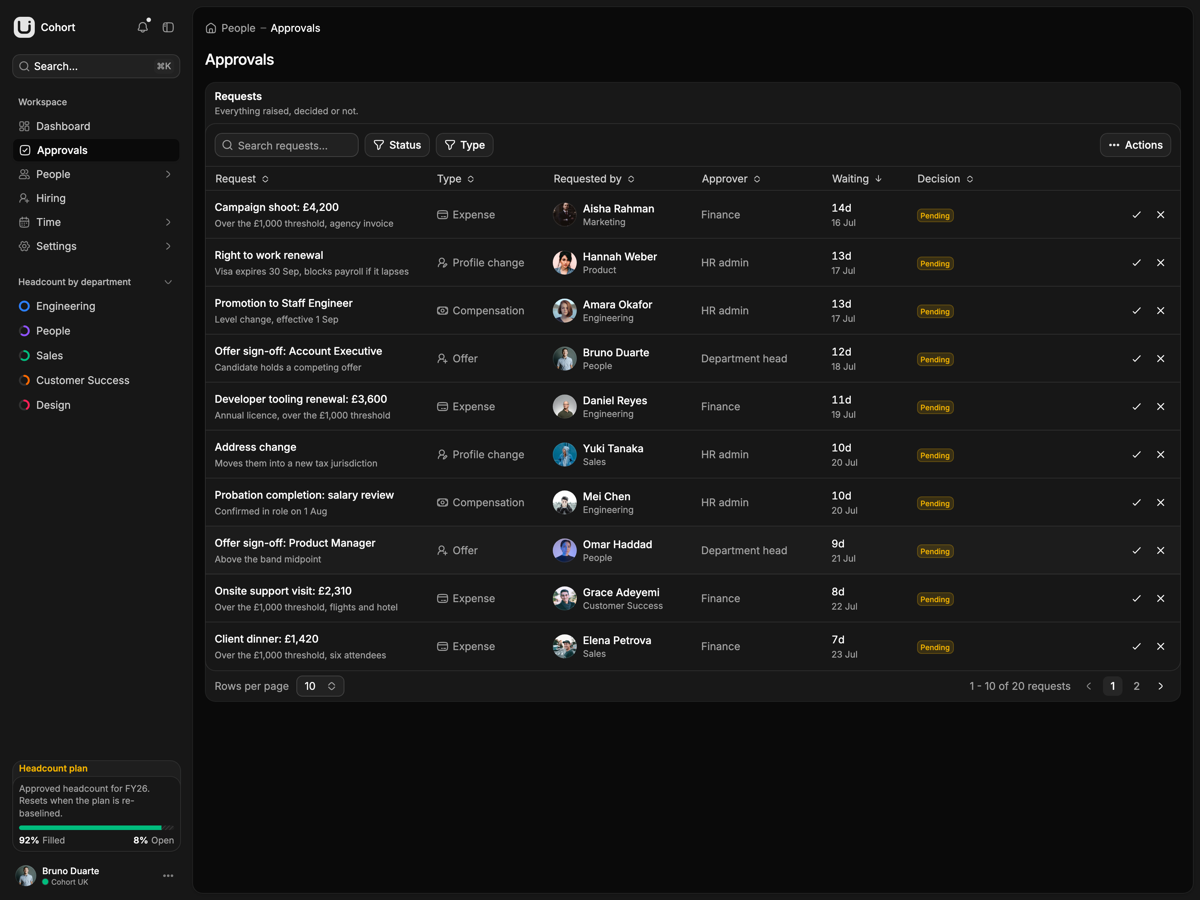
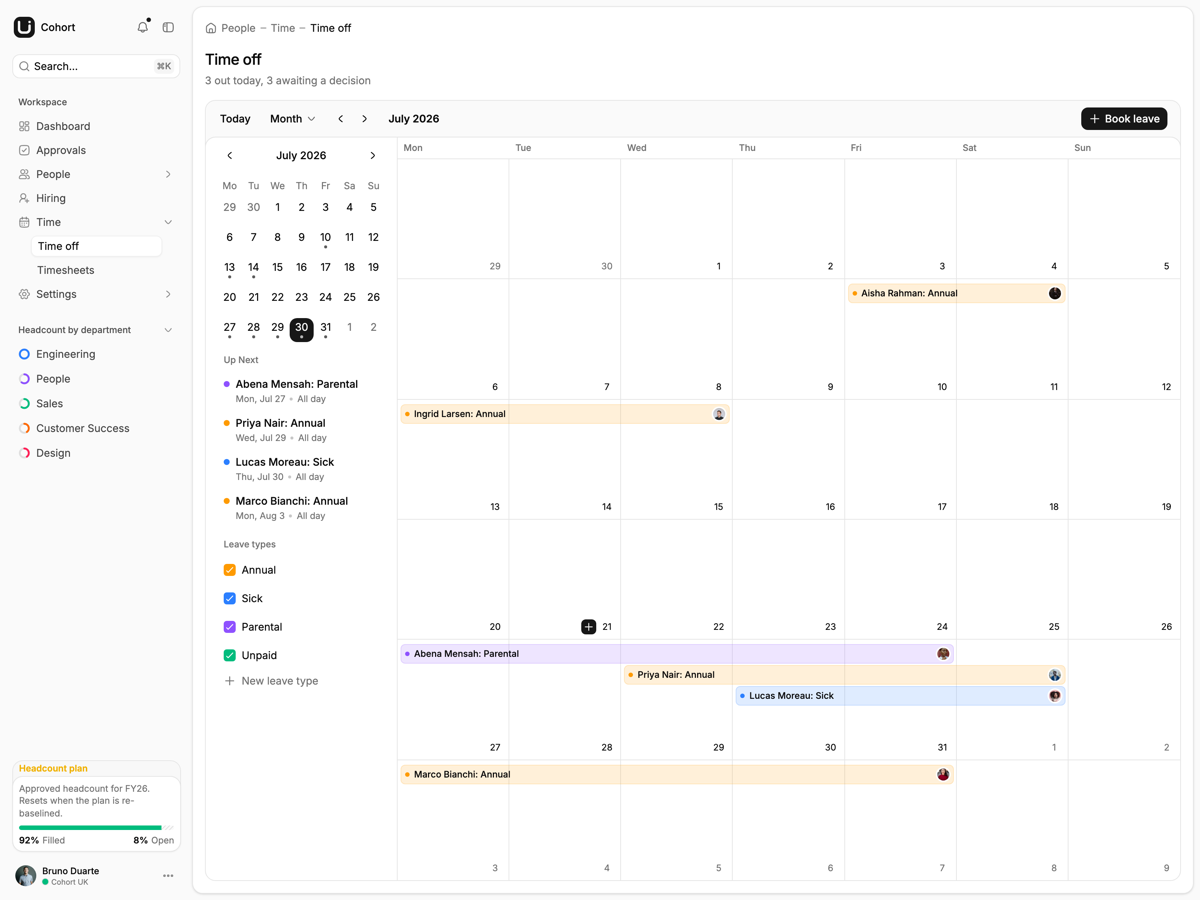
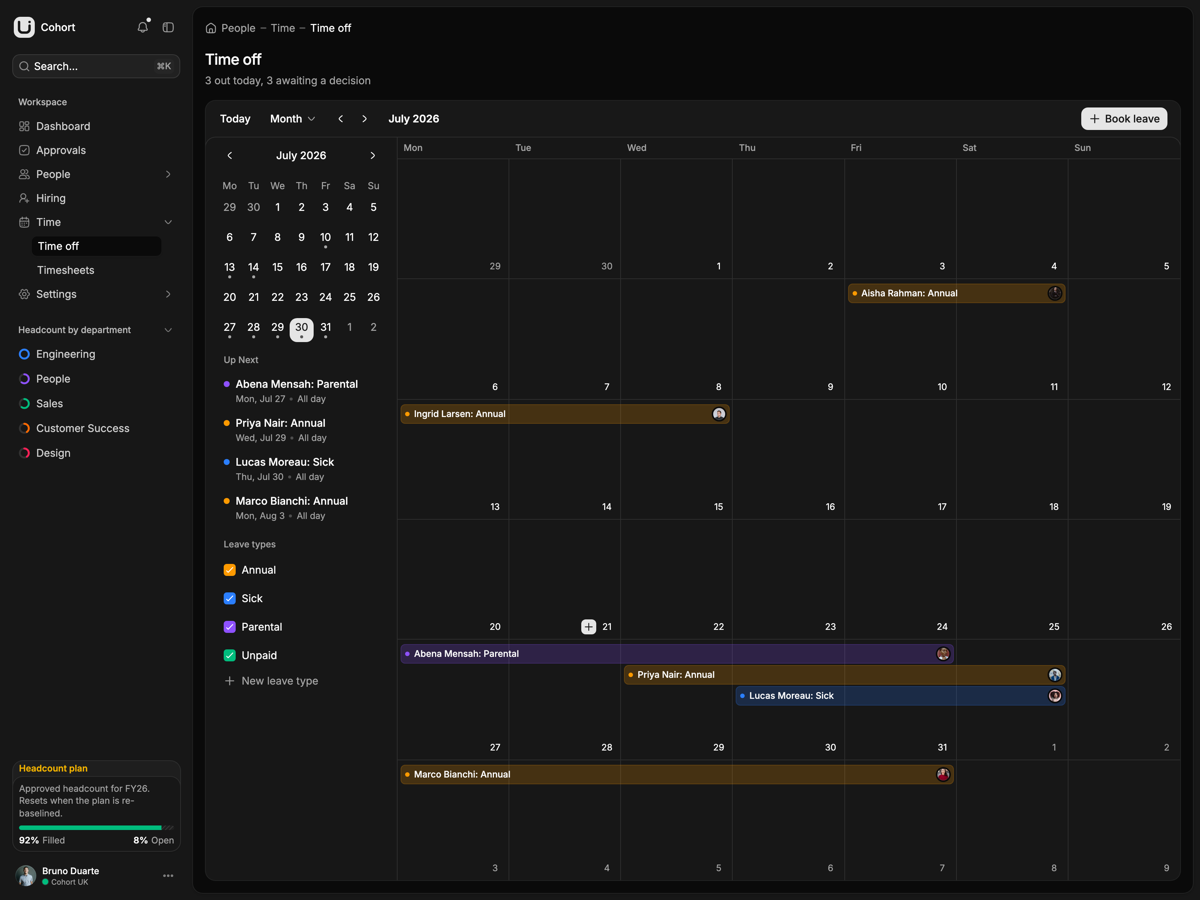
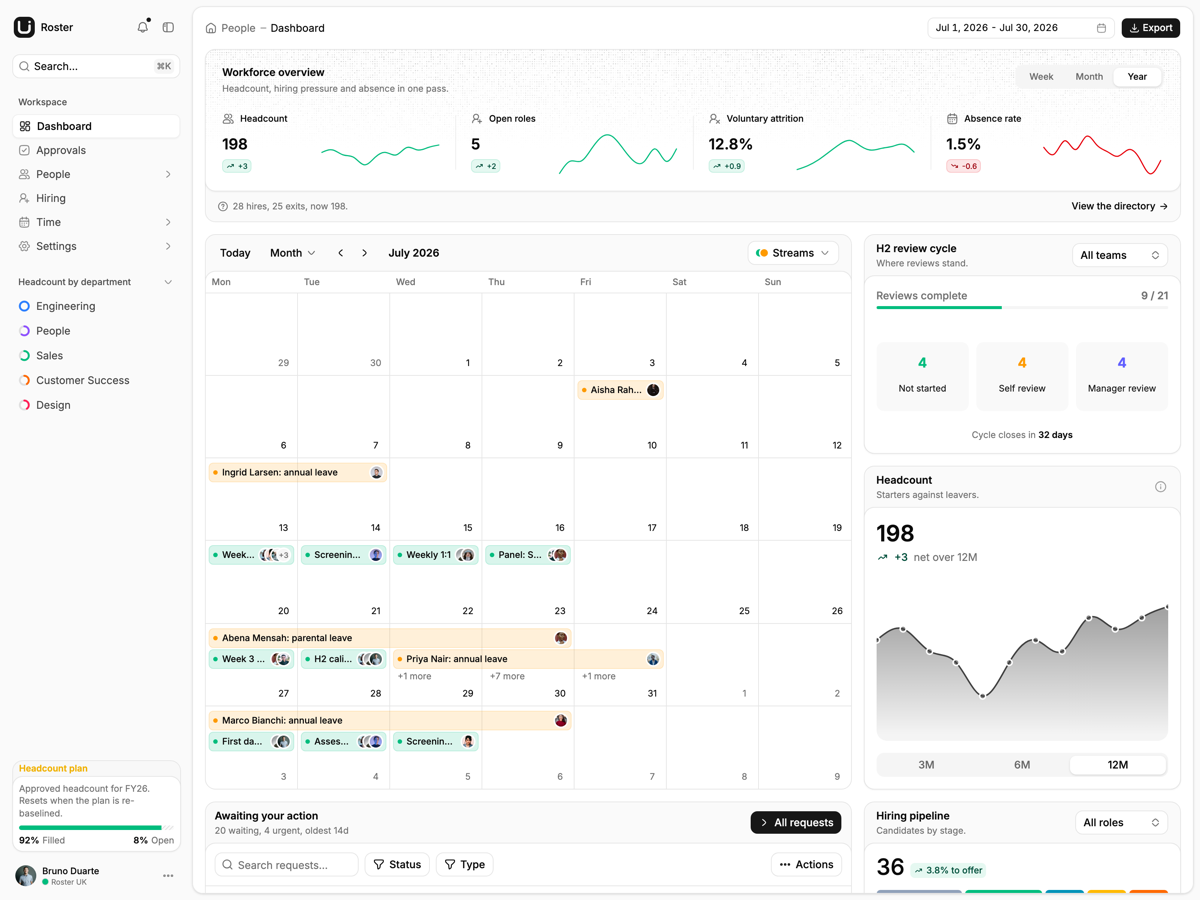
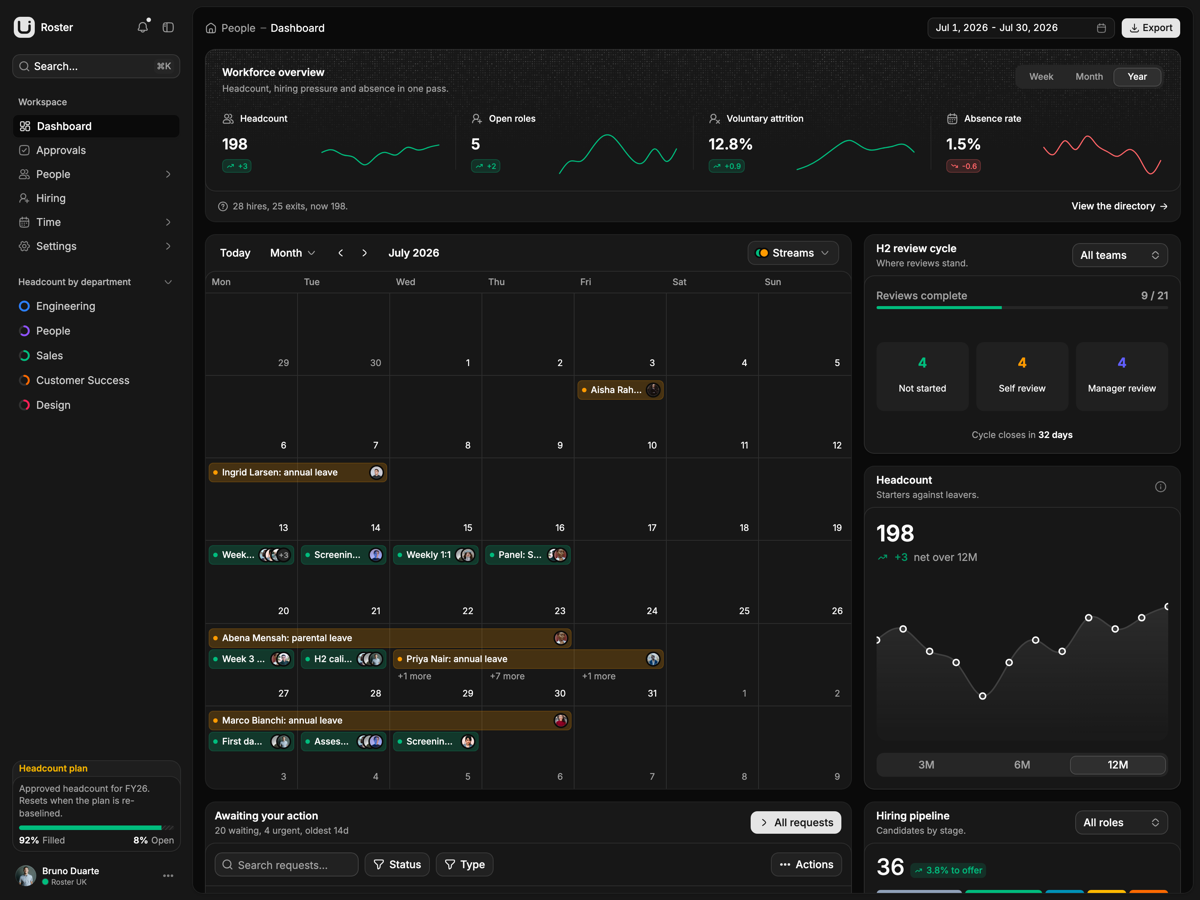
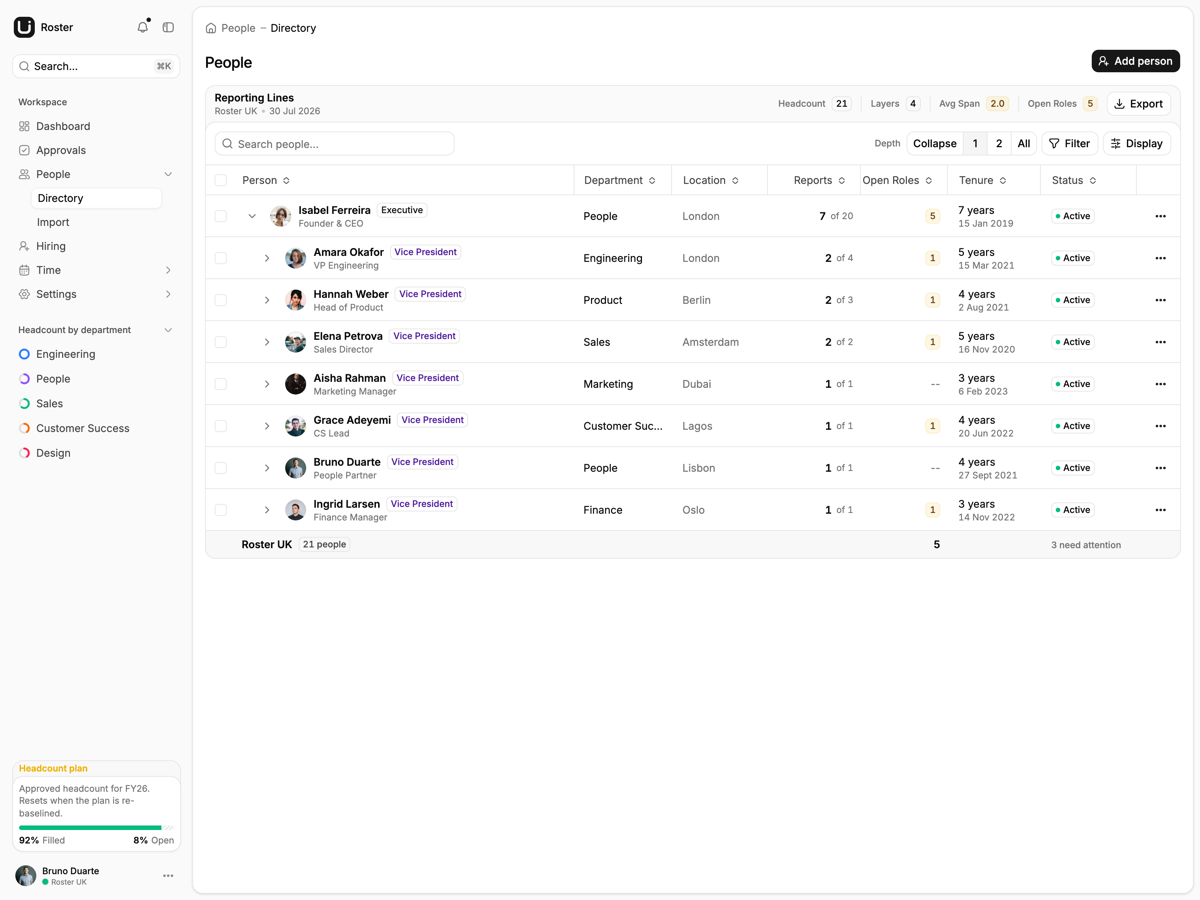
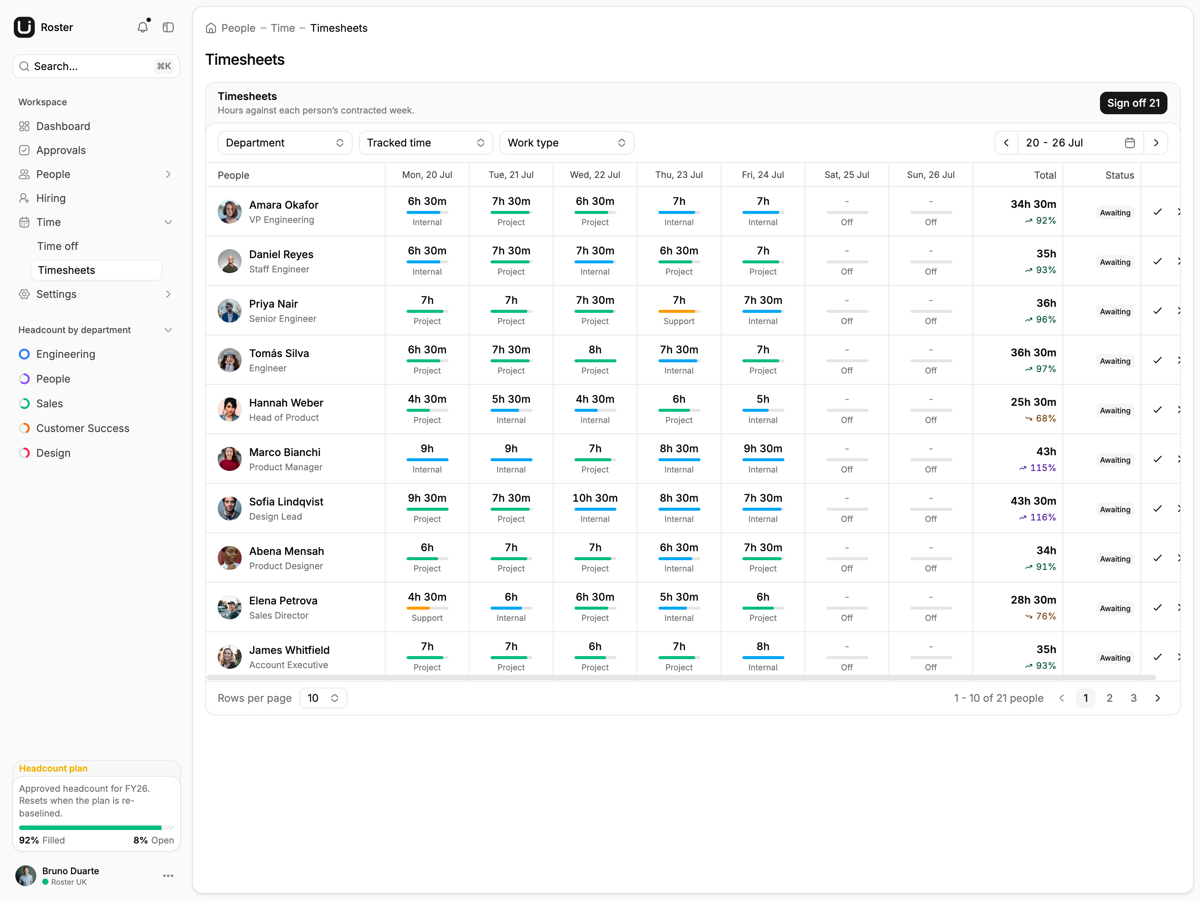
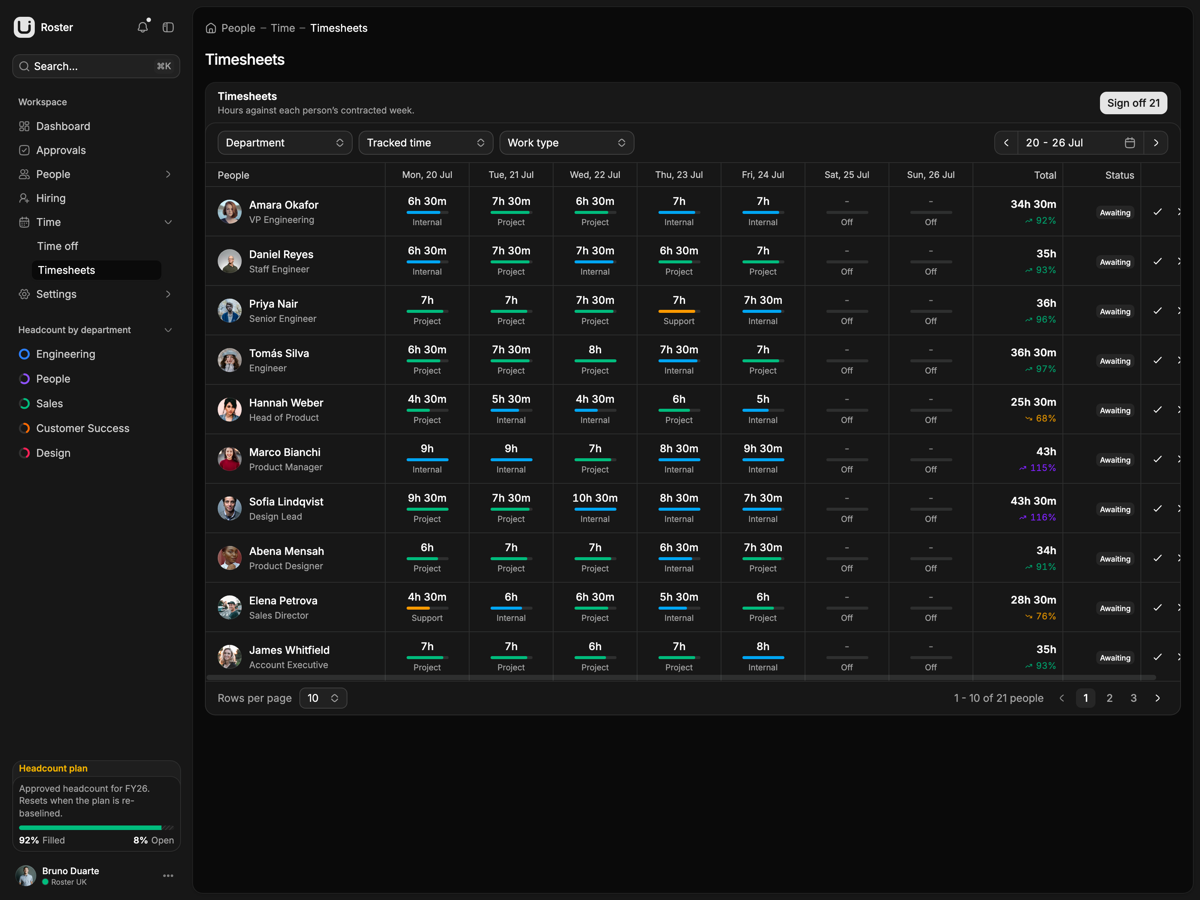
Directory, reporting tree, leave calendar, timesheets, hiring board and approvals, running on Laravel 13 with Eloquent tables behind every write.
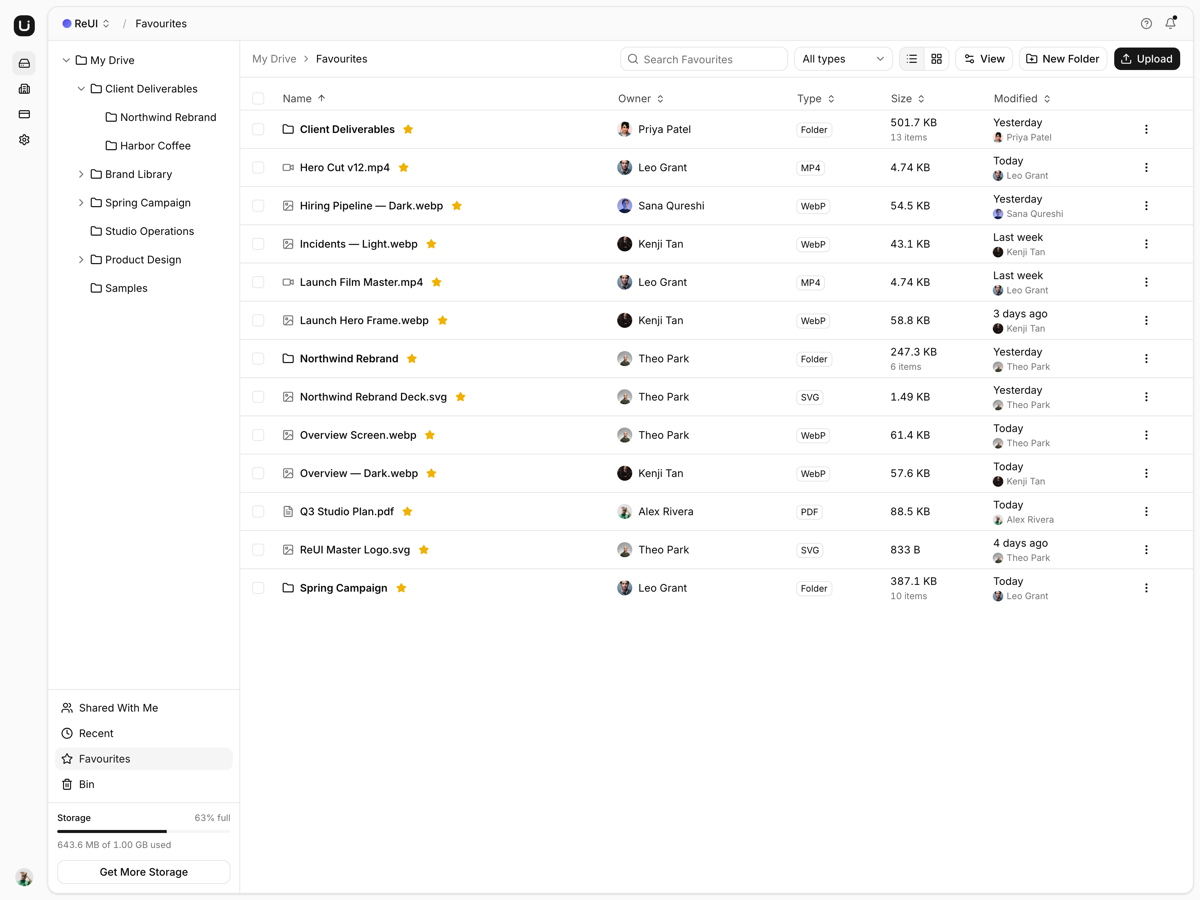
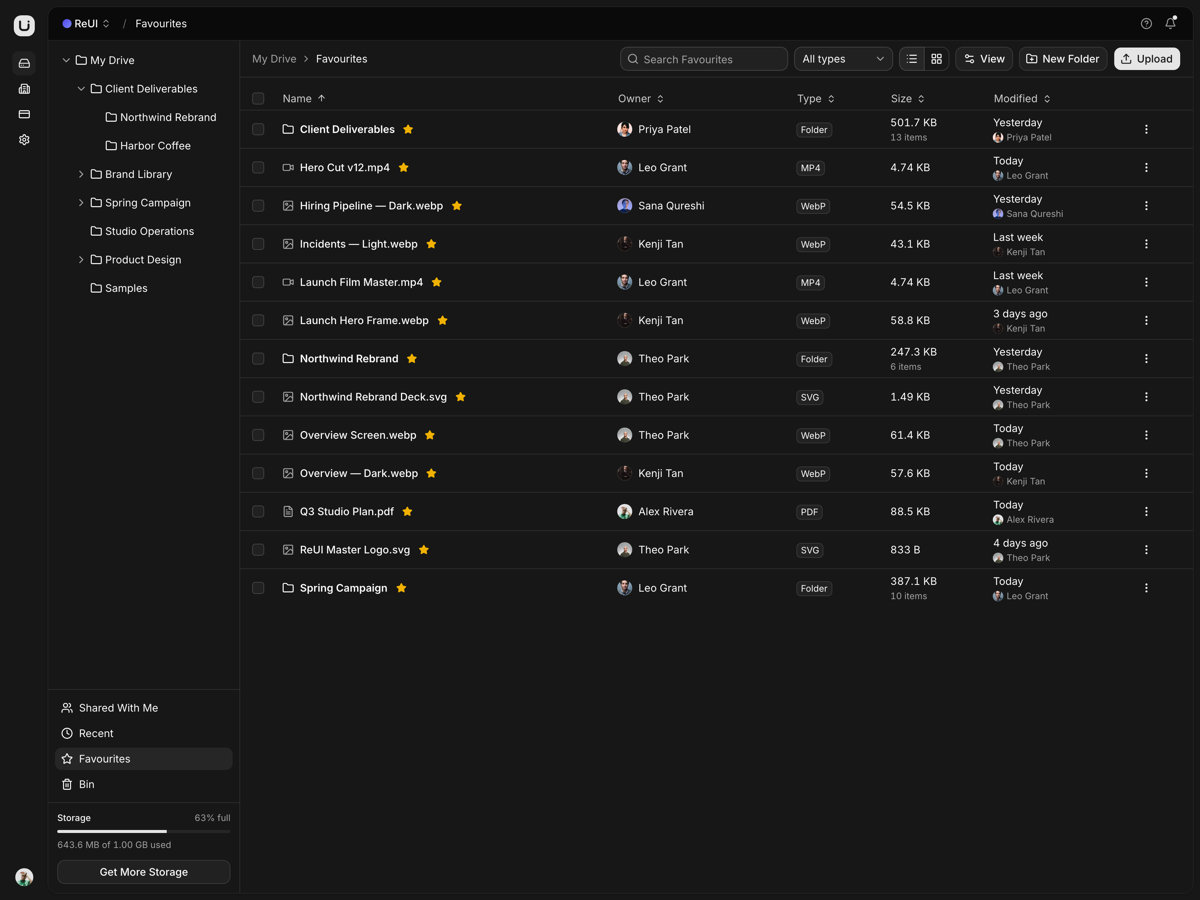
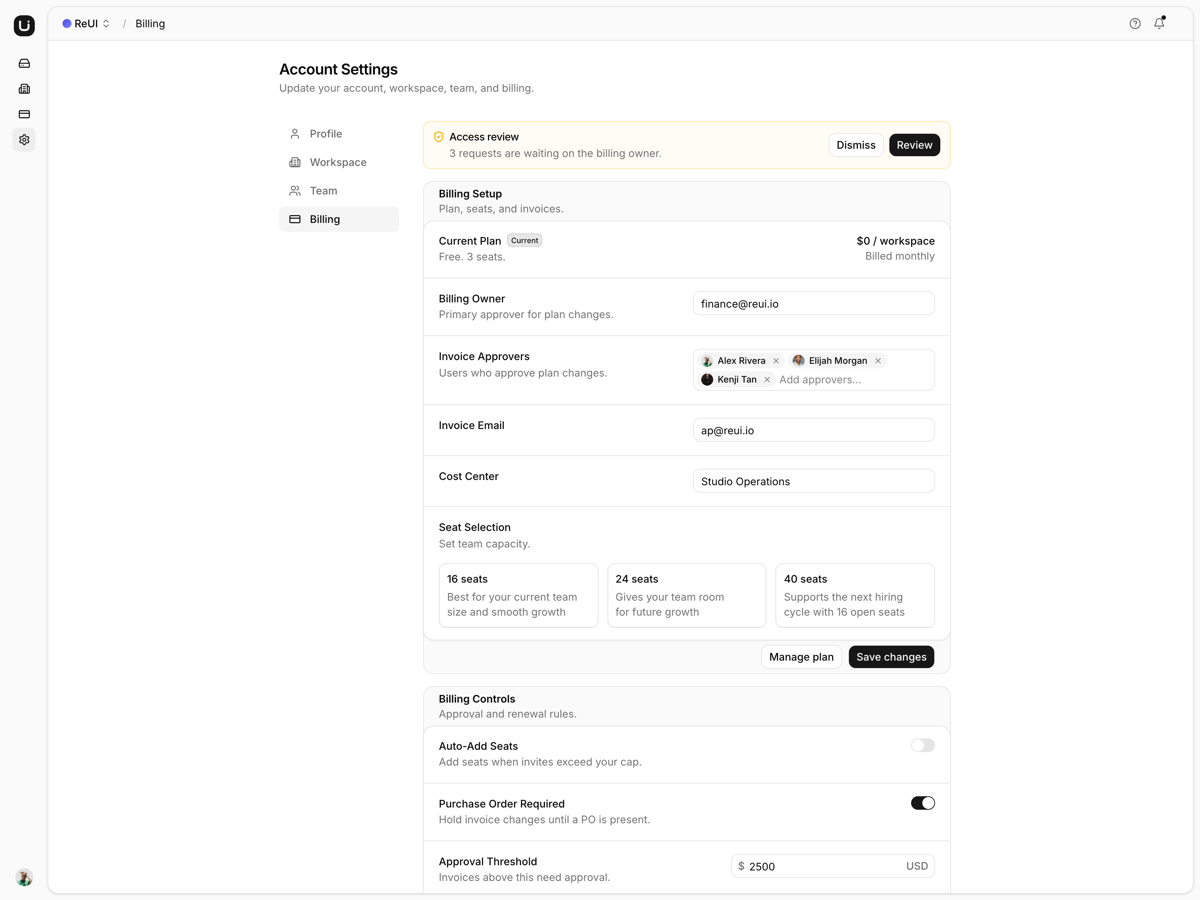
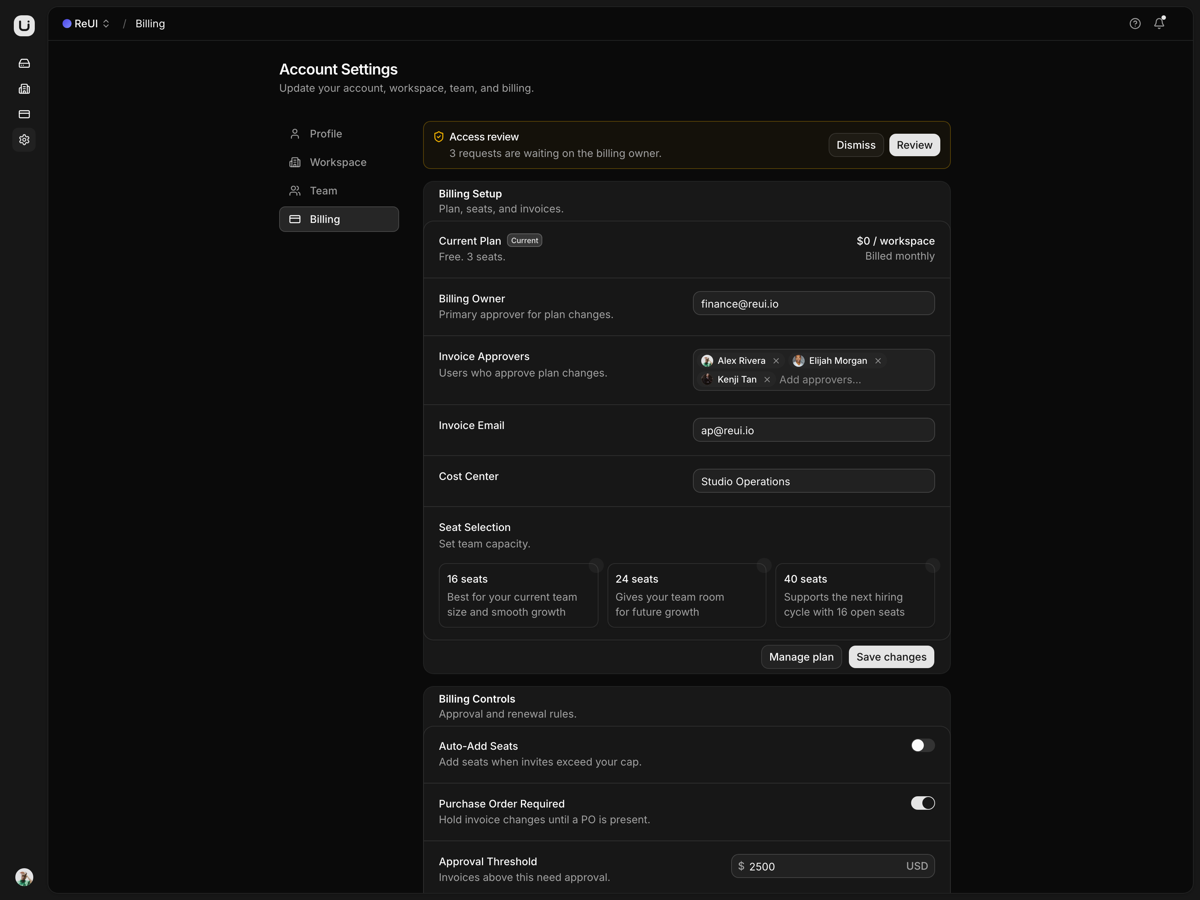
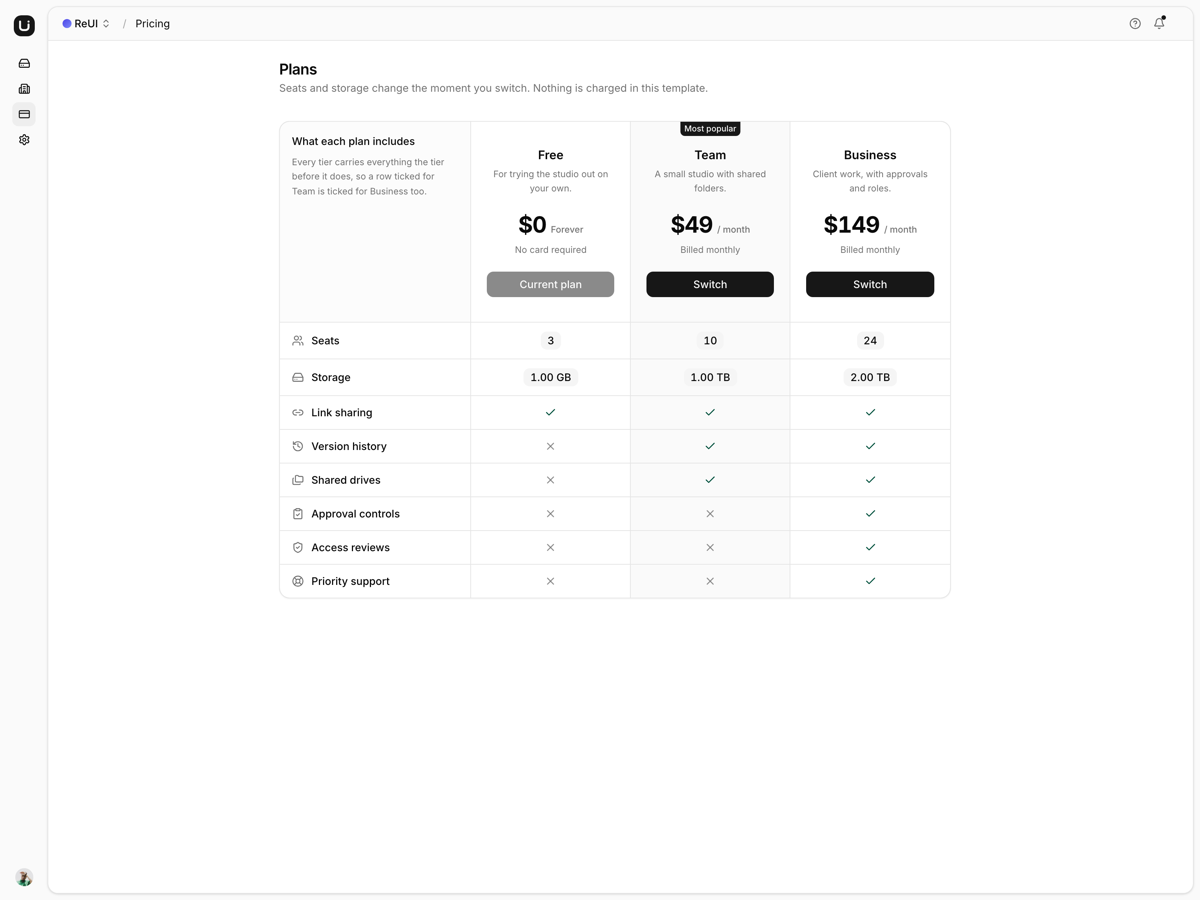
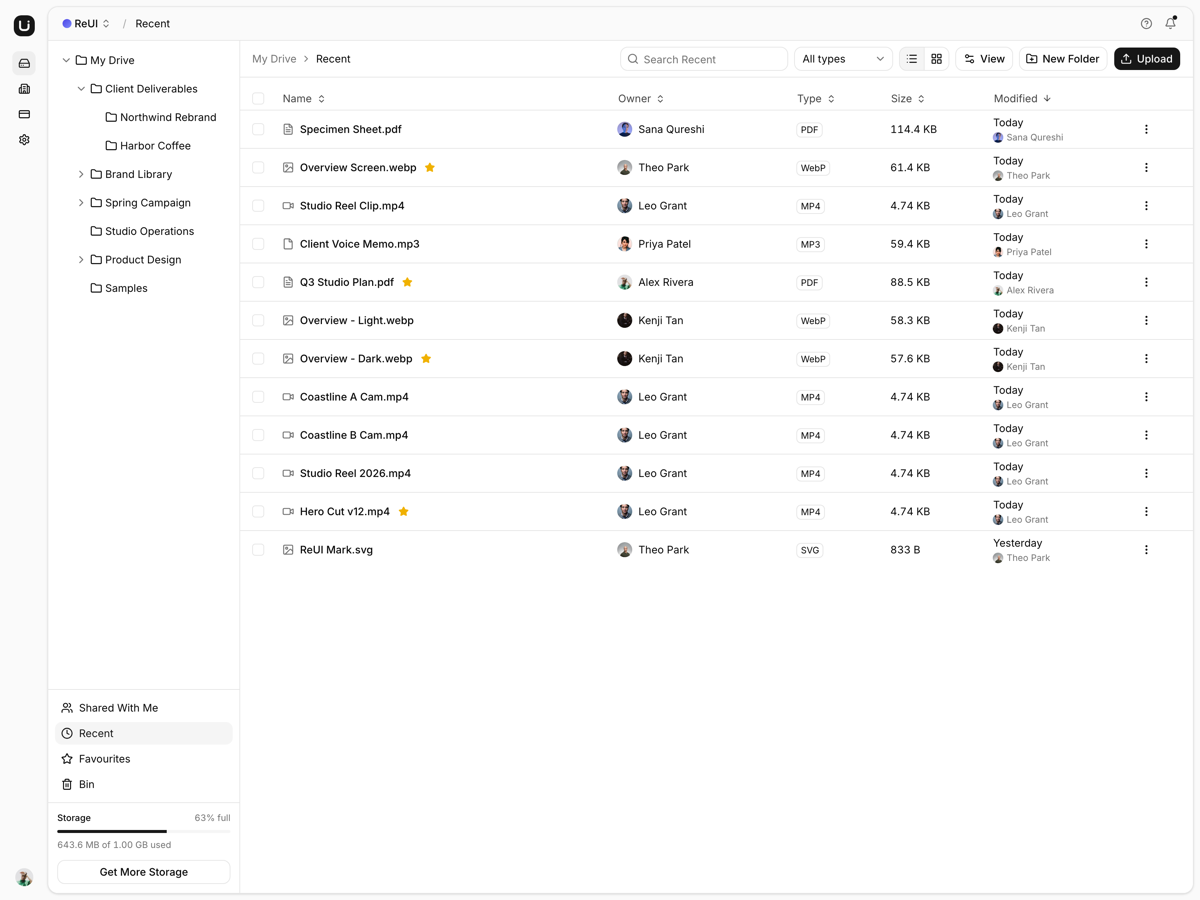
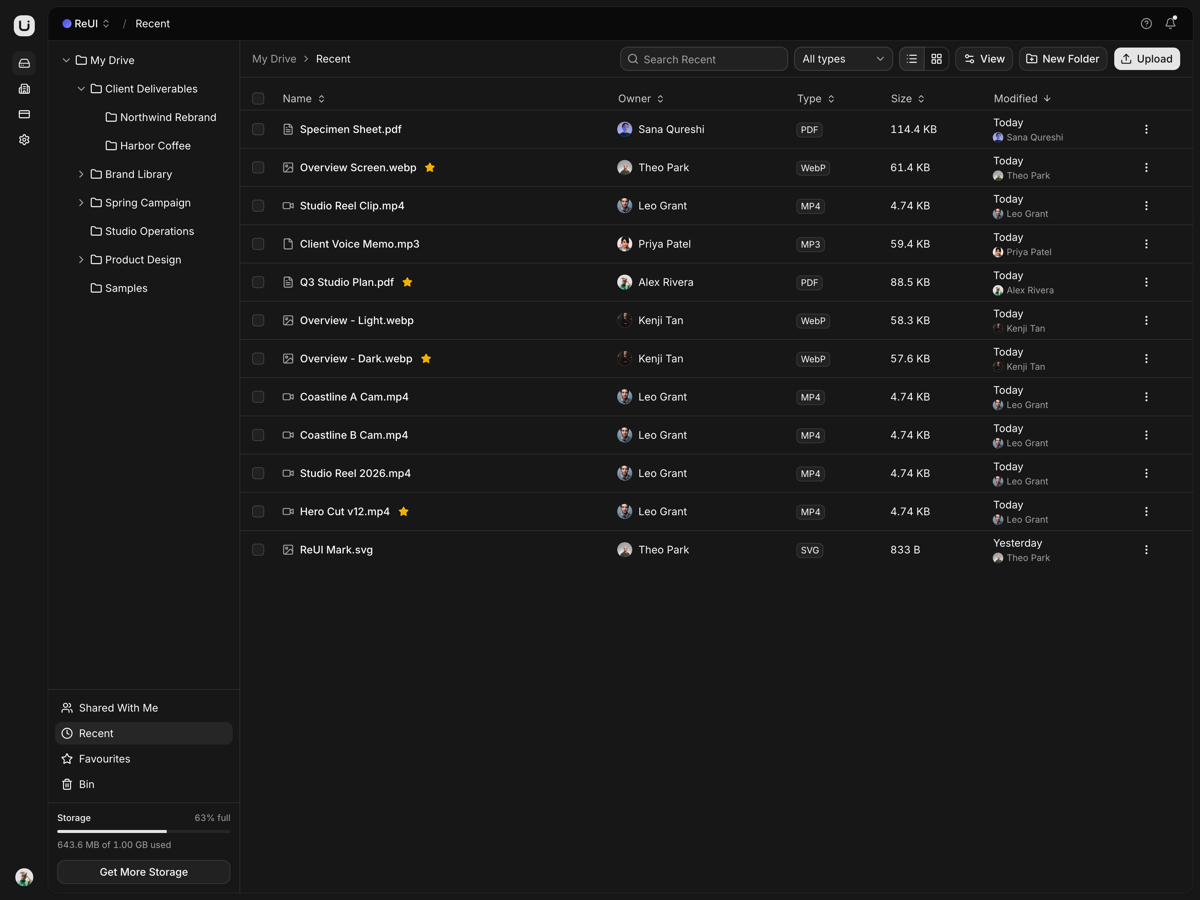
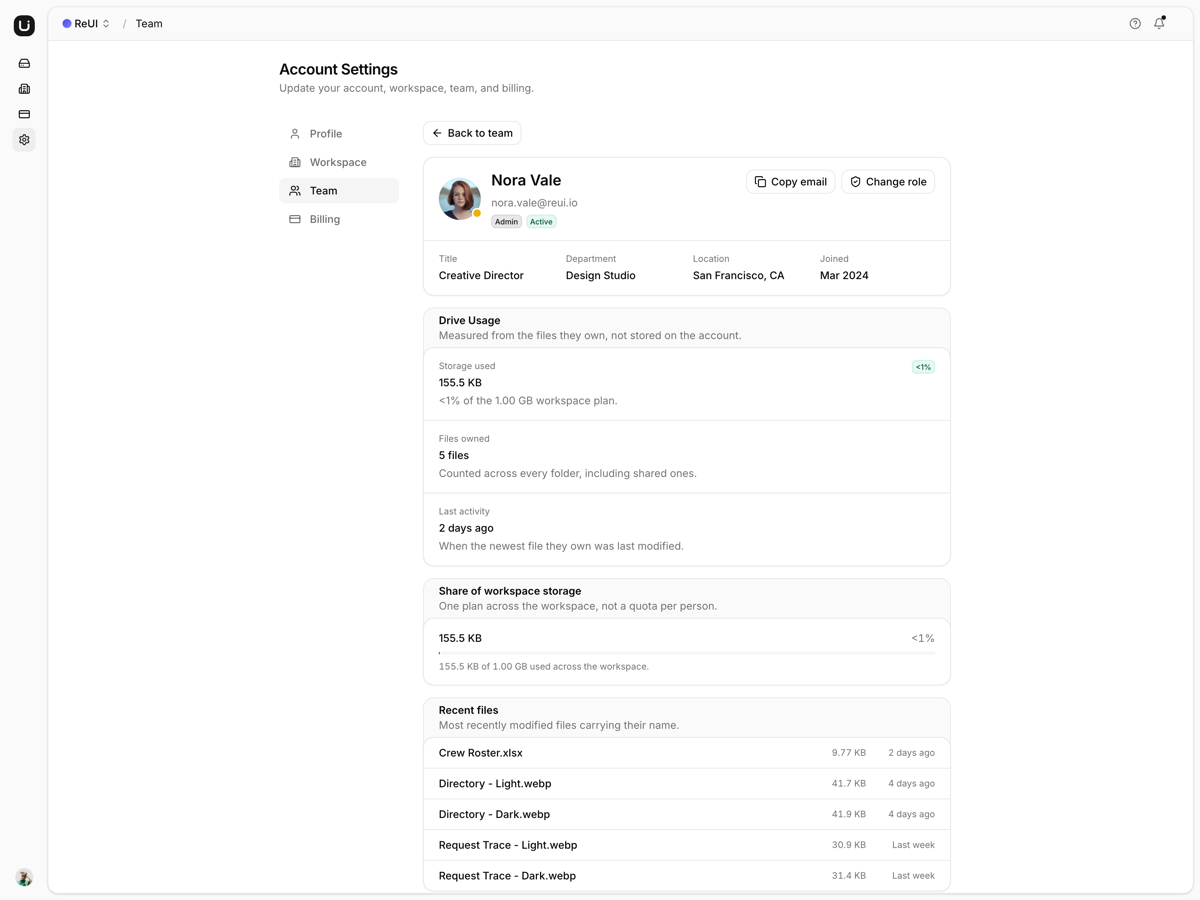
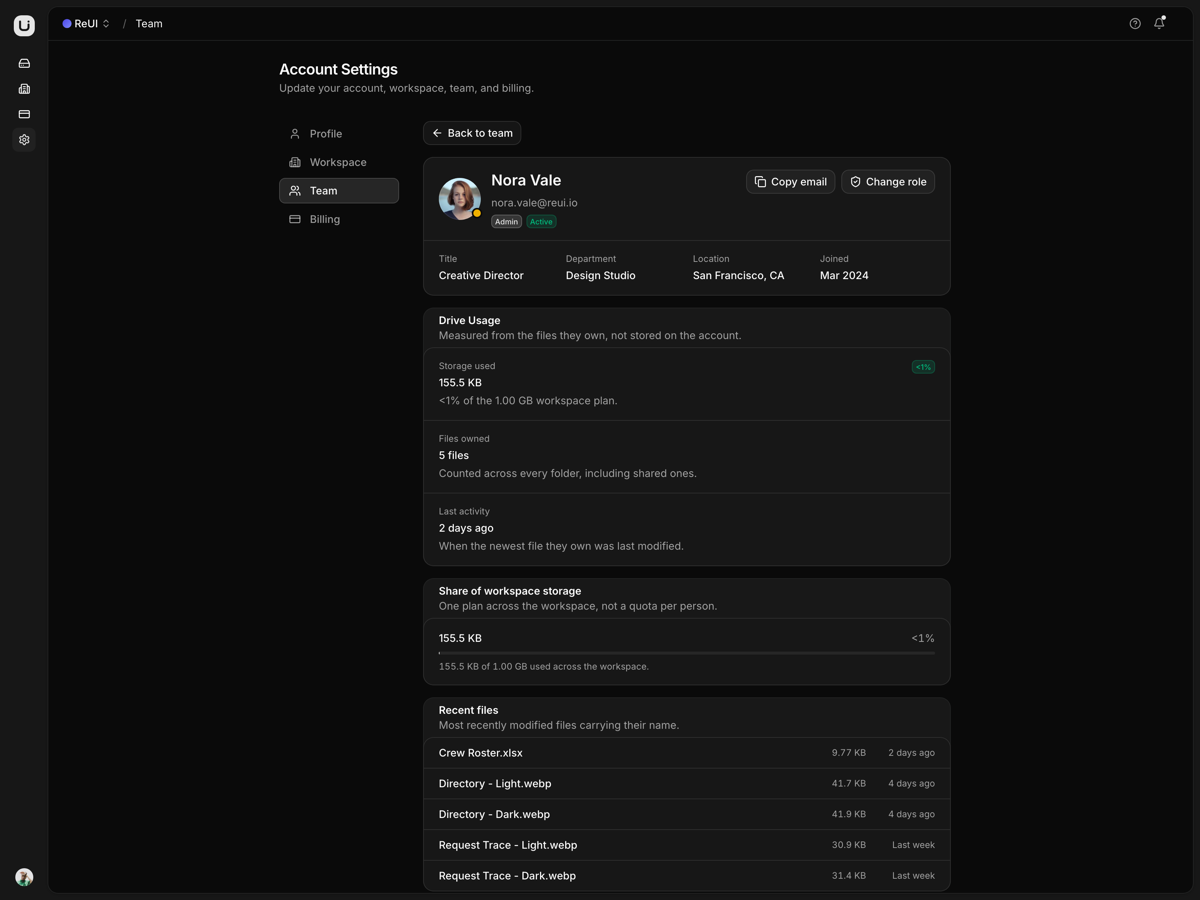
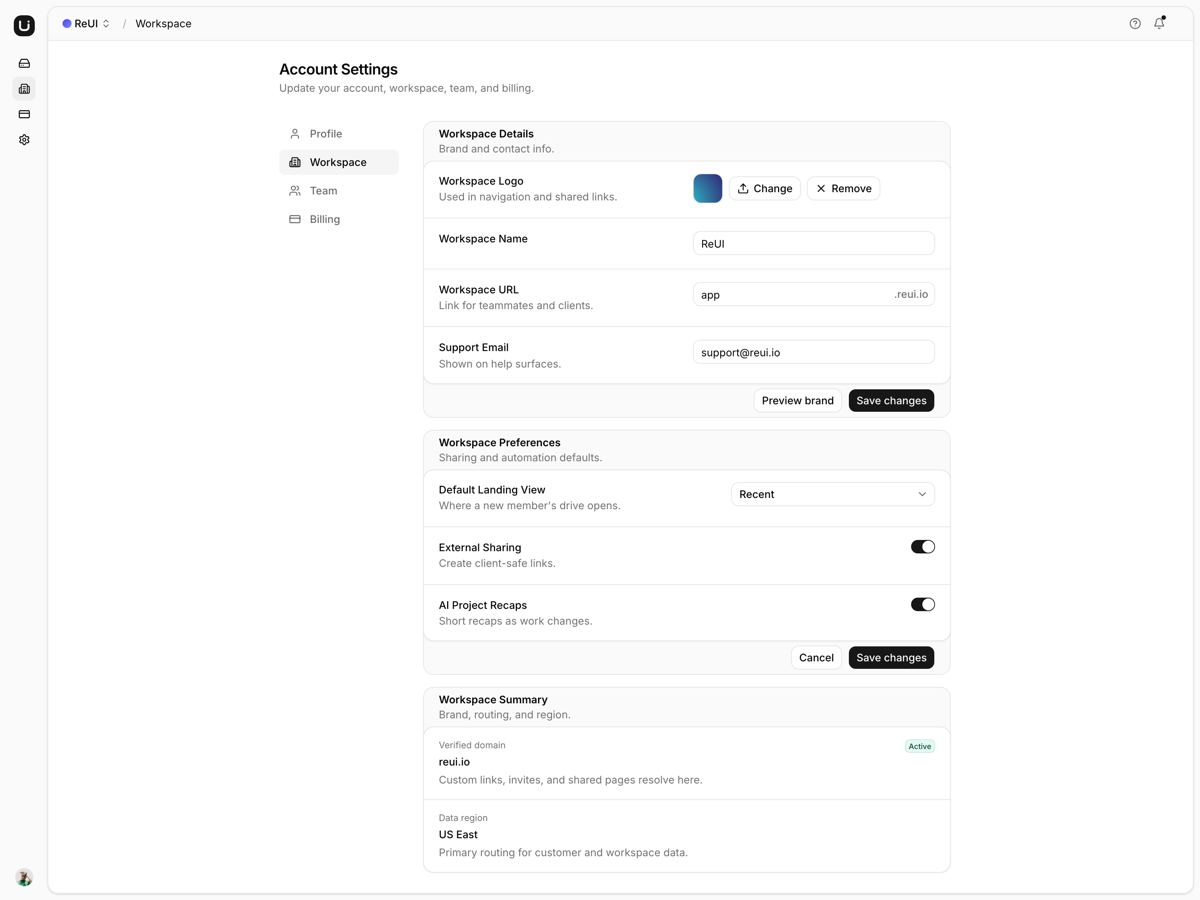
A cloud drive front end: folders, upload, sharing with inherited access, real file previews, a bin, and an account area behind one repository interface.
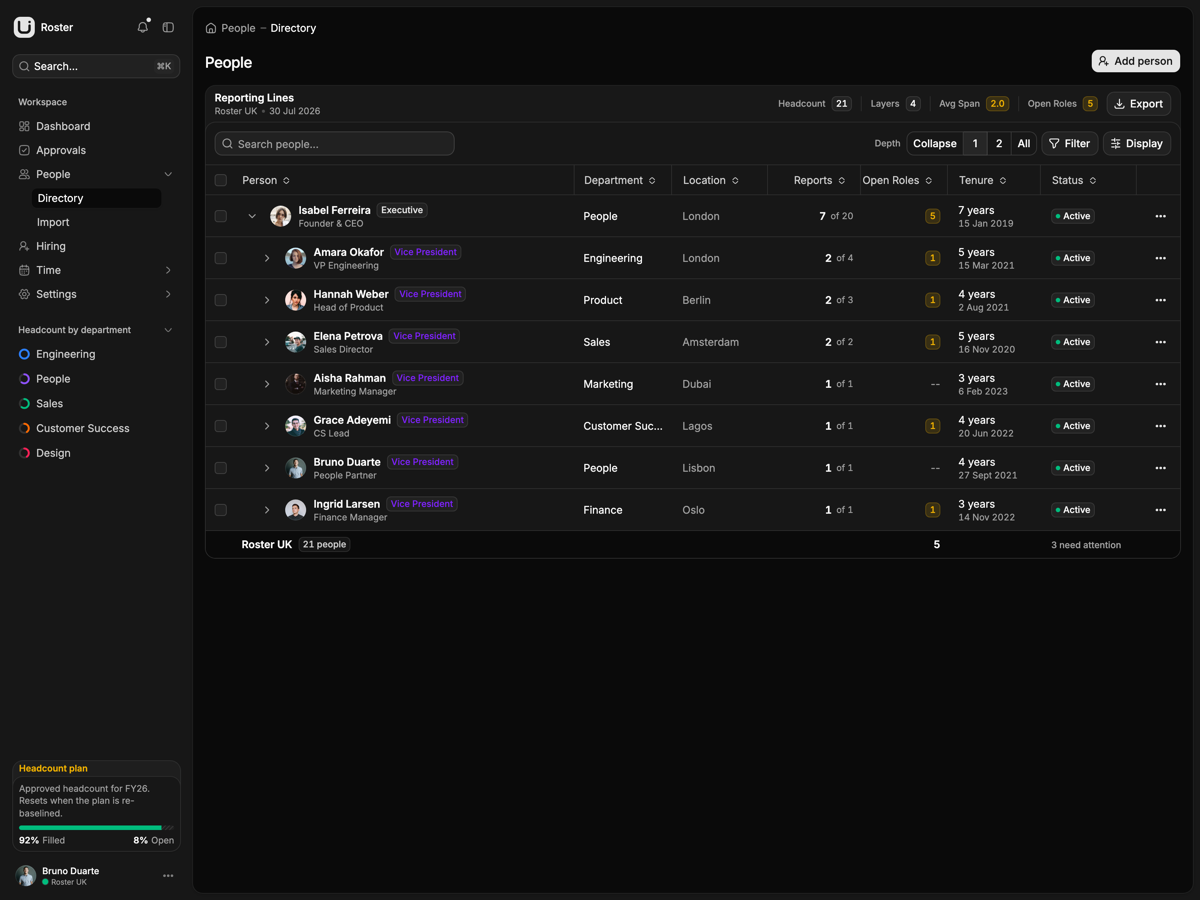
A React people operations console: a directory nested by reporting line, time off, timesheets, a hiring board and approvals, on typed modules with no server.
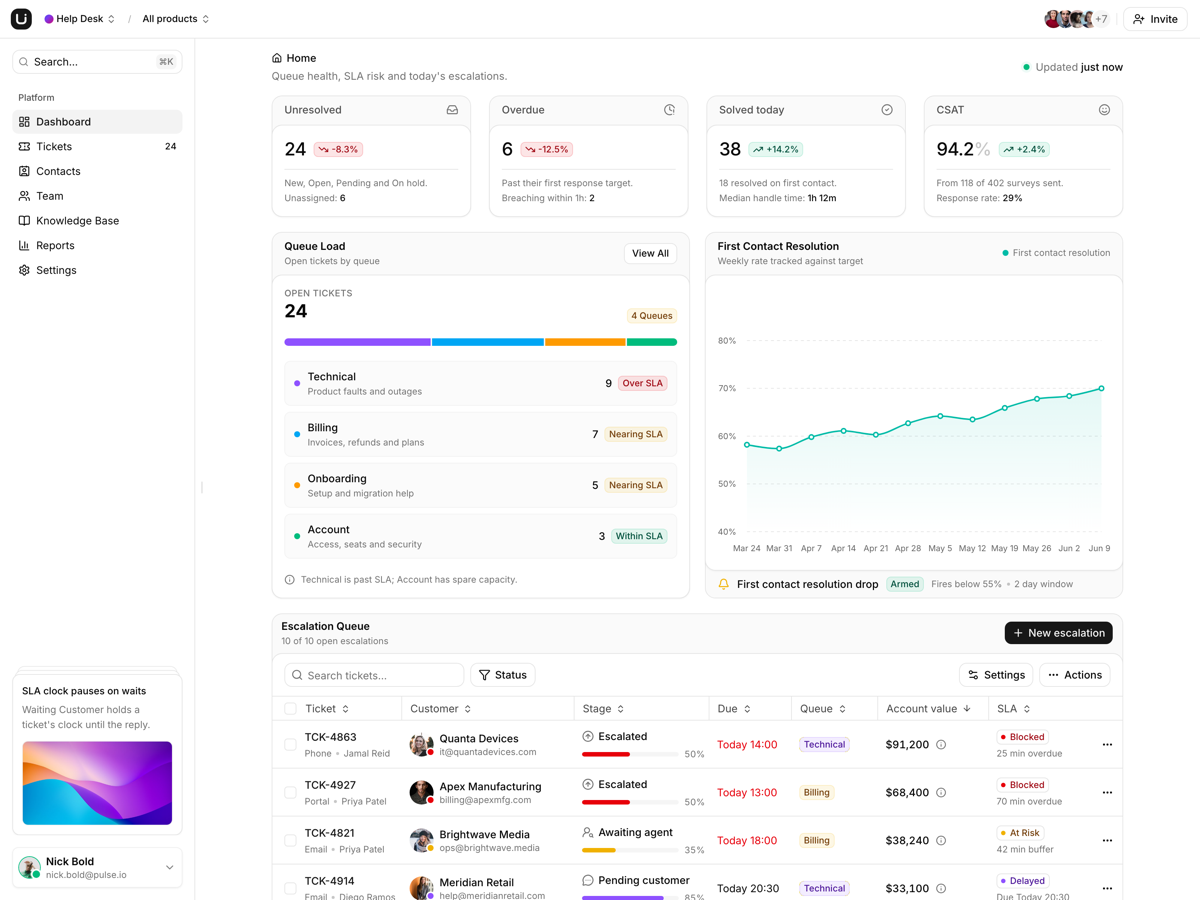
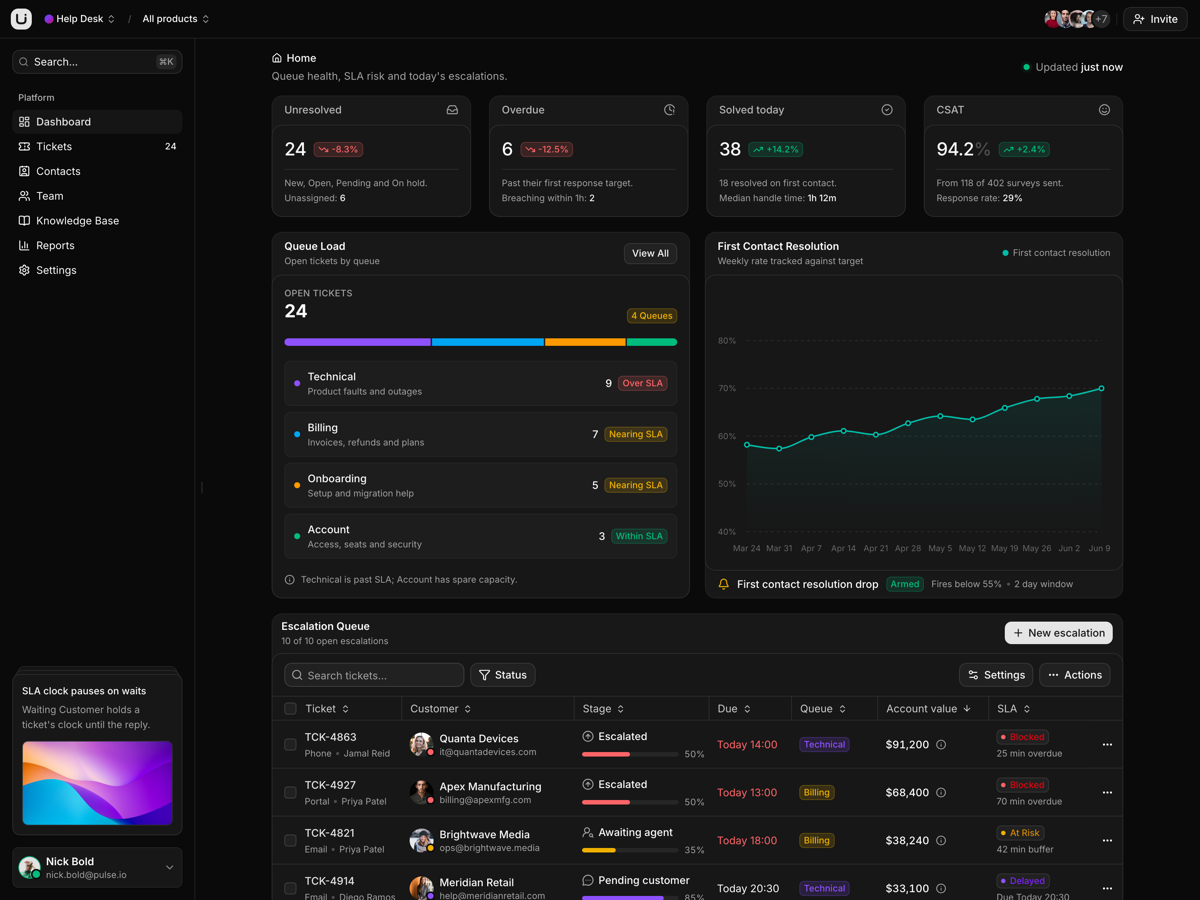
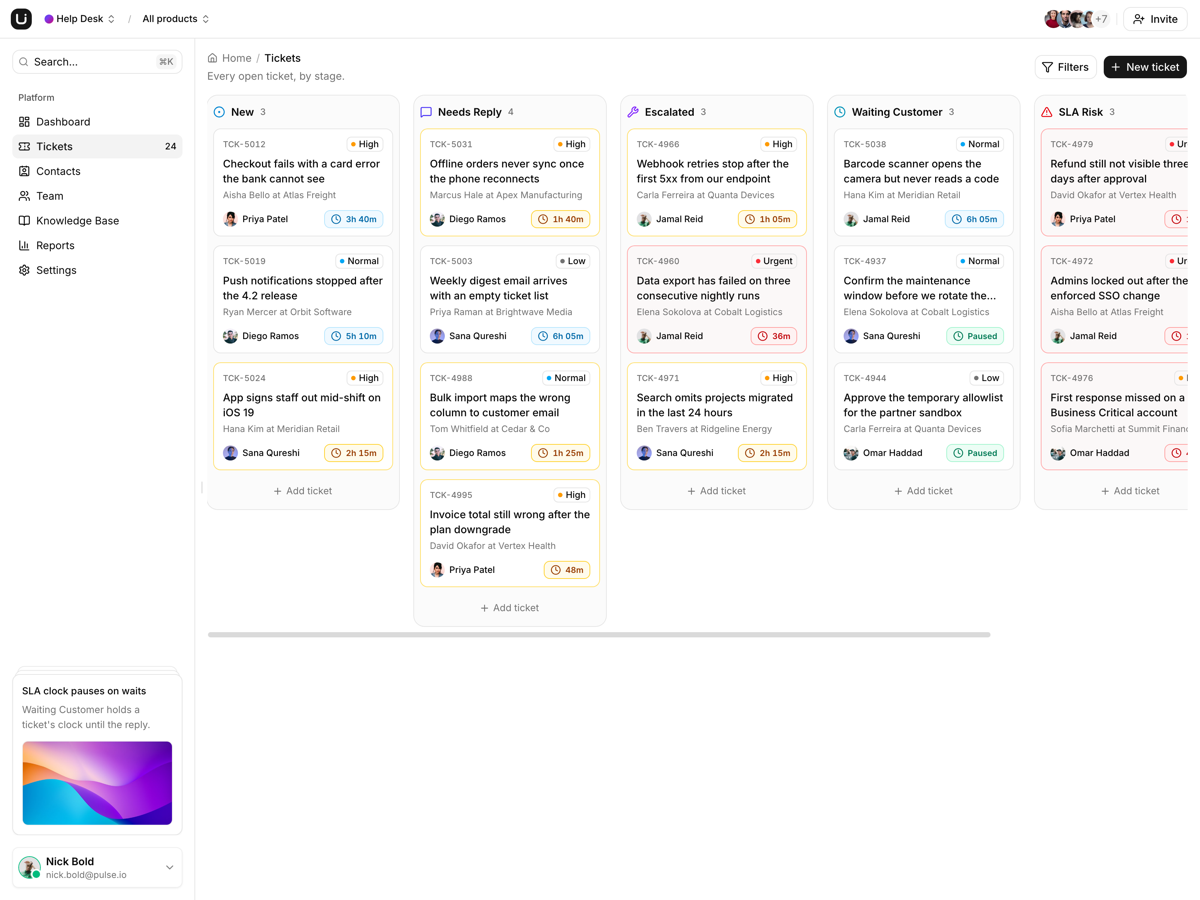
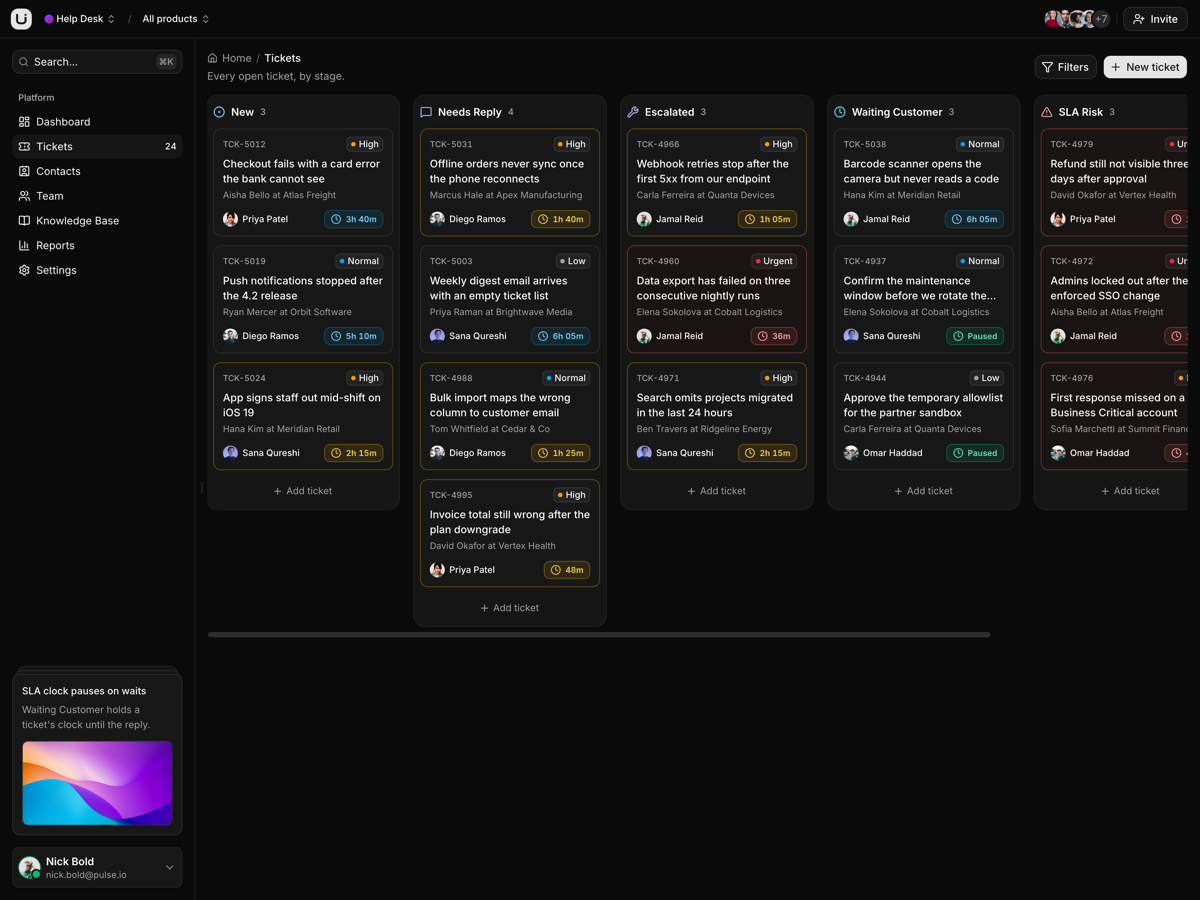
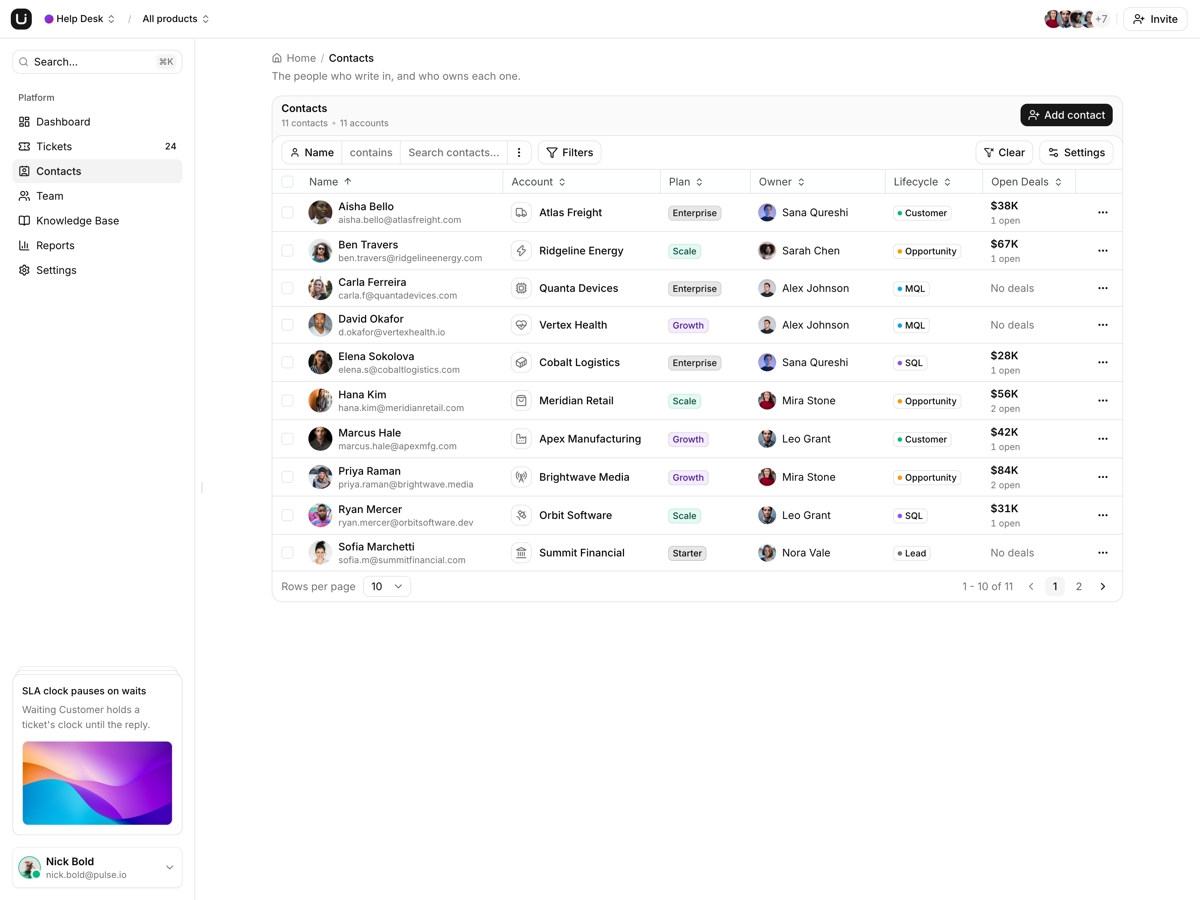
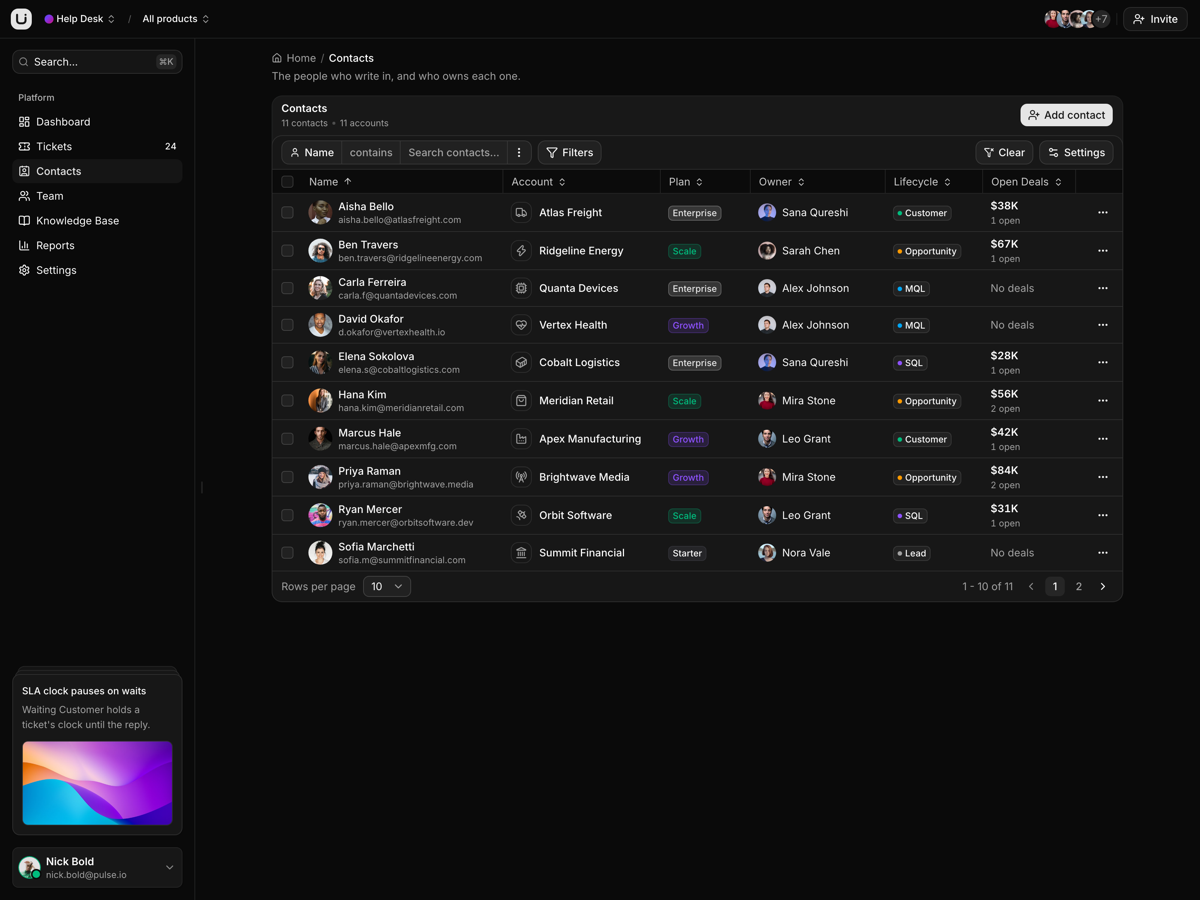
A help desk on TanStack Start: a six column ticket board with SLA states, an escalation queue, contacts, a knowledge base, an agent scorecard and team seats.
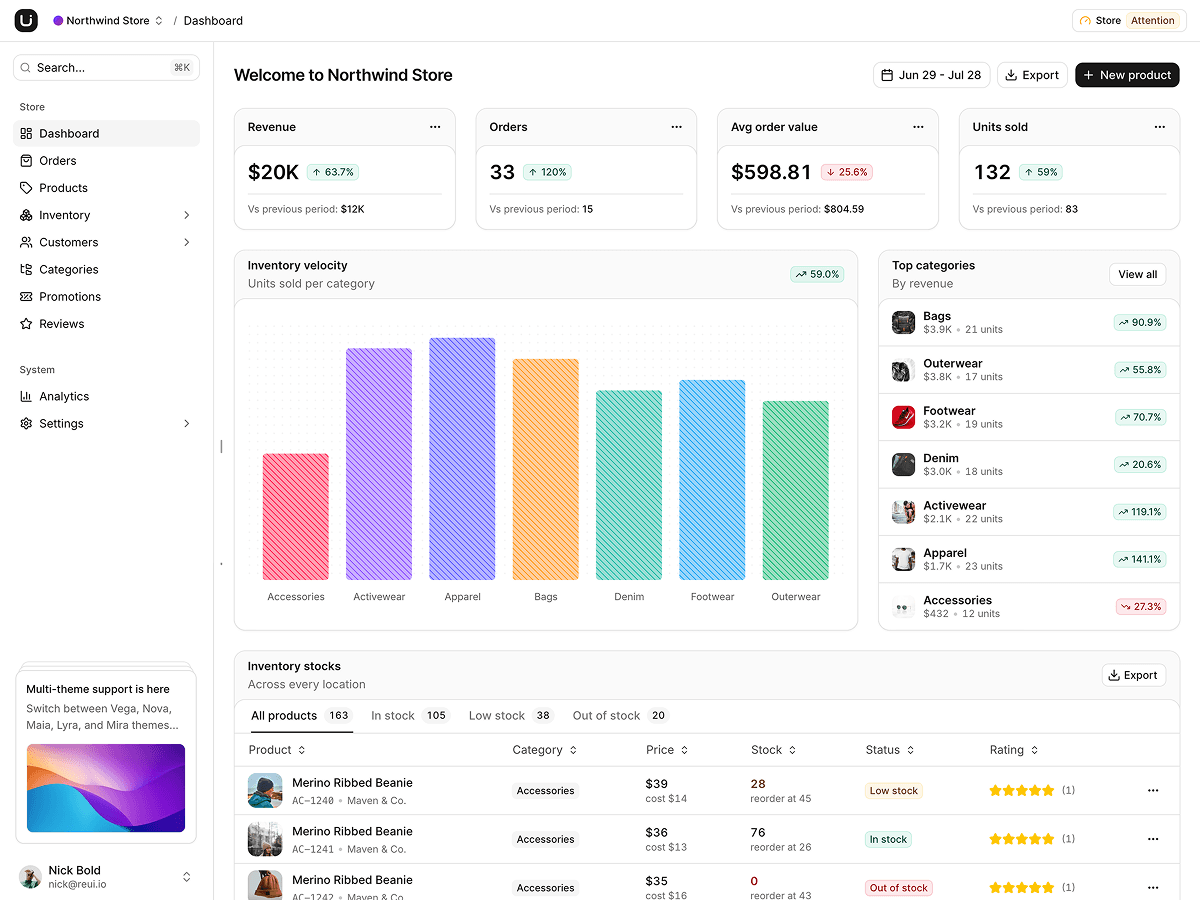
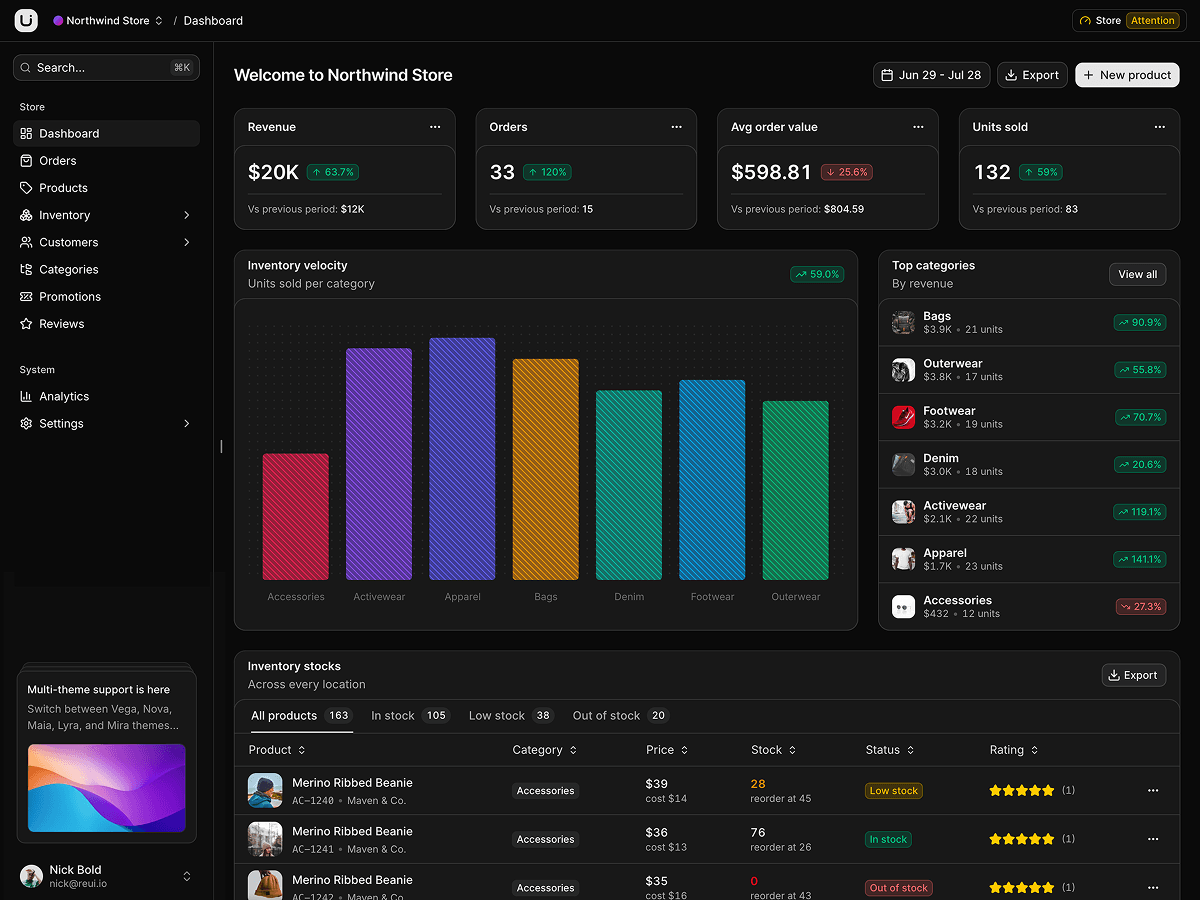
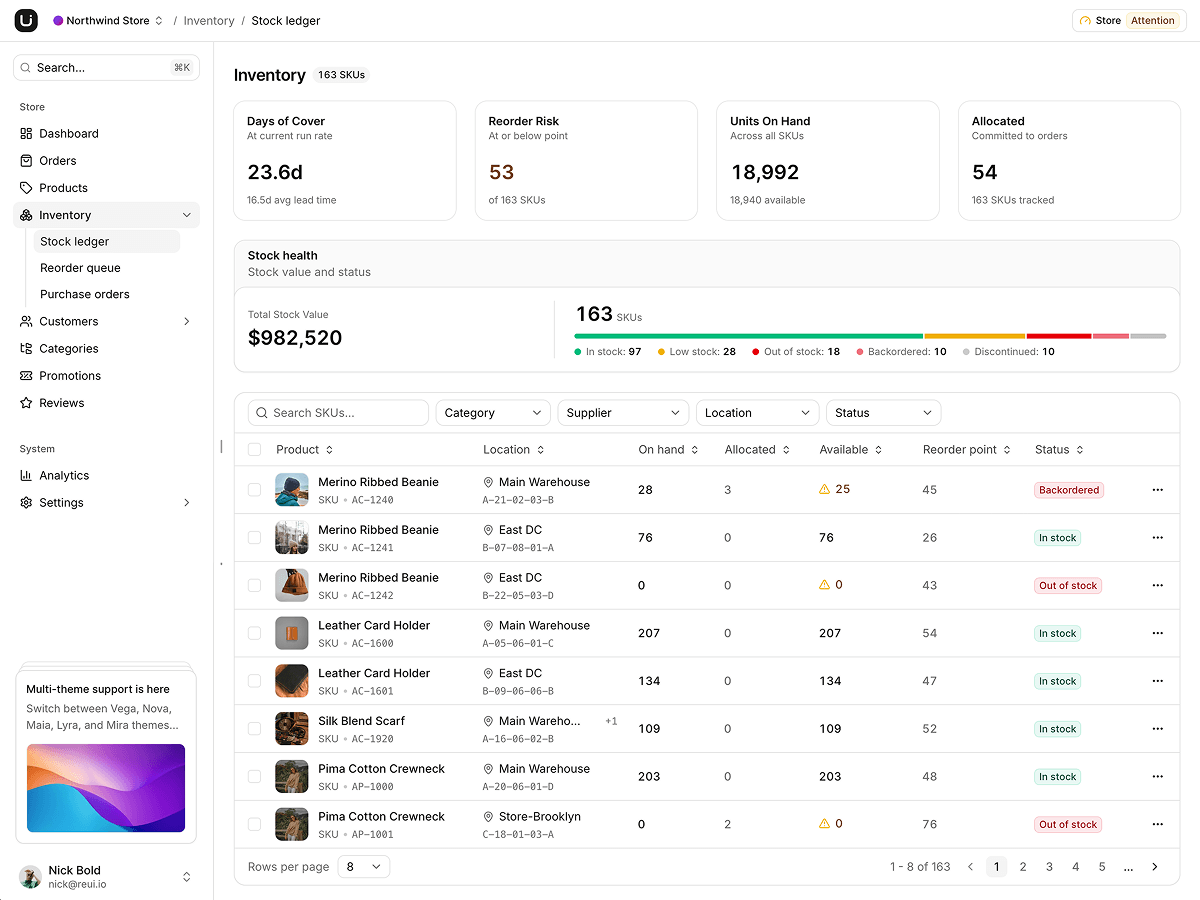
A commerce admin on TanStack Start: orders, catalog, inventory with purchase orders, customers, promotions, reviews and analytics.
Cloud storage on Laravel and Inertia: an explorer with folders and uploads, a share panel that resolves inheritance, revisions, a bin and an account area.
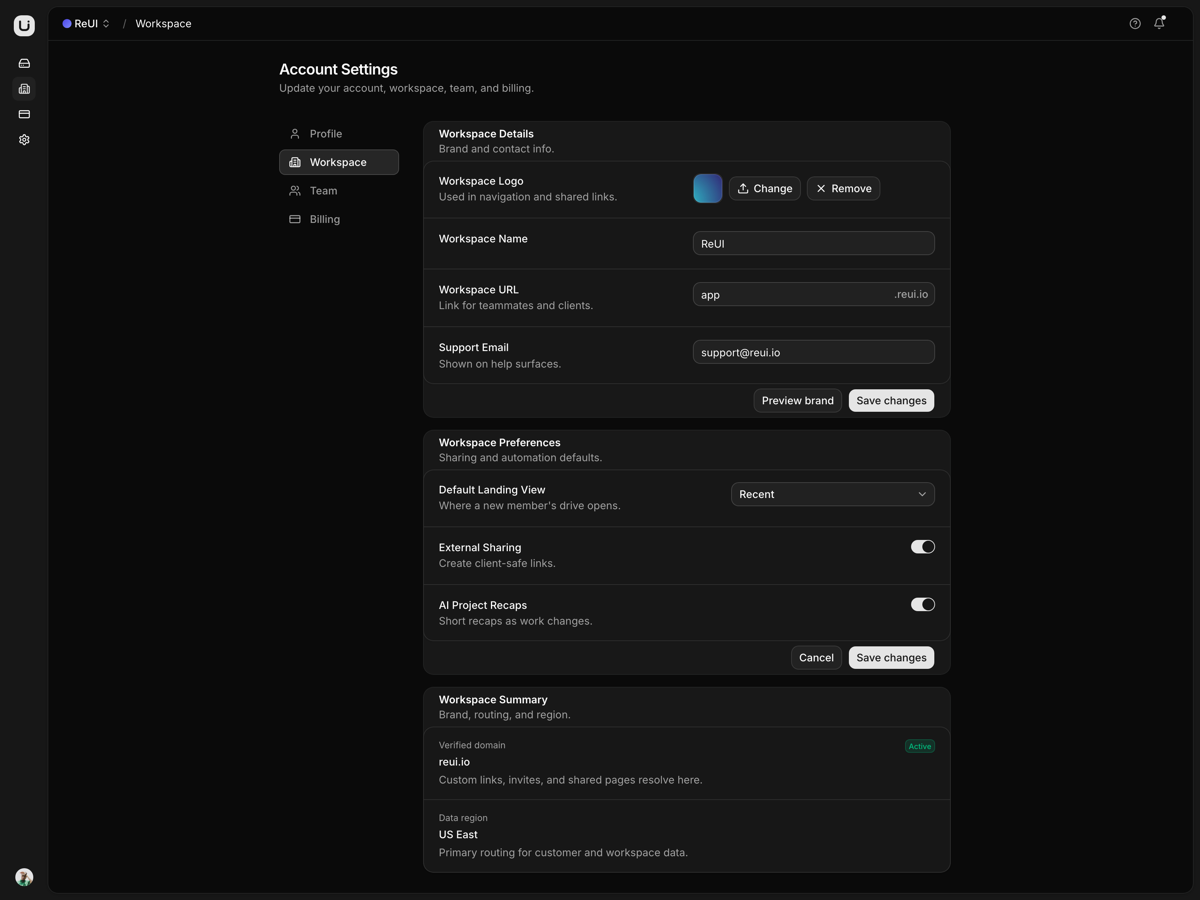
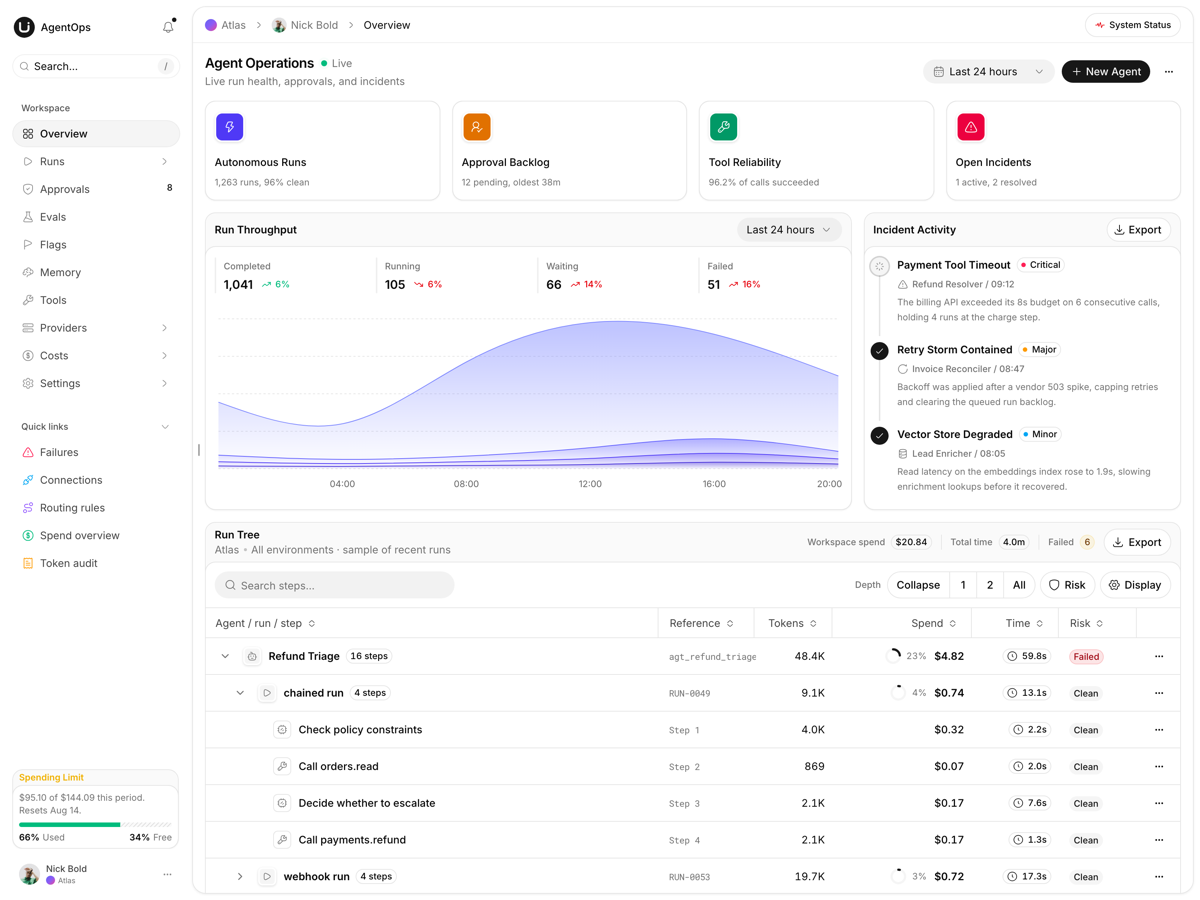
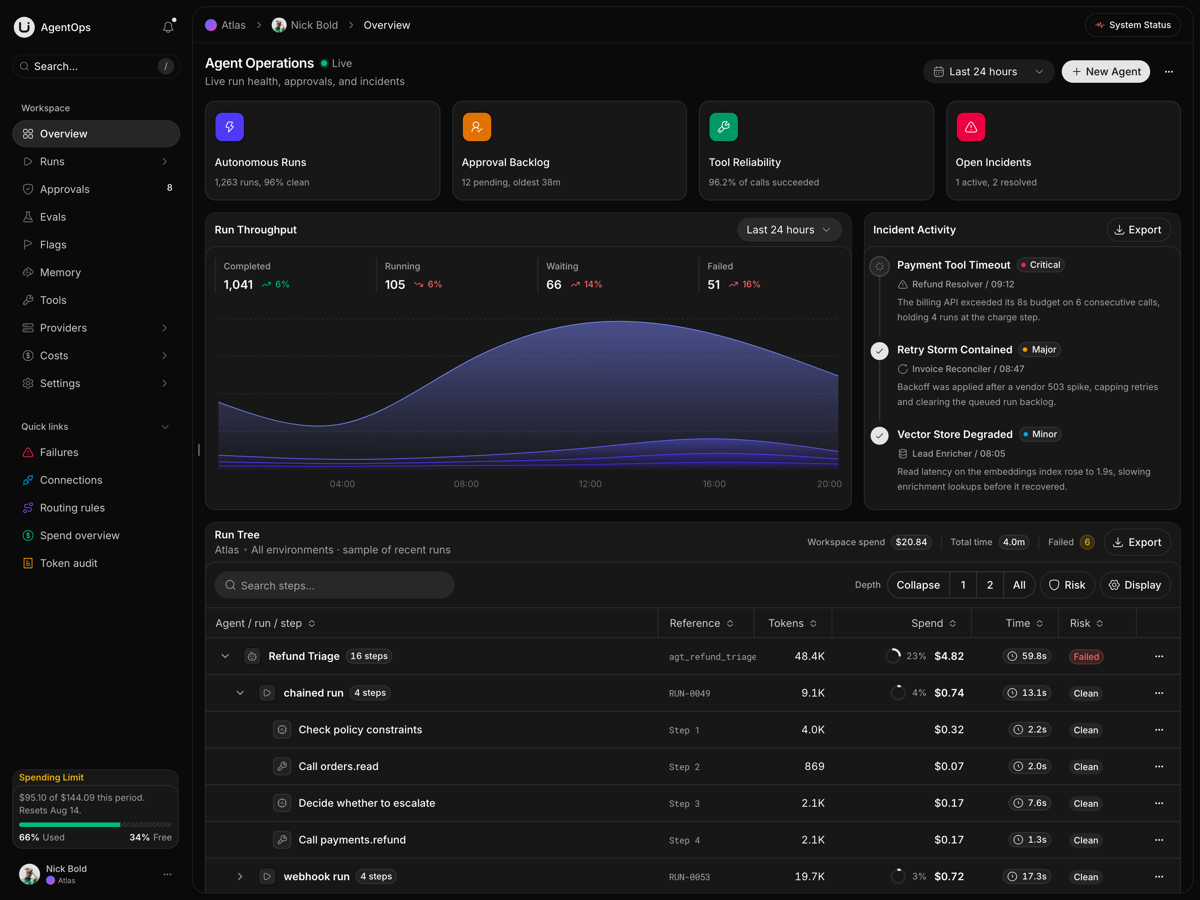
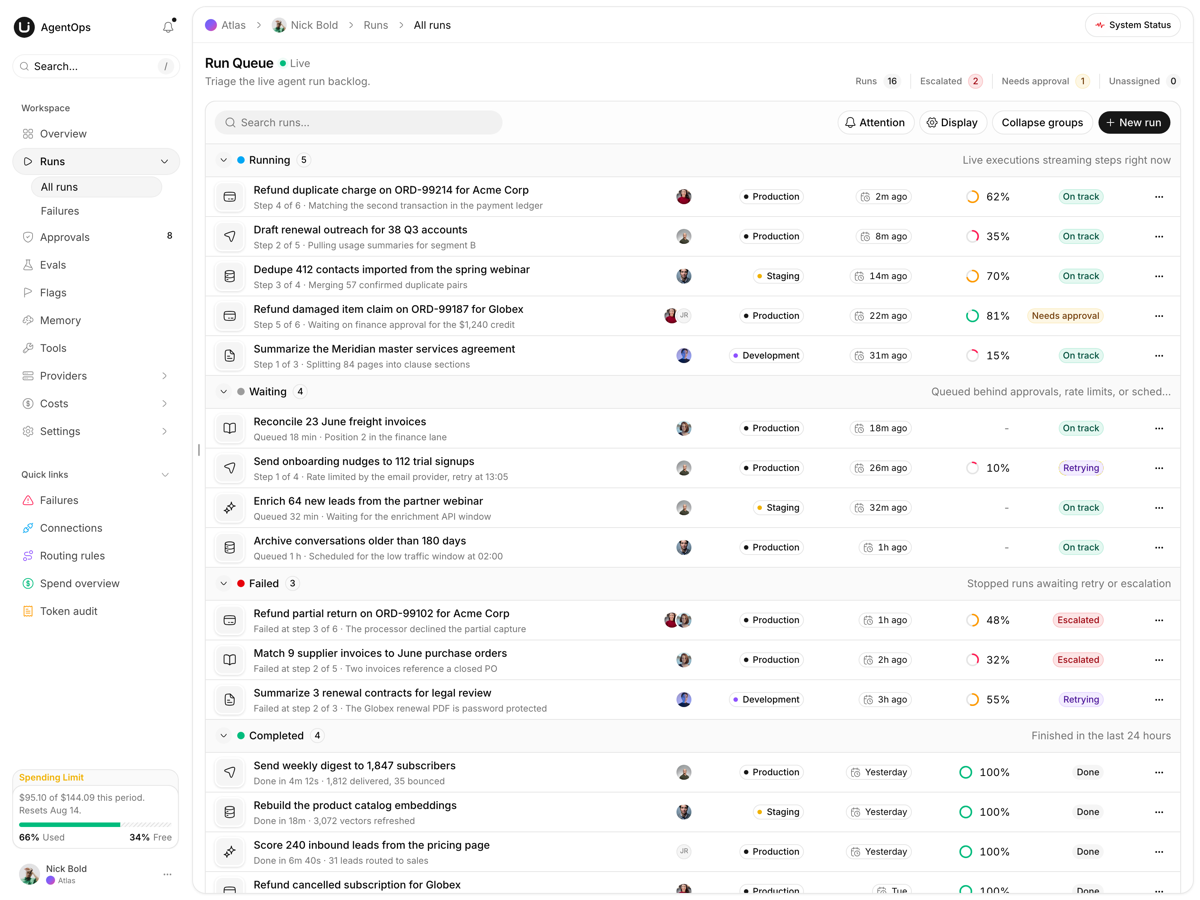
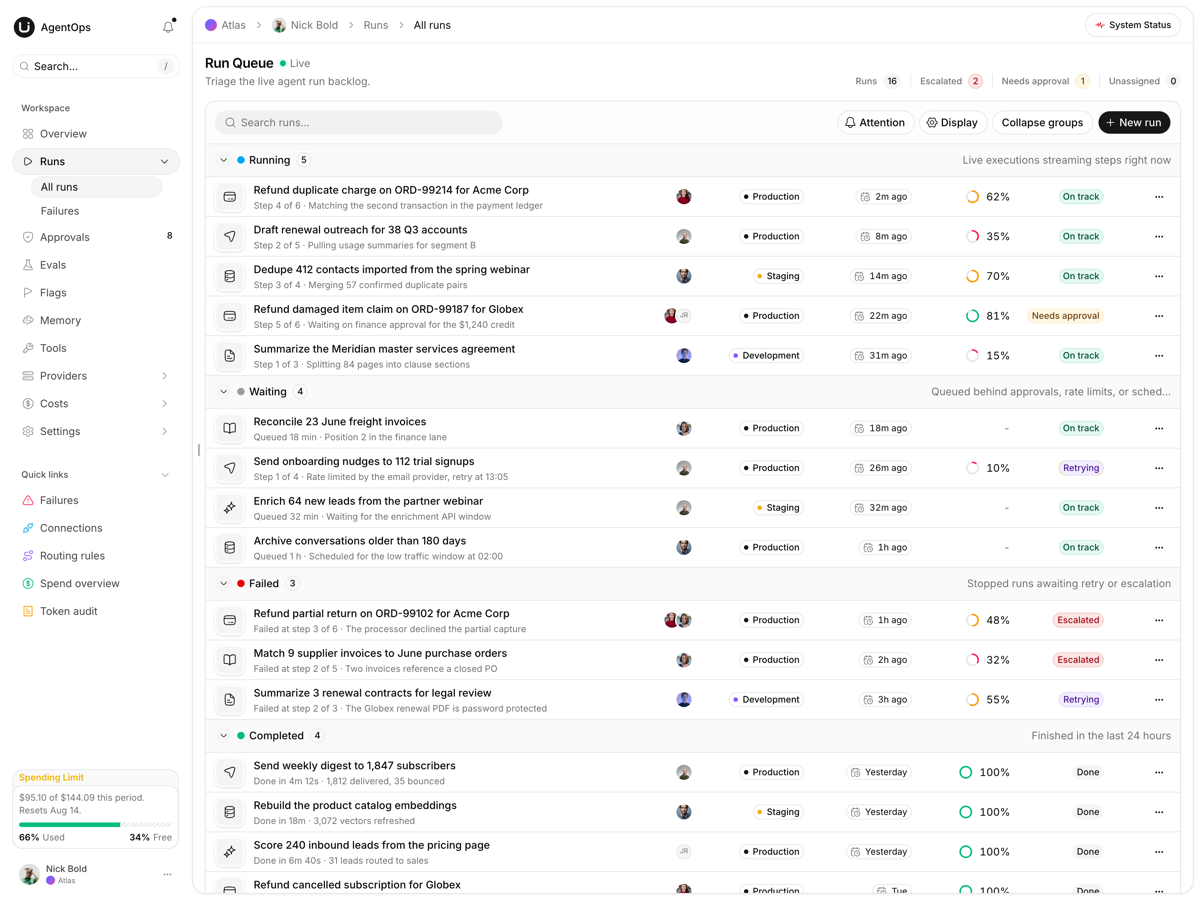
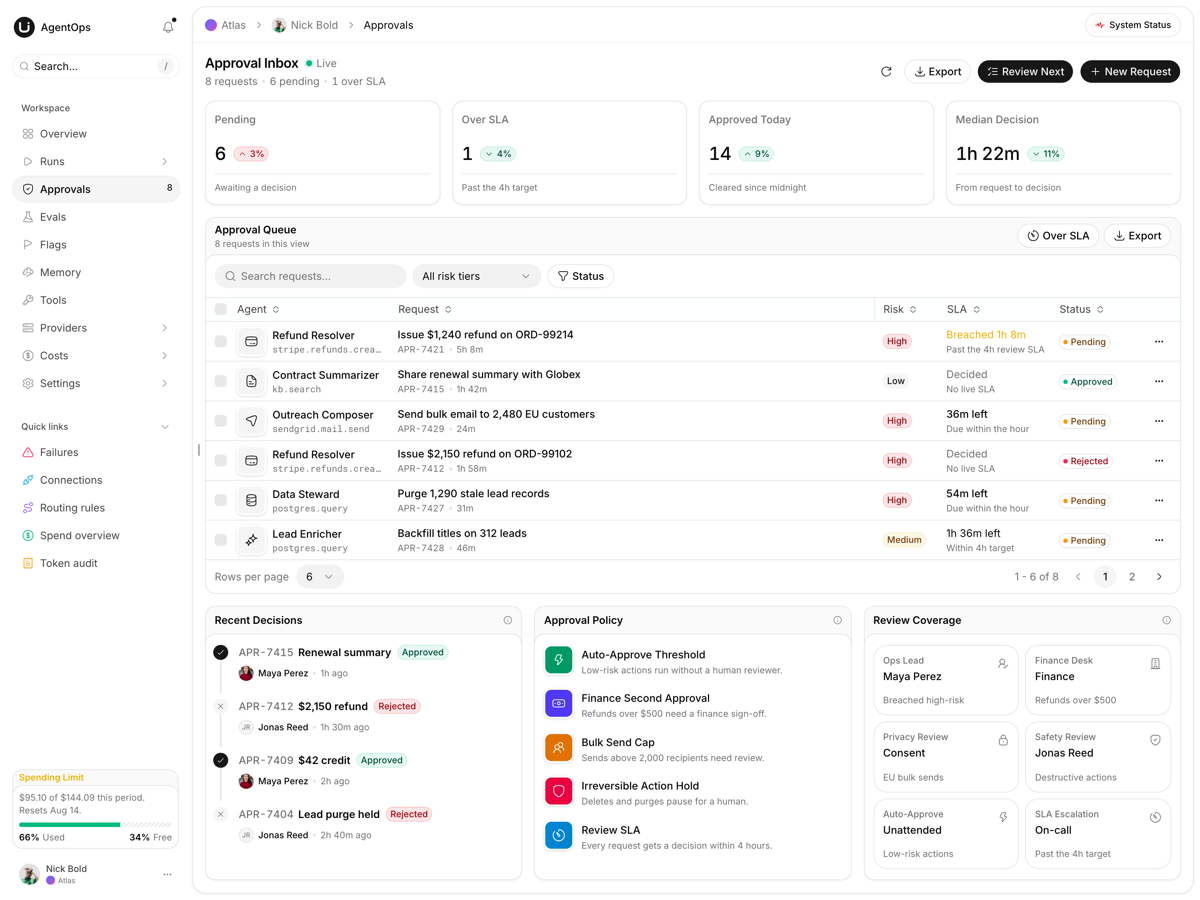
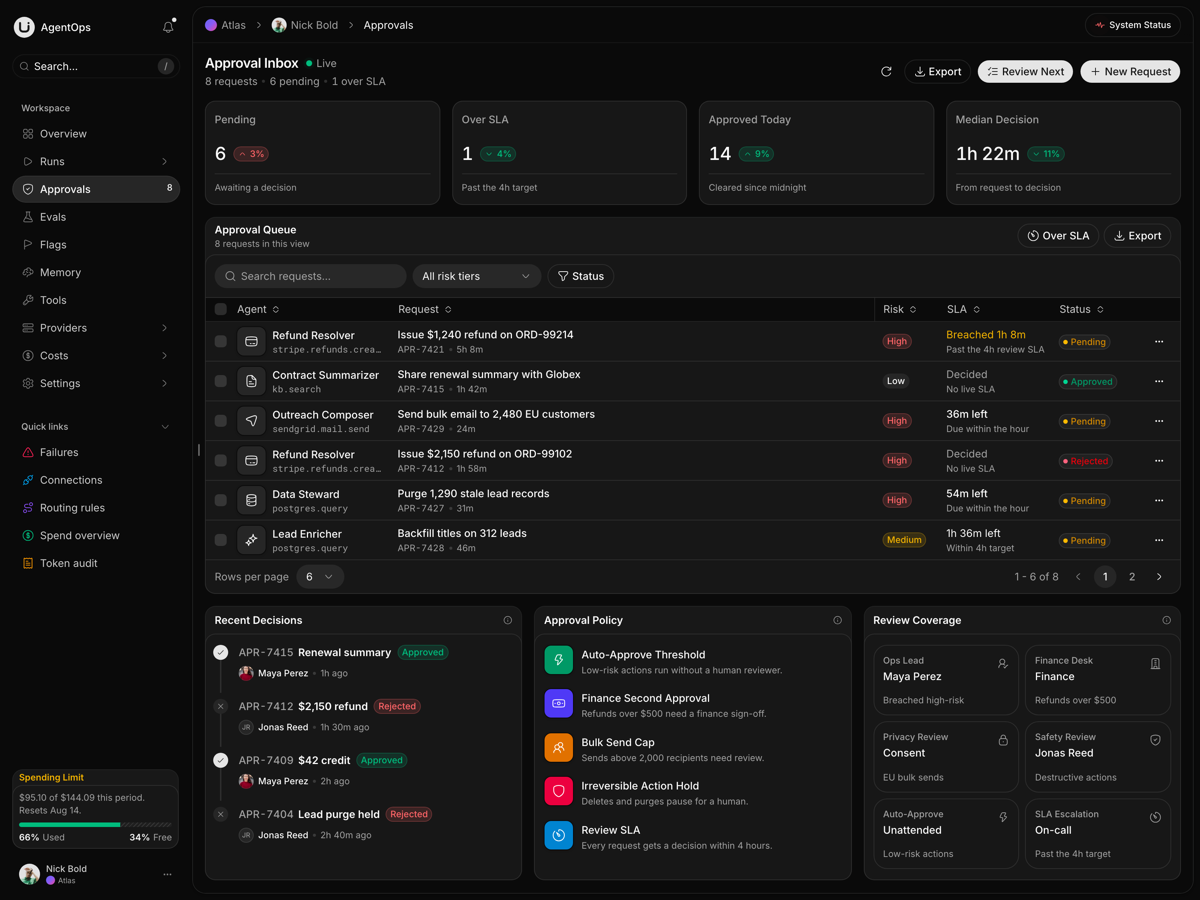
An AI agent operations console: run queue and step traces, human approvals, a tool matrix, eval regressions, provider routing and token spend.
Shadcn UI templates, built from components and blocks
A ReUI template is a whole product, not a screenshot. Each one ships an app shell, a full auth suite, a dashboard, profile and settings, onboarding, and the pages specific to its concept, so the first thing you do is wire up your data rather than build the tenth login form of your career.
Each one downloads as a complete project for one framework (Next.js, Vite, TanStack Start, Astro, or Laravel), and every surface is composed from the same components and blocks in the registry. That is the part that matters six months in: what you add later still matches what shipped.
On Laravel the pages are Inertia components, so they are ordinary React and TypeScript files rather than Blade with a build step bolted on. You keep Eloquent, queues and the auth scaffolding you already have, and the front end is the same registry everything else here is built from.
What is inside every template
- Every screen works. Menus, nav items, buttons, and links all resolve to real pages. No dead ends, no placeholder routes.
- One design language. A single surface mode and token set across the whole template, so it reads as one product rather than a pile of demos.
- Typed, simulated data. Swap the mock layer for your API without touching the UI. Light and dark are both designed, not auto-inverted.
- Downloaded as a full project. The complete source is a download from the template page, not a shadcn add item. It runs with no runtime dependency on us, and anything you add later installs from the ReUI registry.
- Laravel ships with Inertia. Inertia is Laravel's own way of running a React front end, so the pages are ordinary React and TypeScript components served by your routes rather than Blade with a build step bolted on. Eloquent, queues, and the auth scaffolding stay exactly where they are, and the UI is the same registry every other template here is built from.
- Your coding agent knows it too. Point Claude Code, Cursor, or any MCP client at the ReUI MCP server and it can search the registry, read a component's real API, and extend the template with the same blocks it was built from.
Components, blocks, and templates
All three come from the same registry, so moving up a tier never means switching design systems or rewriting what you already installed.
Frequently asked questions
What do I get when I download a template?
Do I need a plan to download templates?
Are templates sold individually?
How do I install a template?
Can I use a template in a client or commercial project?
Do I get updates after downloading?
Start building with ReUI Pro today.
Every Pro block, every style, and every future addition, with one license for unlimited projects.
From $249, once. Lifetime updates.