Lucent - TanStack Start DevOps Console Template
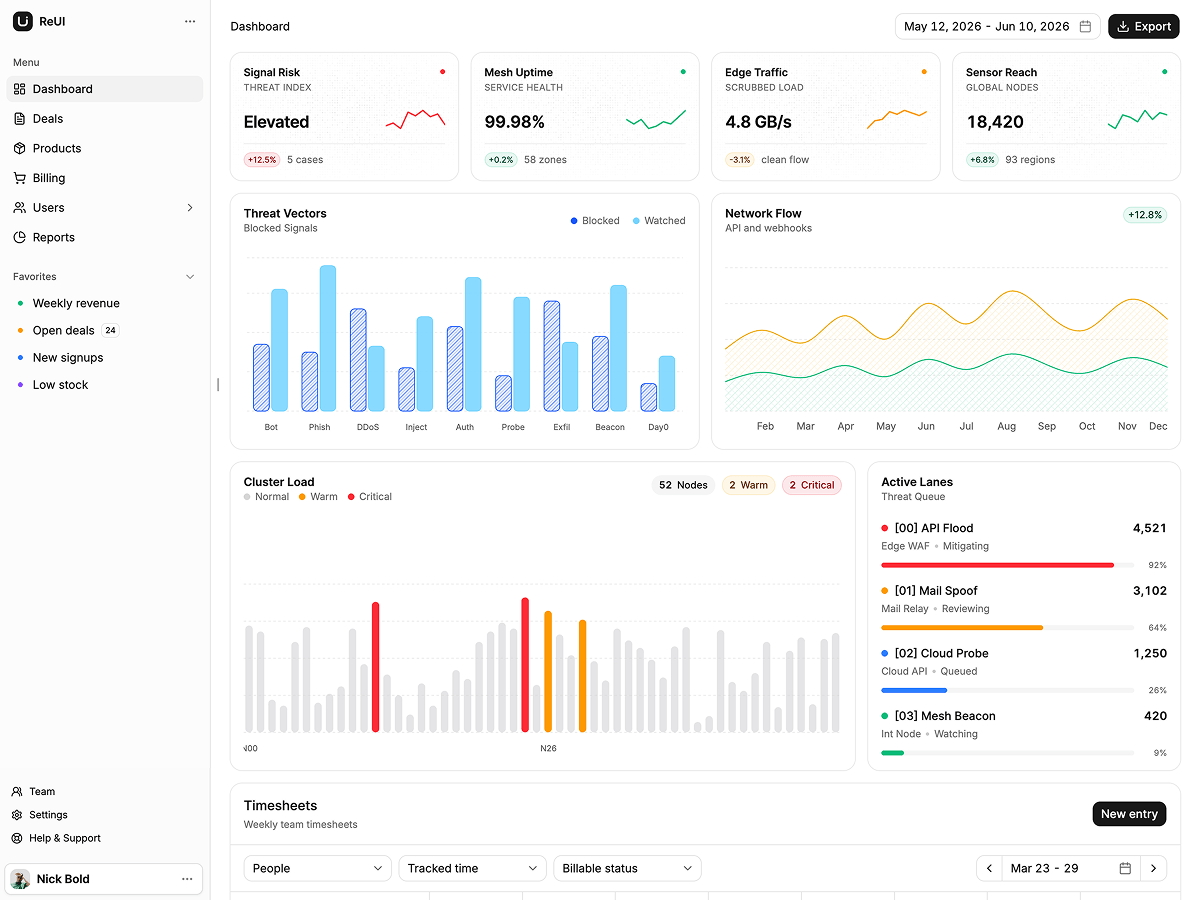
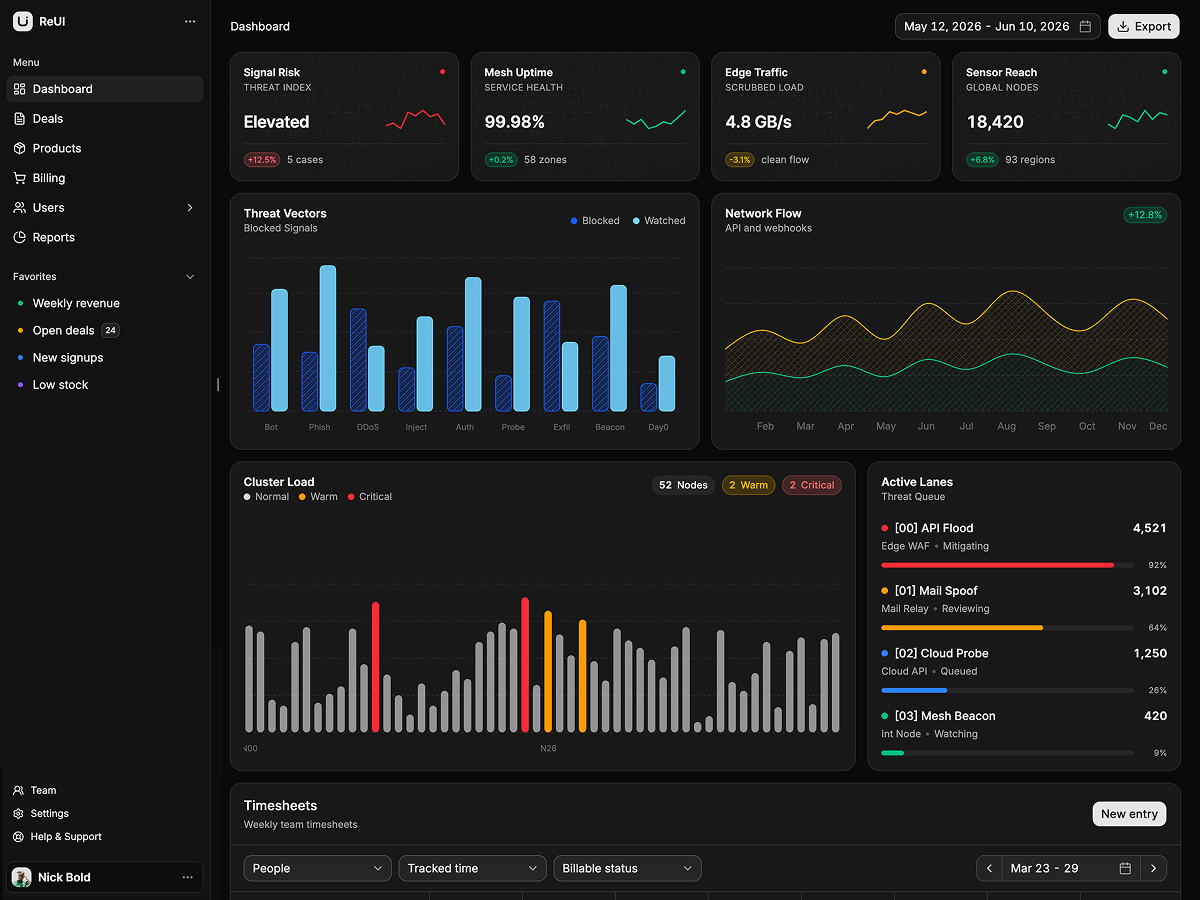
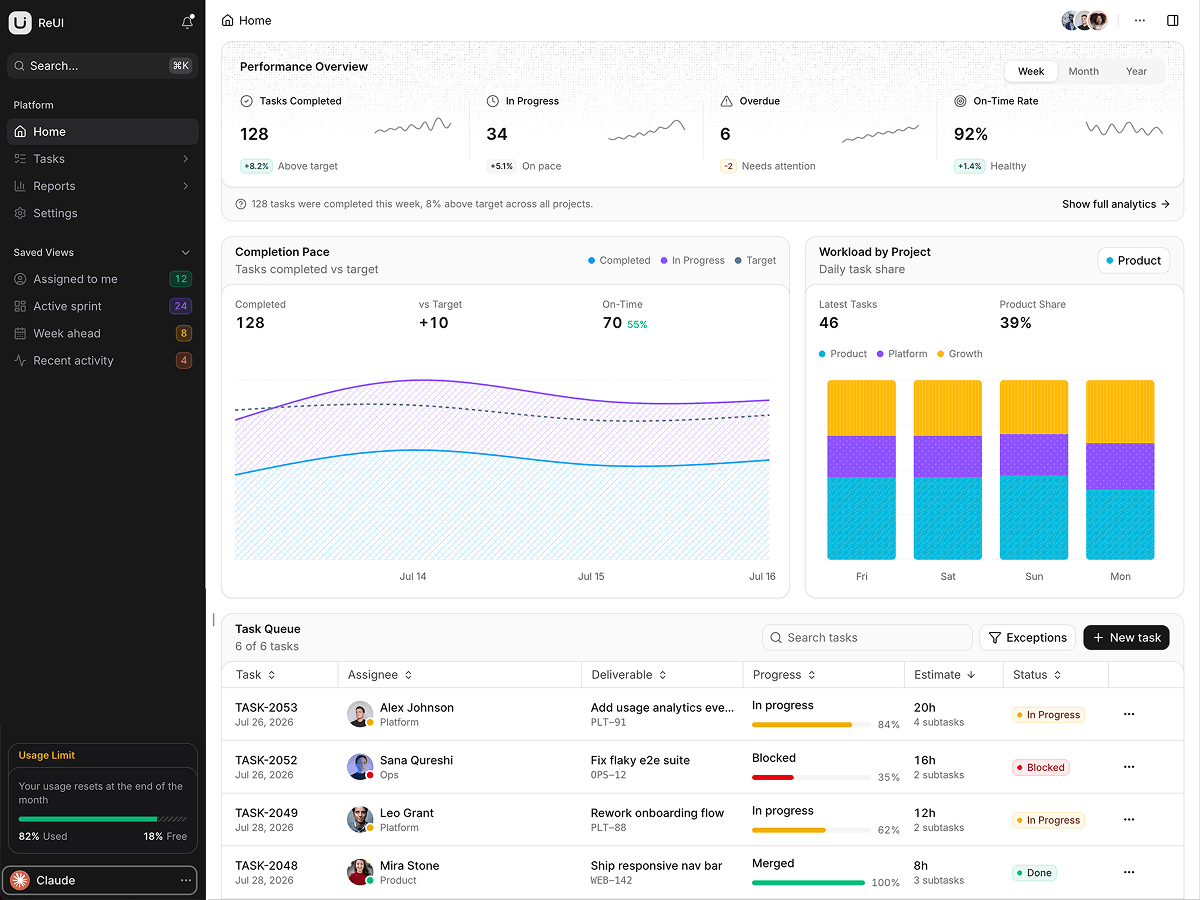
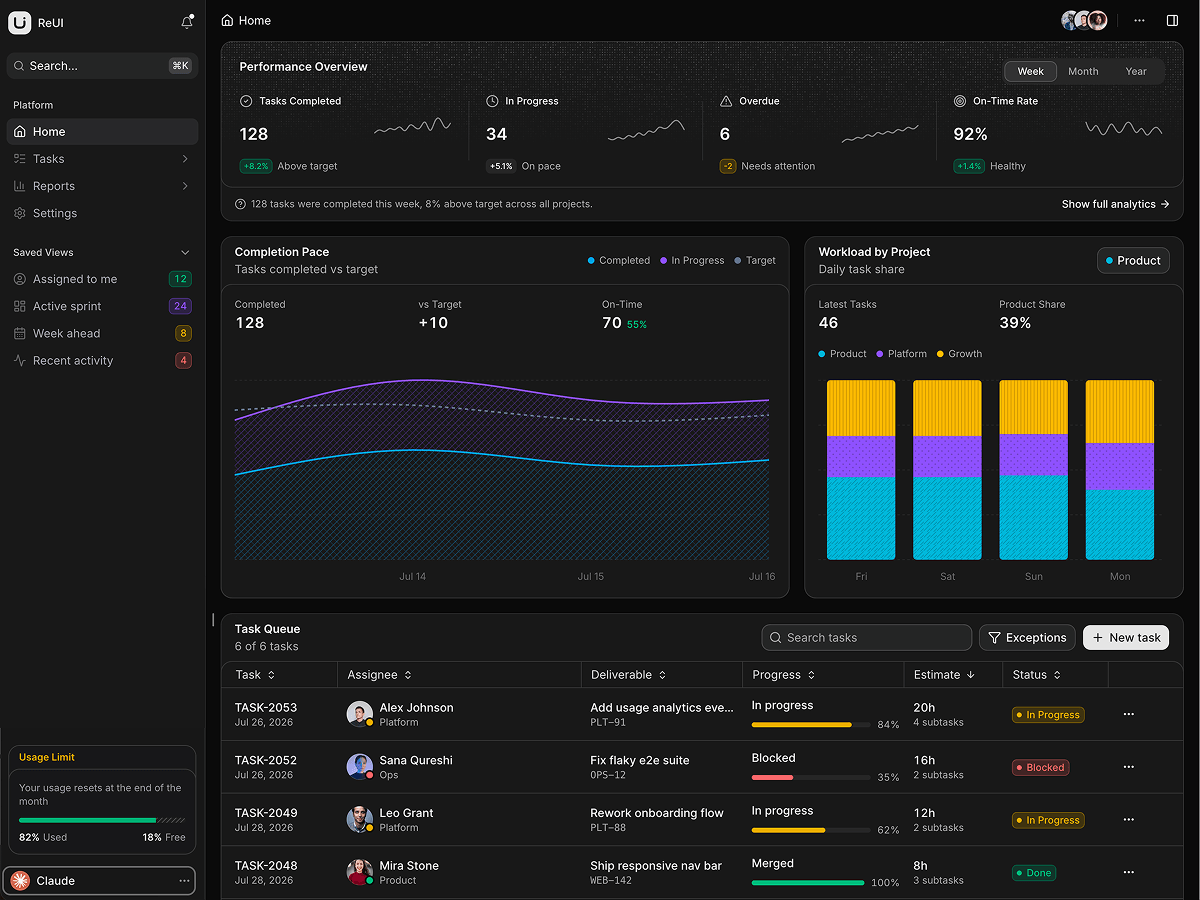
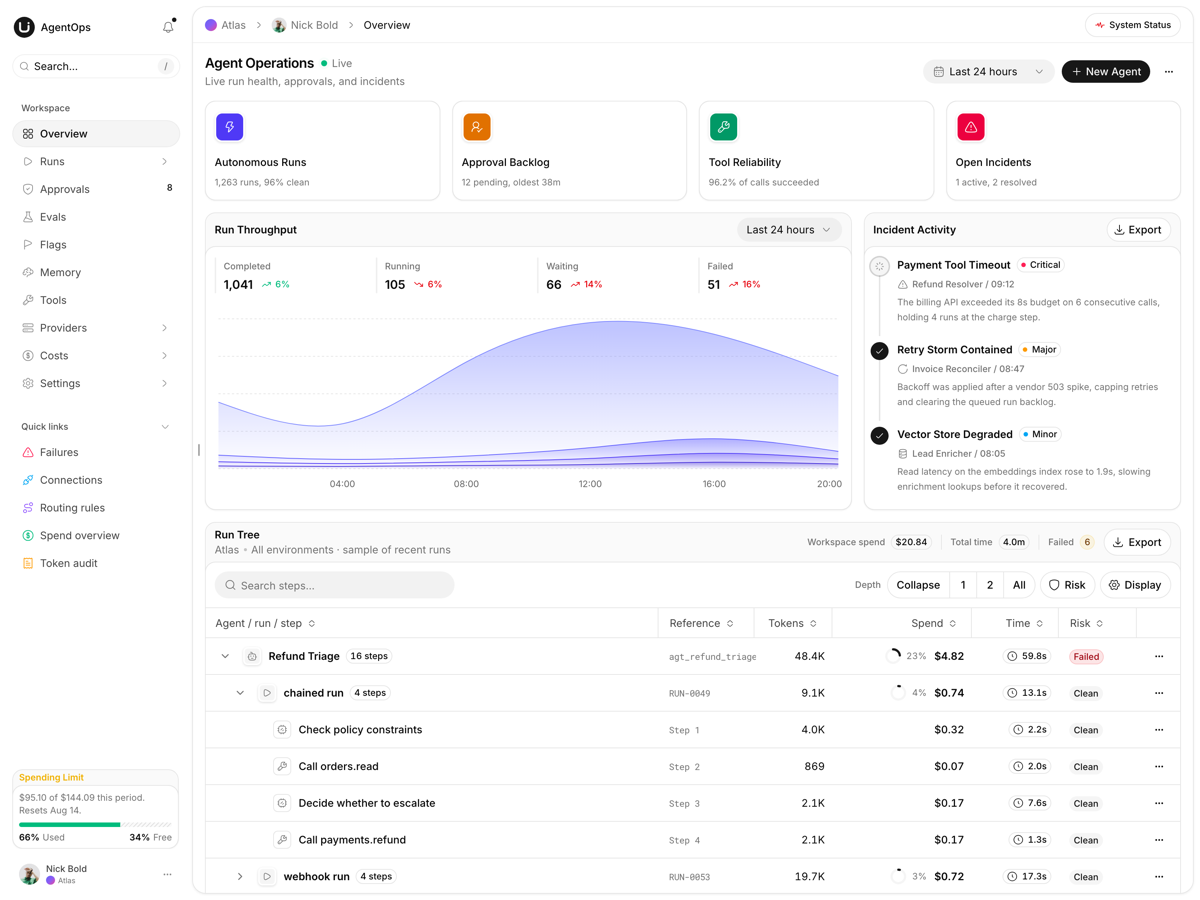
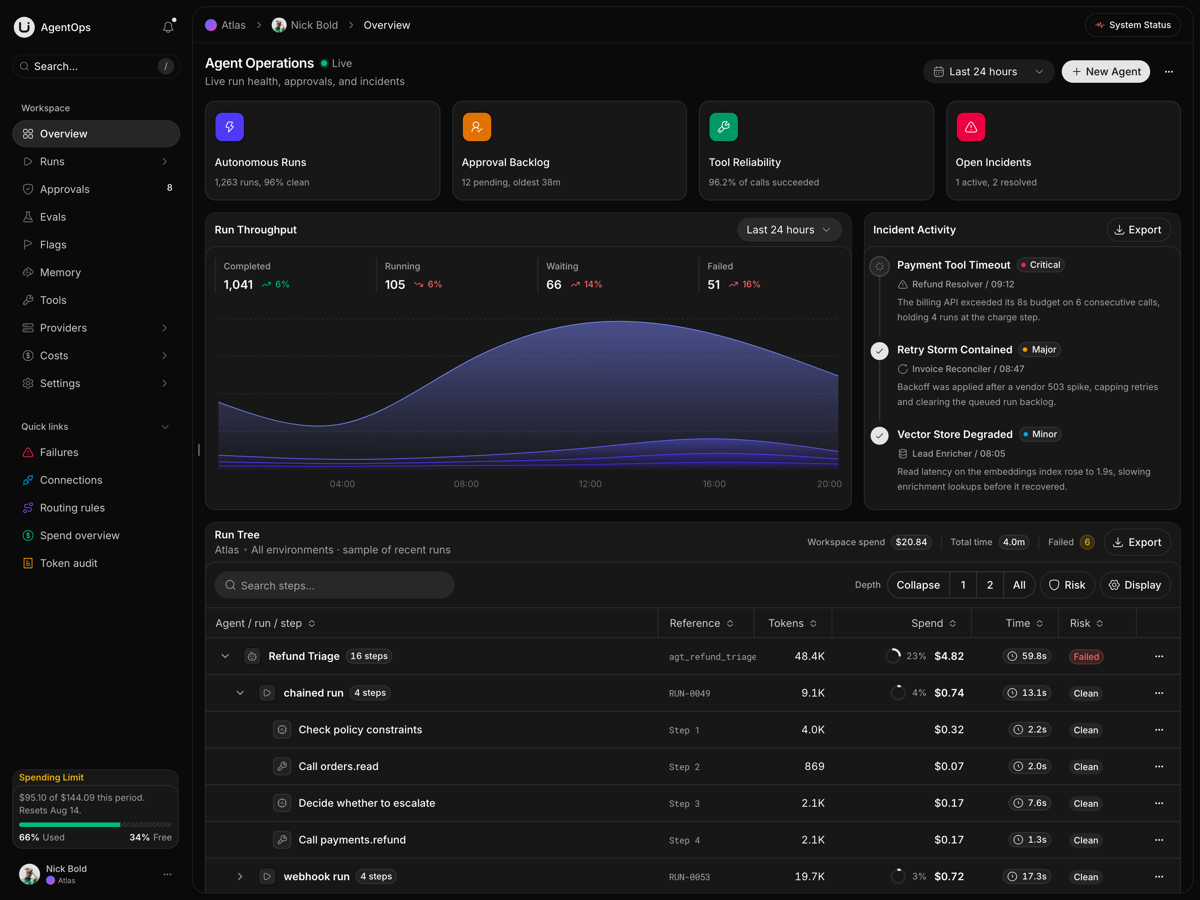
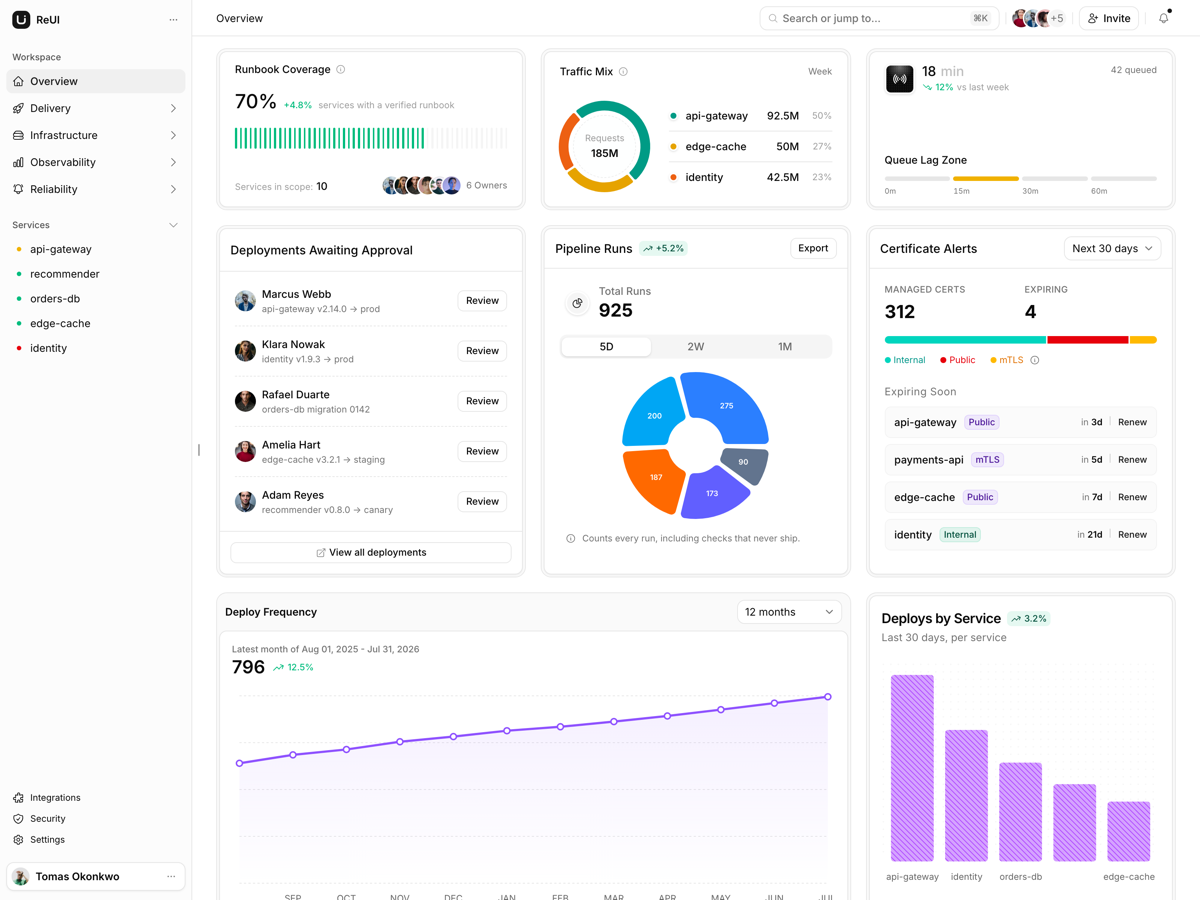
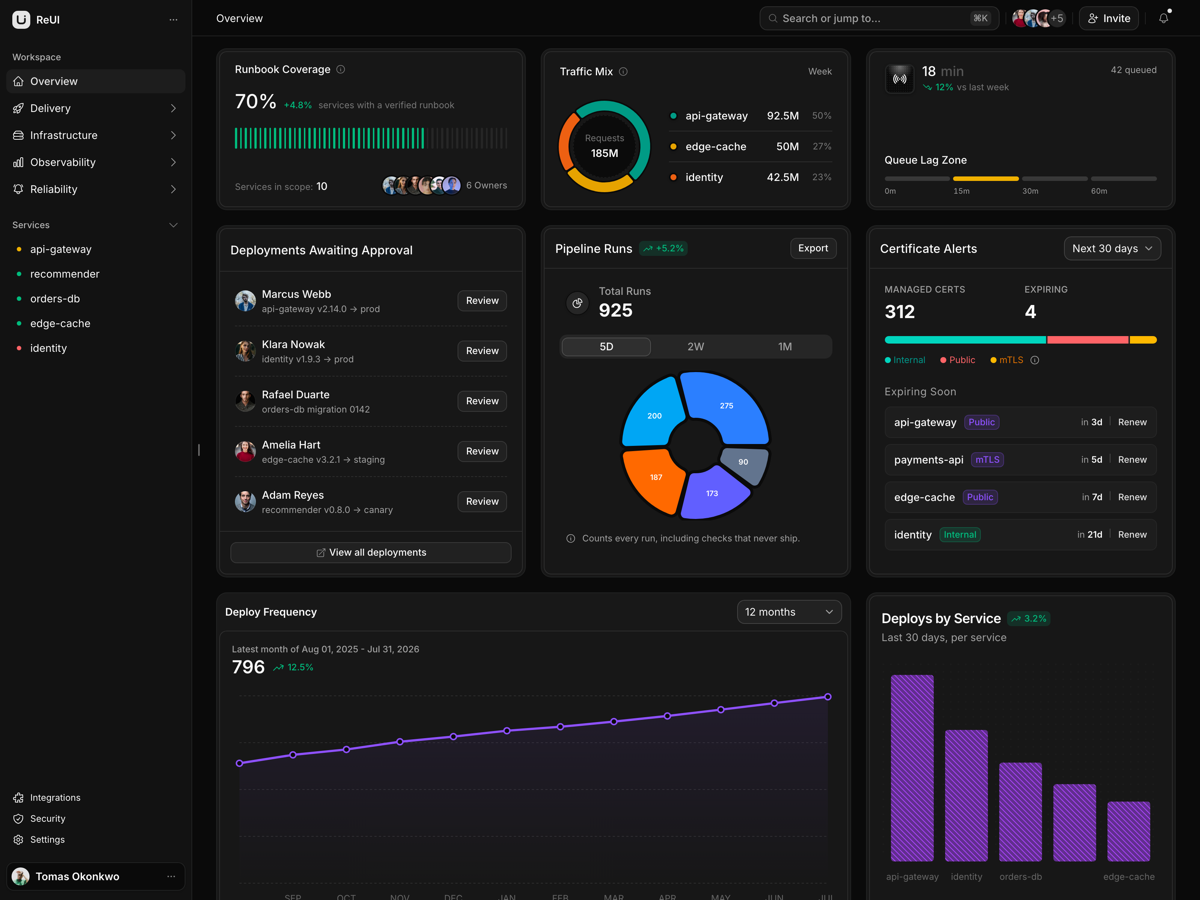
A DevOps delivery console on TanStack Start: a release board, a deployment ledger, traces, alerts, incident response and an on-call rota.
What is included
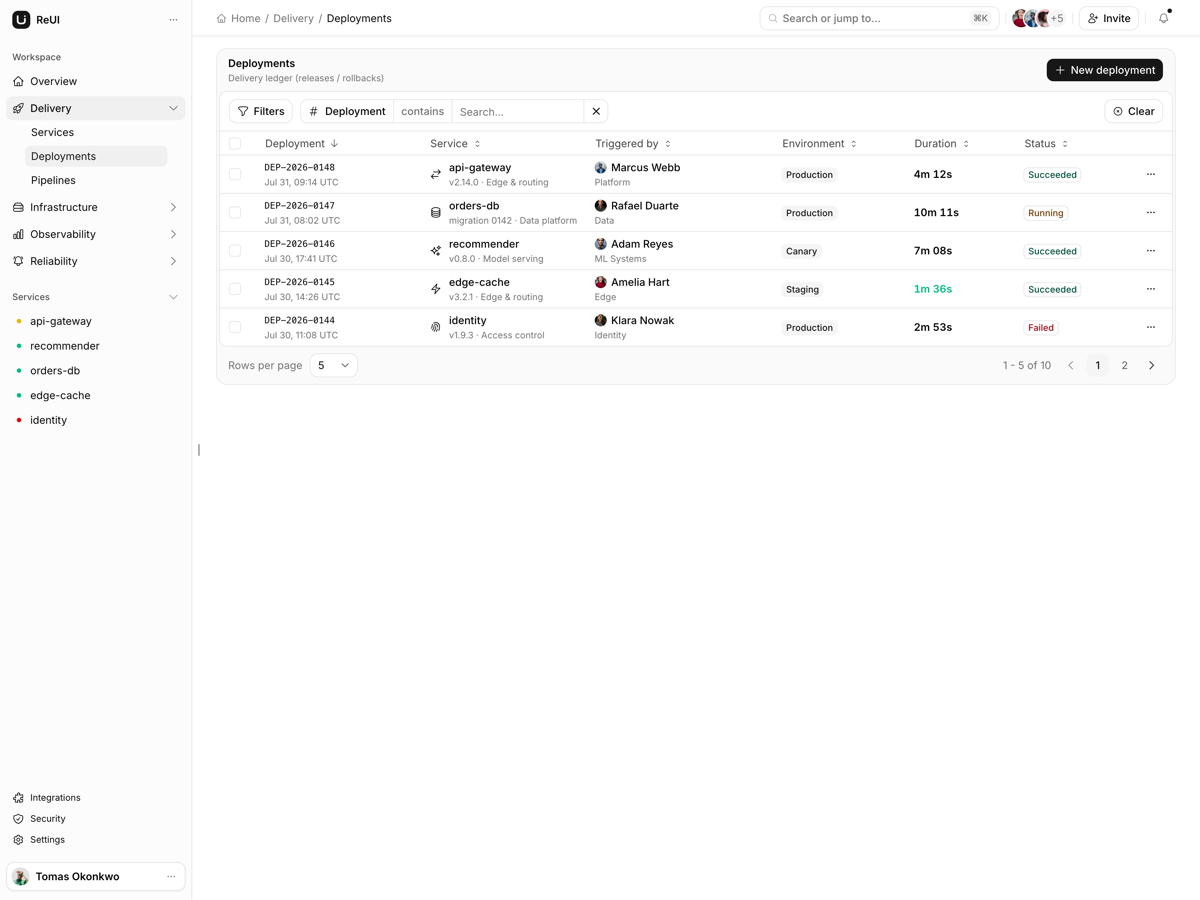
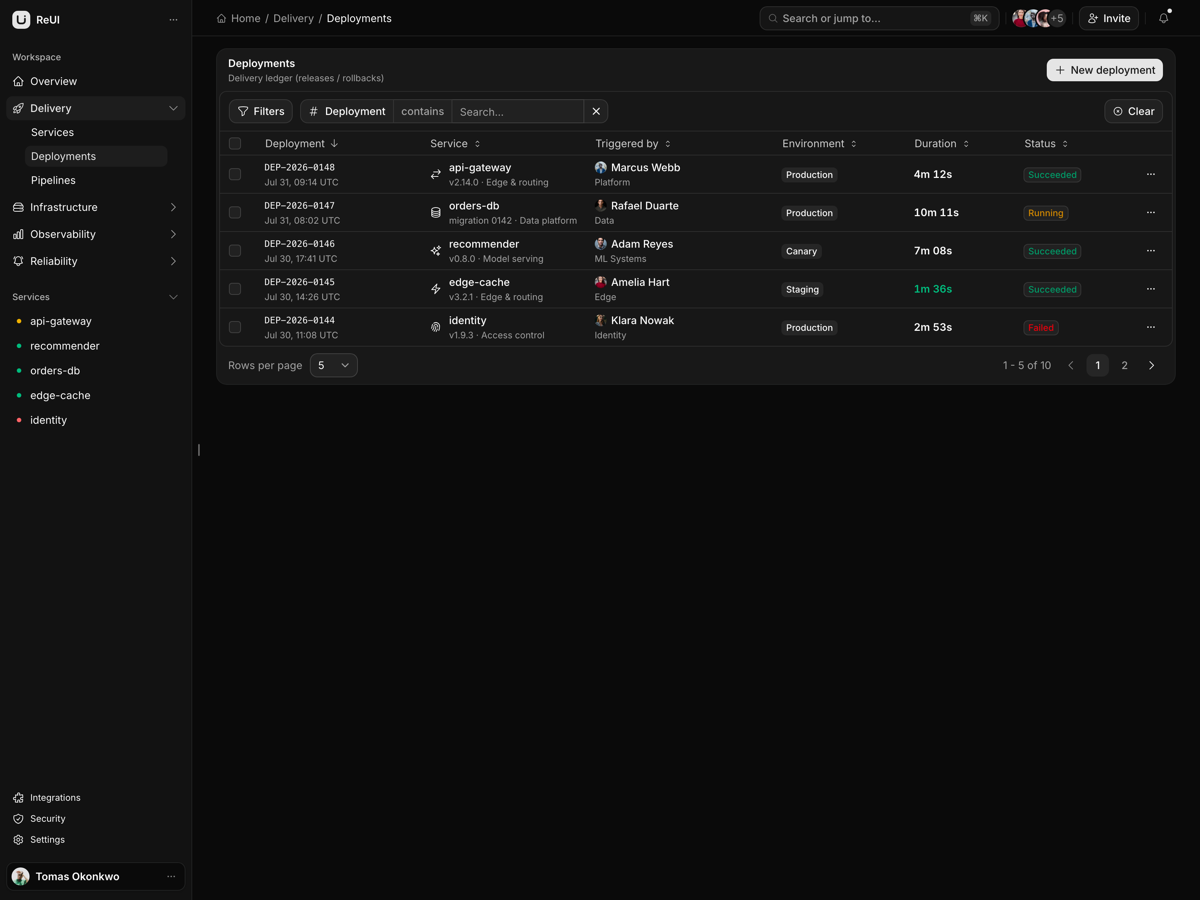
- Deployment ledger with rollback. A queued release lands Running, then settles to Succeeded with its real elapsed seconds.
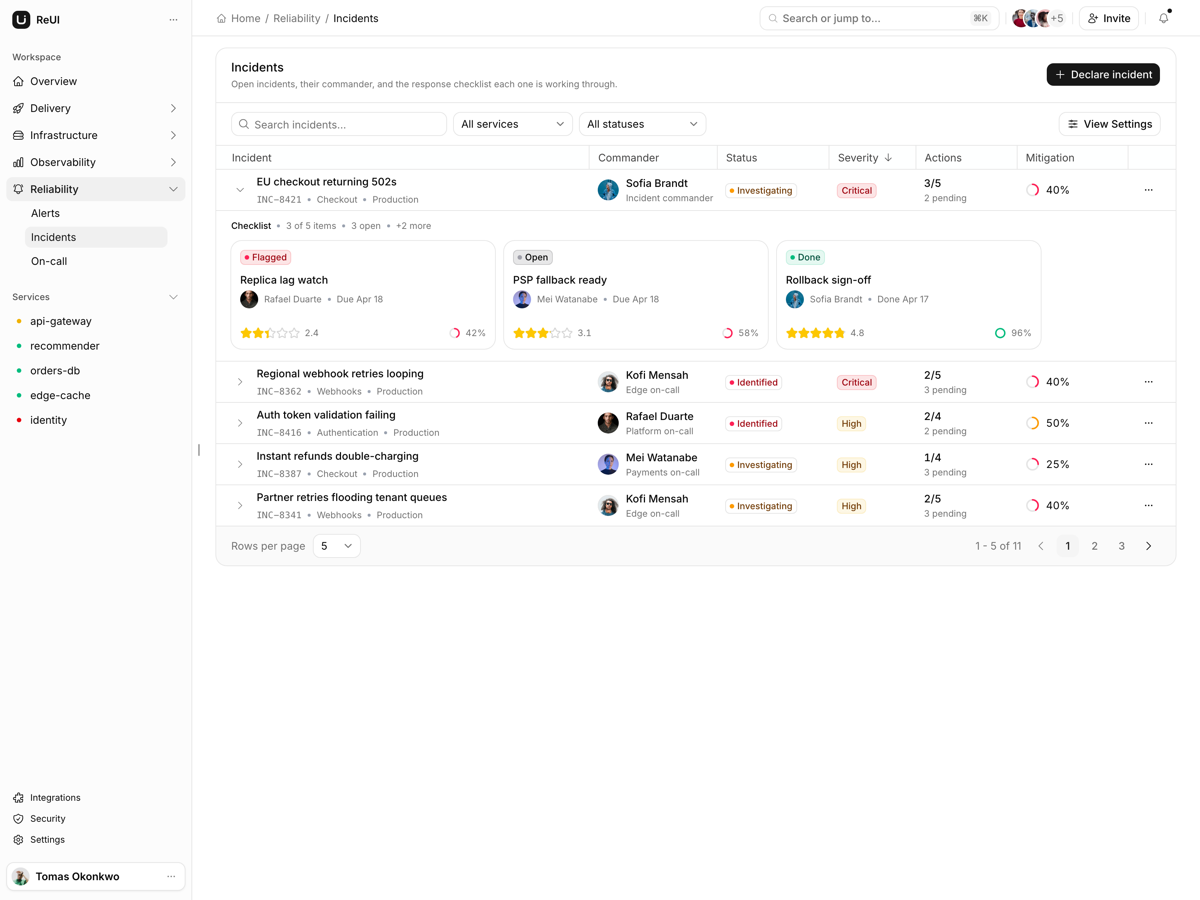
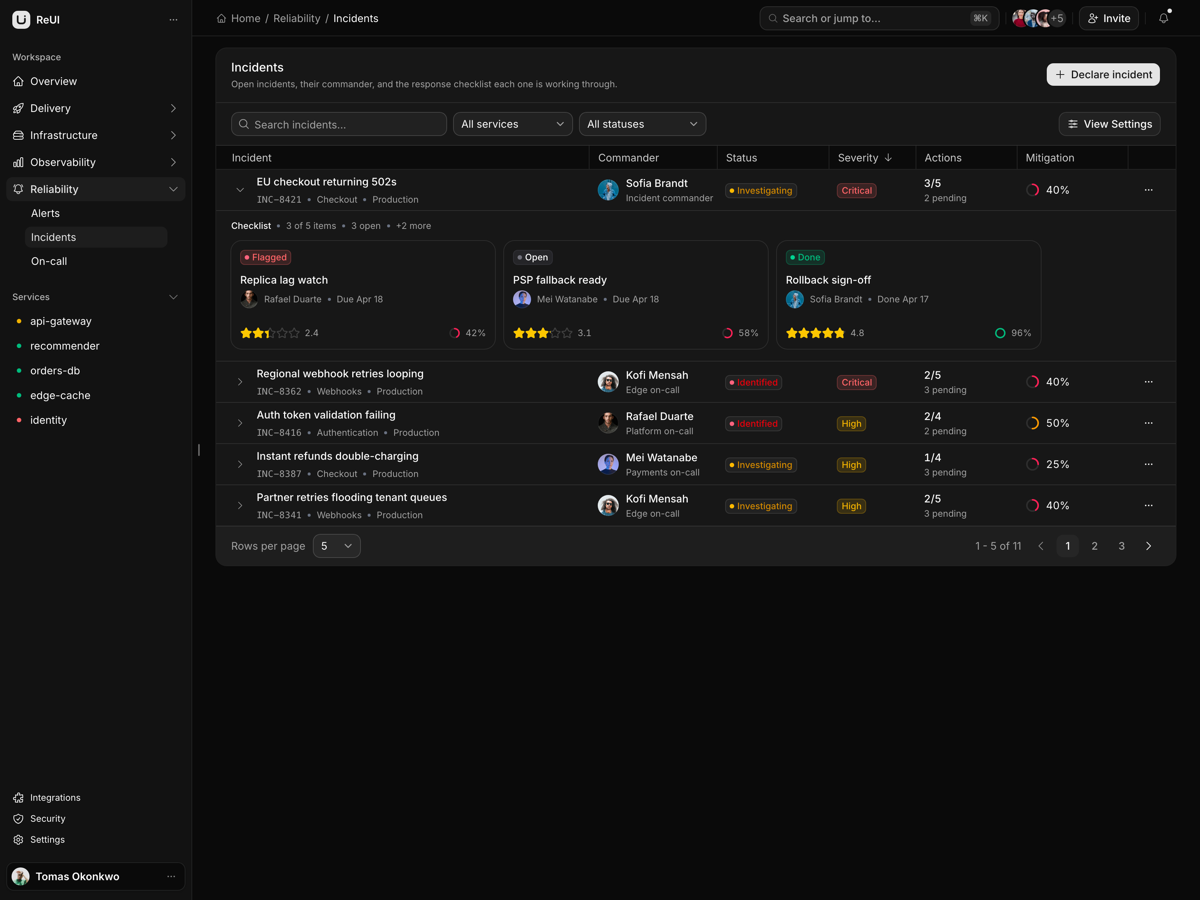
- Severity builds the checklist. Declaring a Critical incident opens five response steps; Low opens two and pages nobody.
- Rotations on a timeline. On-call draws each shift as a bar per rotation, and the uncovered slots stay visibly empty.
- Silences expire. The sheet names the clock time alerts resume.
- Sidebar dots carry health. A pinned service takes its dot colour from the service data, and the row opens that service's sheet.
- Sampling rules are ordered. First match wins, so the panel marks every existing rule the new one would shadow.
- Filtered views are URLs. Deployments, hosts and alerts read their filters from typed search params, so a link carries them.
- Heroicons, not Lucide. Every page imports @heroicons/react; lucide survives only inside the shadcn primitives.
Who it is for
- Platform teams building an internal console Eighteen screens exist, so the work left is pointing them at your own APIs.
- Adding incident response to an existing tool The alert queue, the response checklist and the on-call rota are already drawn.
- Demoing a delivery product to SREs Every side sheet does something the others do not, so the tour never repeats itself.
Frequently asked questions
Does it include a backend, and what happens to a deployment I queue?
No backend and no database. Each feature keeps its rows in a module-level array read through useSyncExternalStore, so queueing a release, declaring an incident or flipping a feature flag updates every subscriber and then resets on a full reload. Seventy-three // customize: comments mark the call sites to replace, each naming the real API that belongs there. There is no fetch call, no server function and no API key anywhere in src.
Is the sign-in screen wired, and is anything guarded?
No. /sign-in renders the @reui/auth-3 block outside the app shell and is reached from Sign Out in the avatar menu, but submitting the form only navigates back to /, because signIn() is a one-line // customize: seam with no provider behind it. Nothing in the tree is guarded either: the only beforeLoad redirects /account to /account/profile. Wire your provider in signIn(), then guard the _app layout route, which is where the shell mounts once.
How is this different from the other console templates?
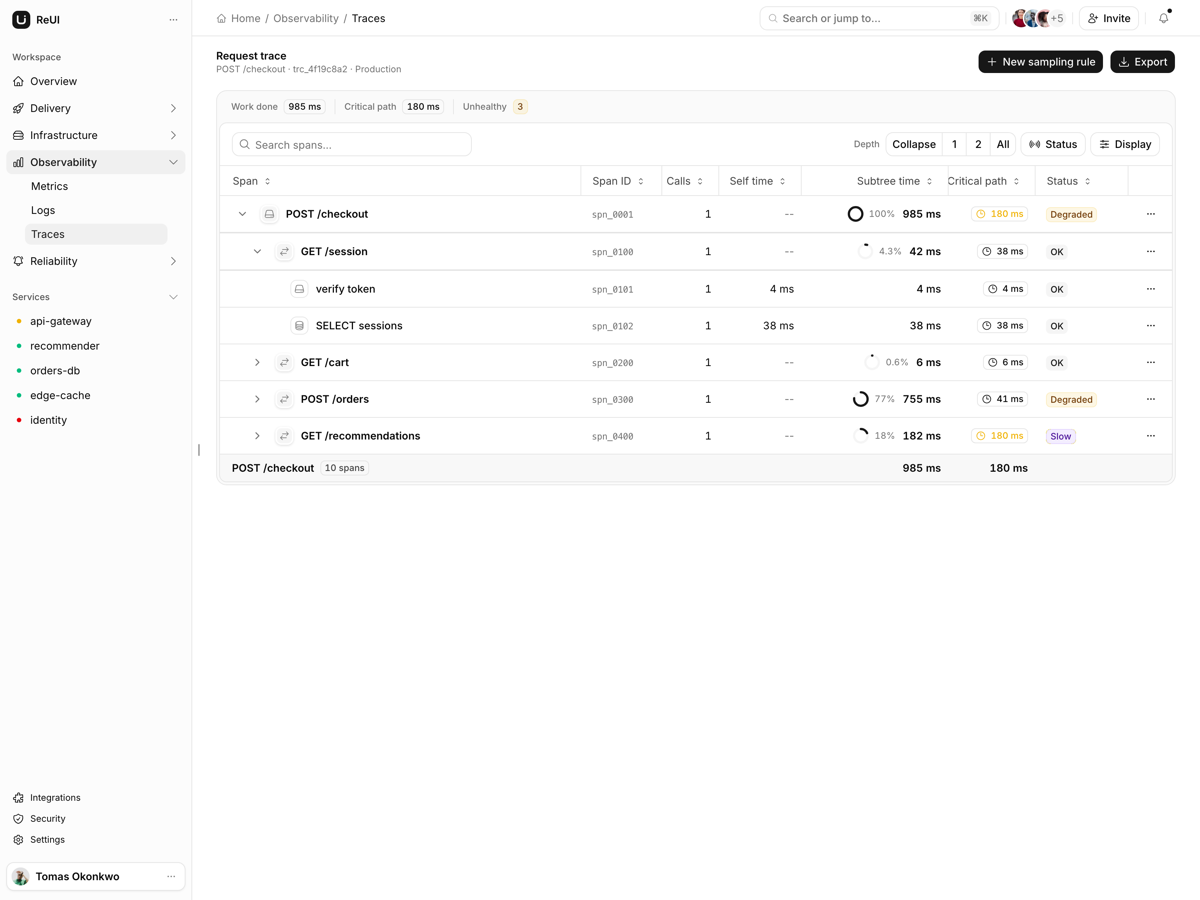
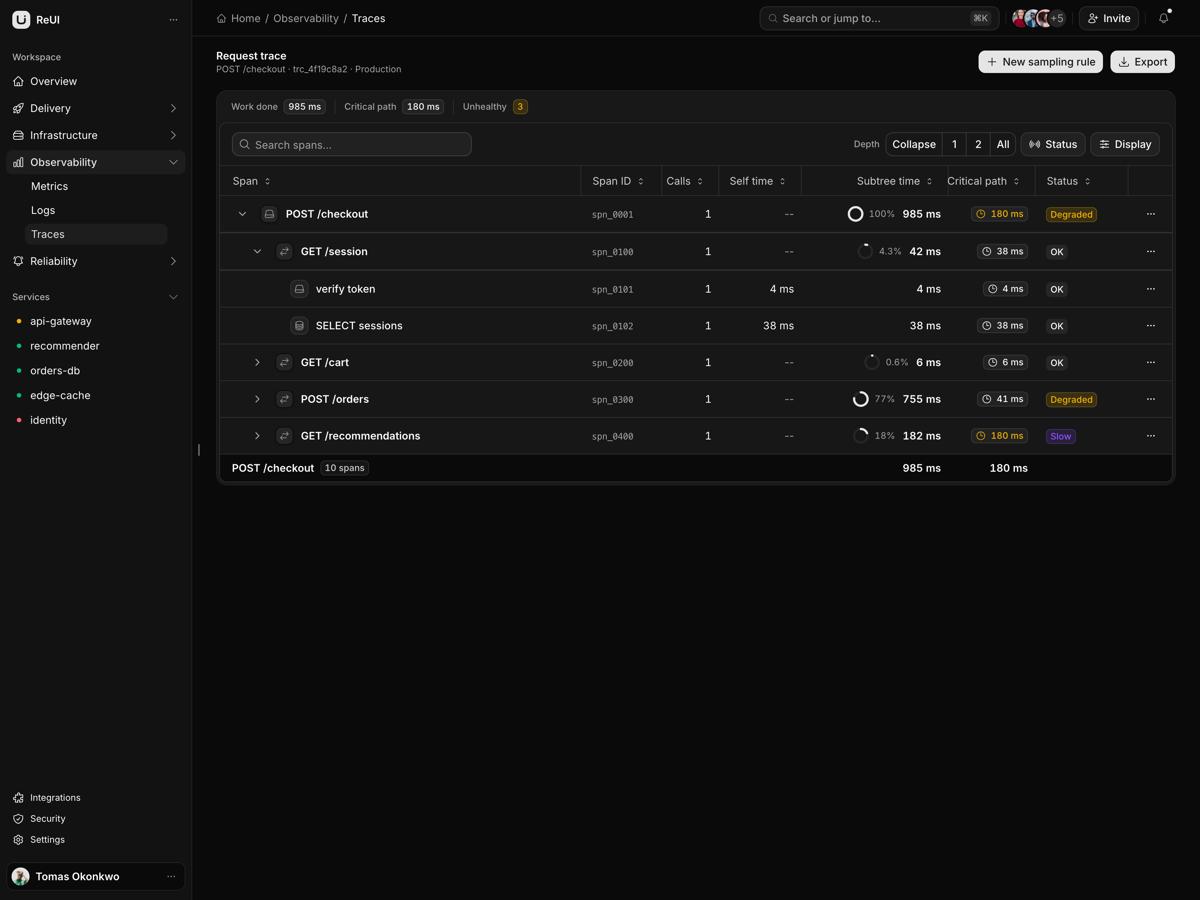
Lucent is the delivery and incident domain on TanStack Start: a release board you drag, an alert queue you triage, a trace tree that explains why one 17 ms query costs 680 ms. Flux is an AI agent console on Next.js and Atlas is a general admin. Two limits to know before you buy: the navbar's Command-K dialog opens but returns no results, and there is no services page and no log stream, so service health lives in the sidebar's pinned rows and the sheet they open.
What do I get when I download a template?
The full source of a standalone project: every page, component, route, and style, ready to run locally. Templates are built entirely from ReUI blocks and components, so the code matches the registry you already use.
Do I need a plan to download templates?
Free templates only need a ReUI account, so sign in and download. Every other template is included with the Ultimate plan, alongside all blocks and Motion Icons.
Are templates sold individually?
No. Templates come with the Ultimate plan rather than as separate purchases, so one upgrade unlocks the whole catalog, including everything added later.
How do I install a template?
Download the source, install dependencies with your package manager, add your environment variables, and run the dev server. Each template ships a README with its own setup steps.