Next.js Observability Dashboard Template with SLOs and Logs - ReUI
Strata - Next.js Observability Dashboard Template
new
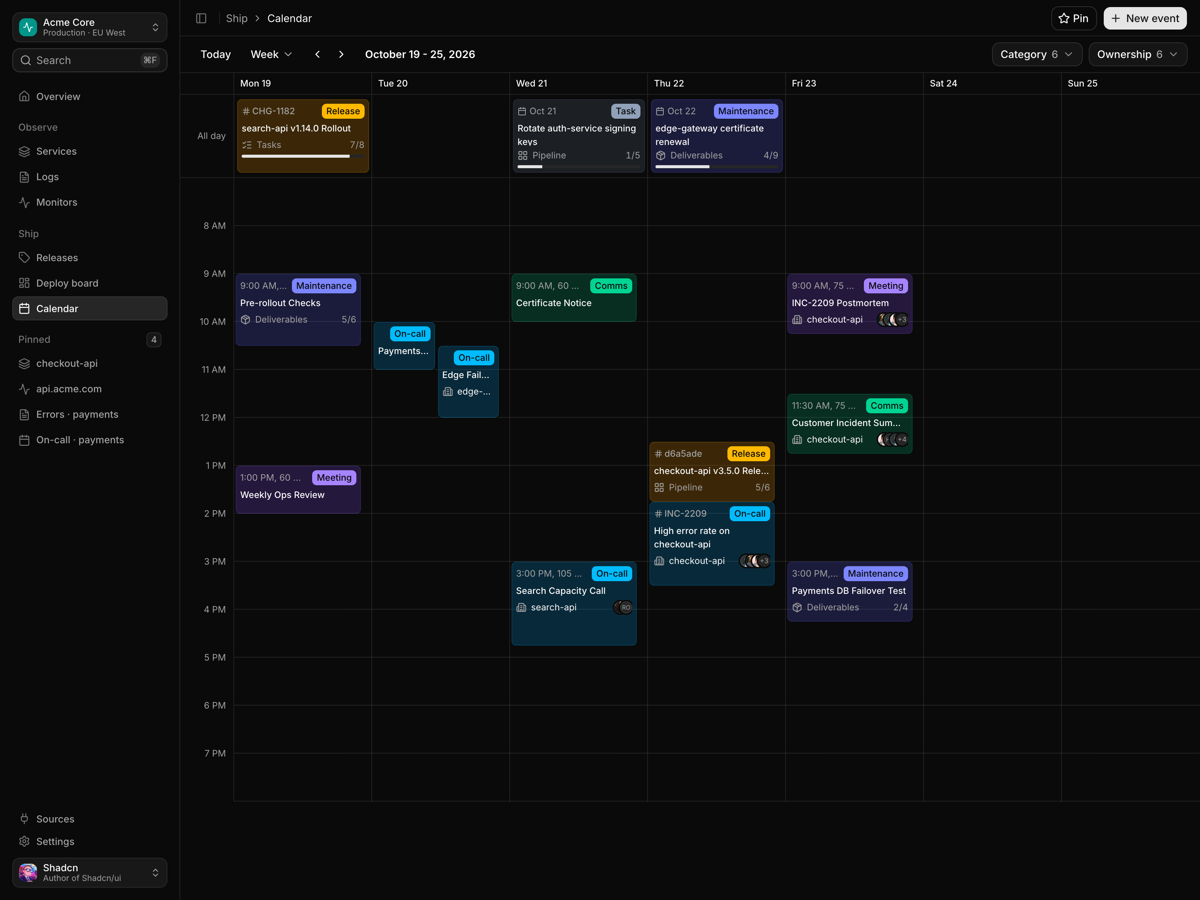
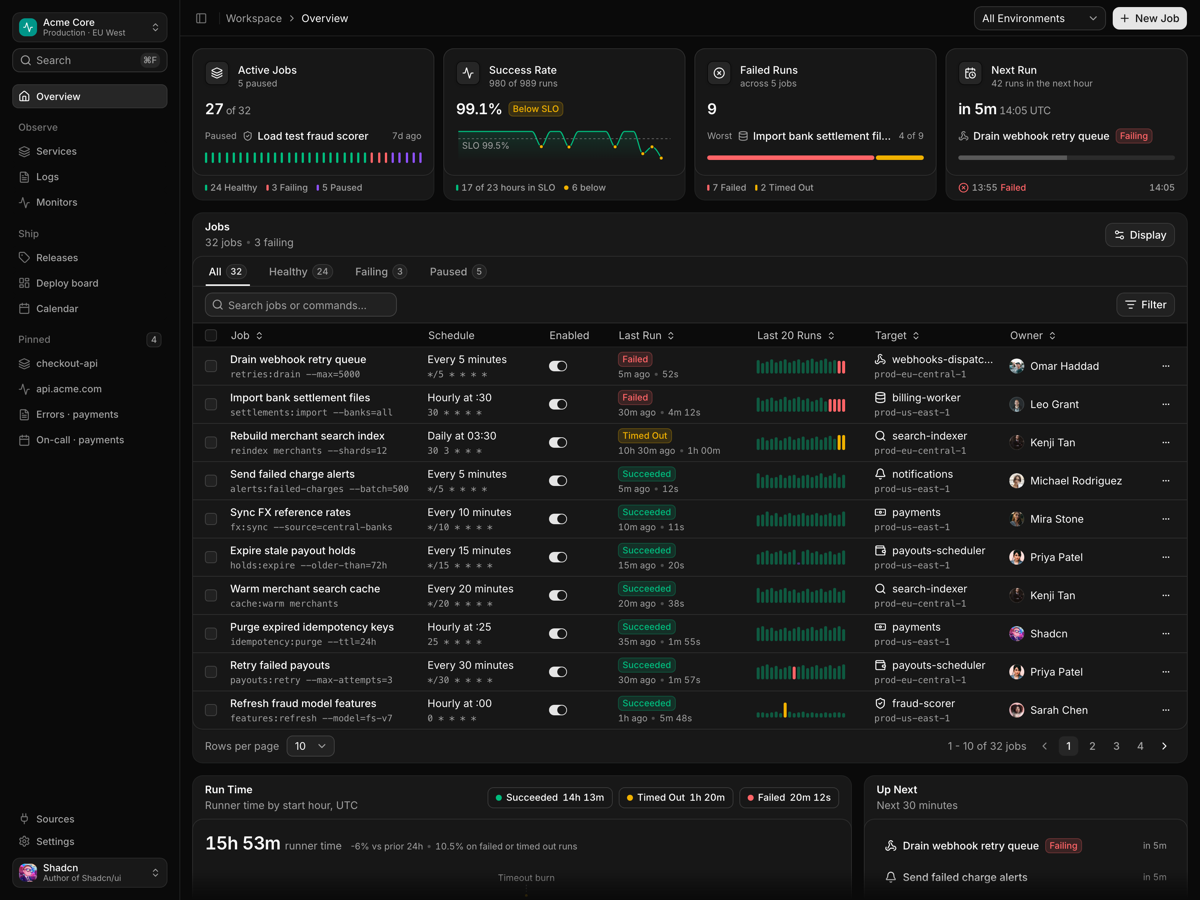
An observability console on Next.js: SLO error budgets, synthetic monitors, a log explorer, releases, a deploy board, cron jobs, an on-call calendar and data sources.
More templates
What is included
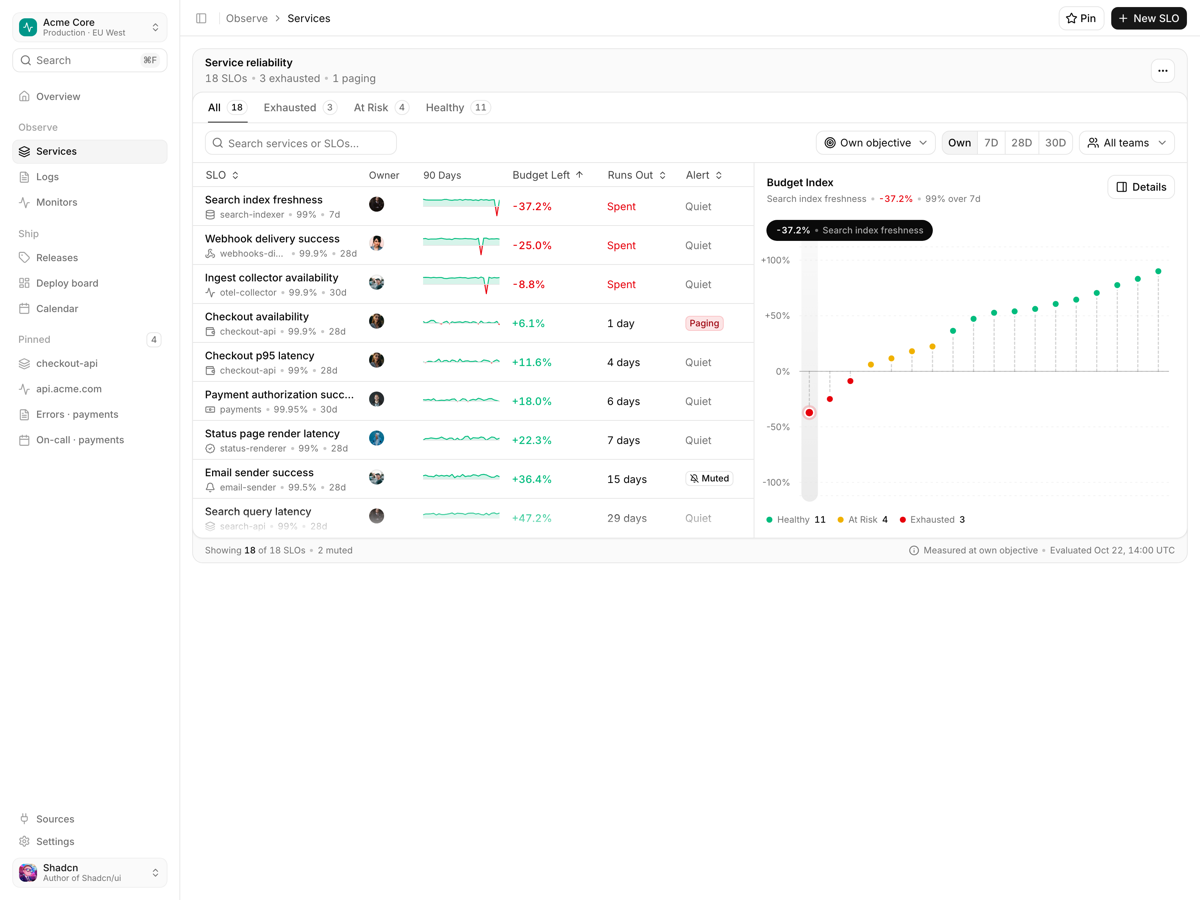
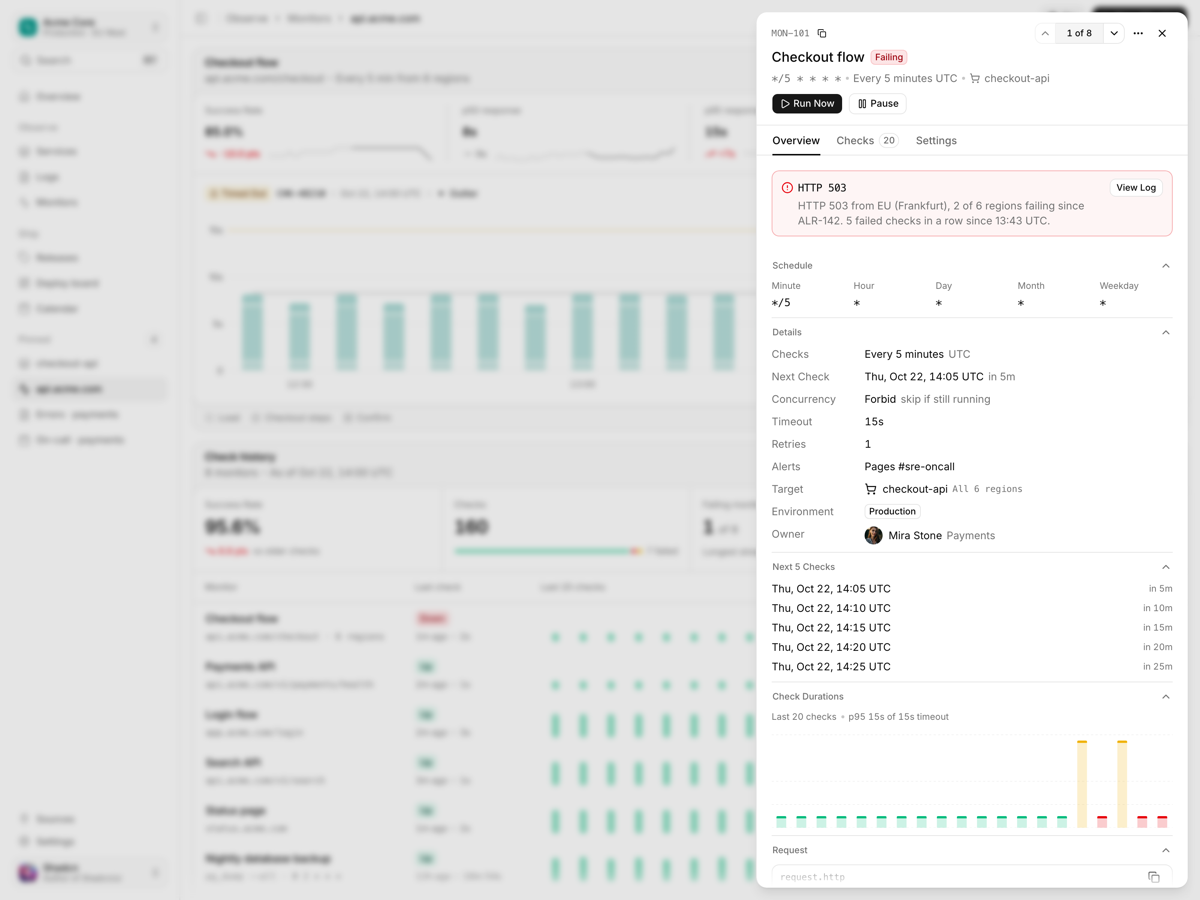
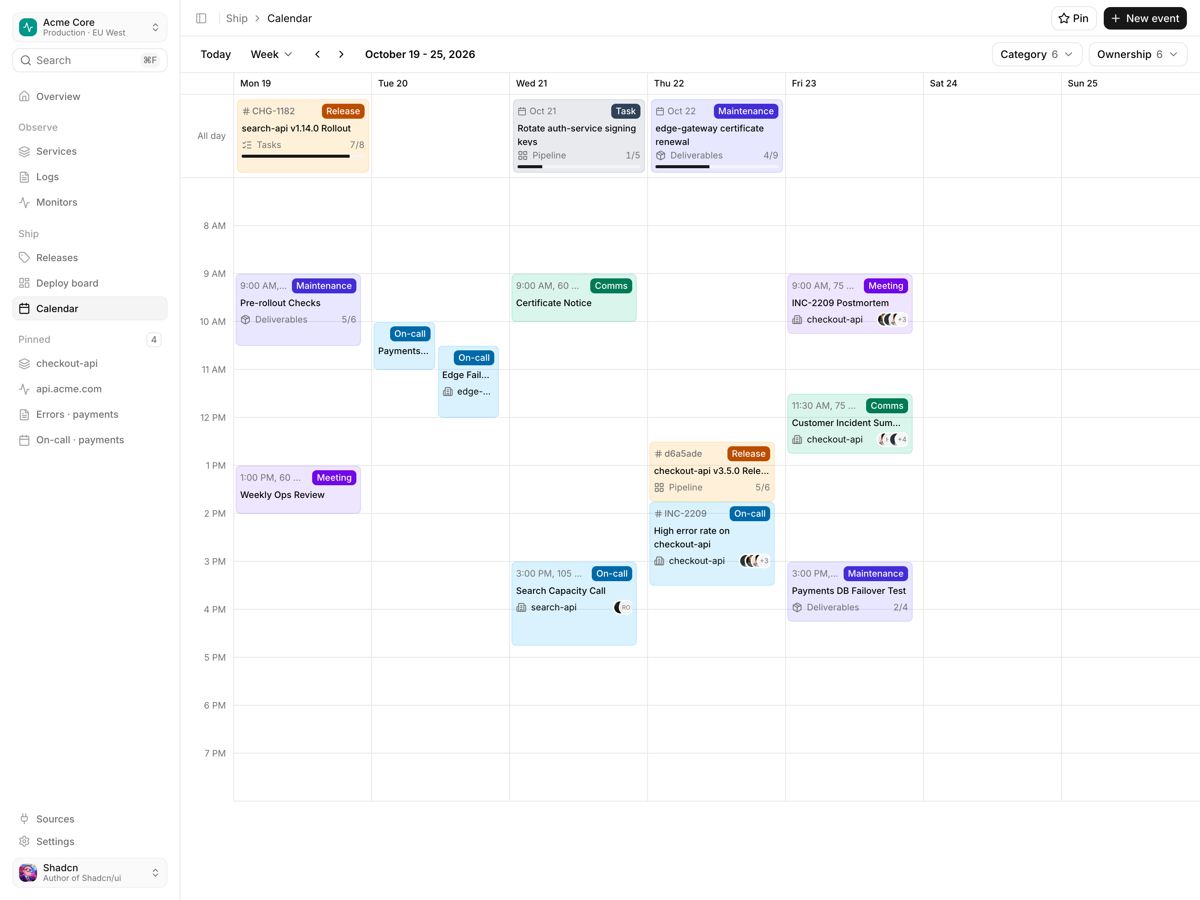
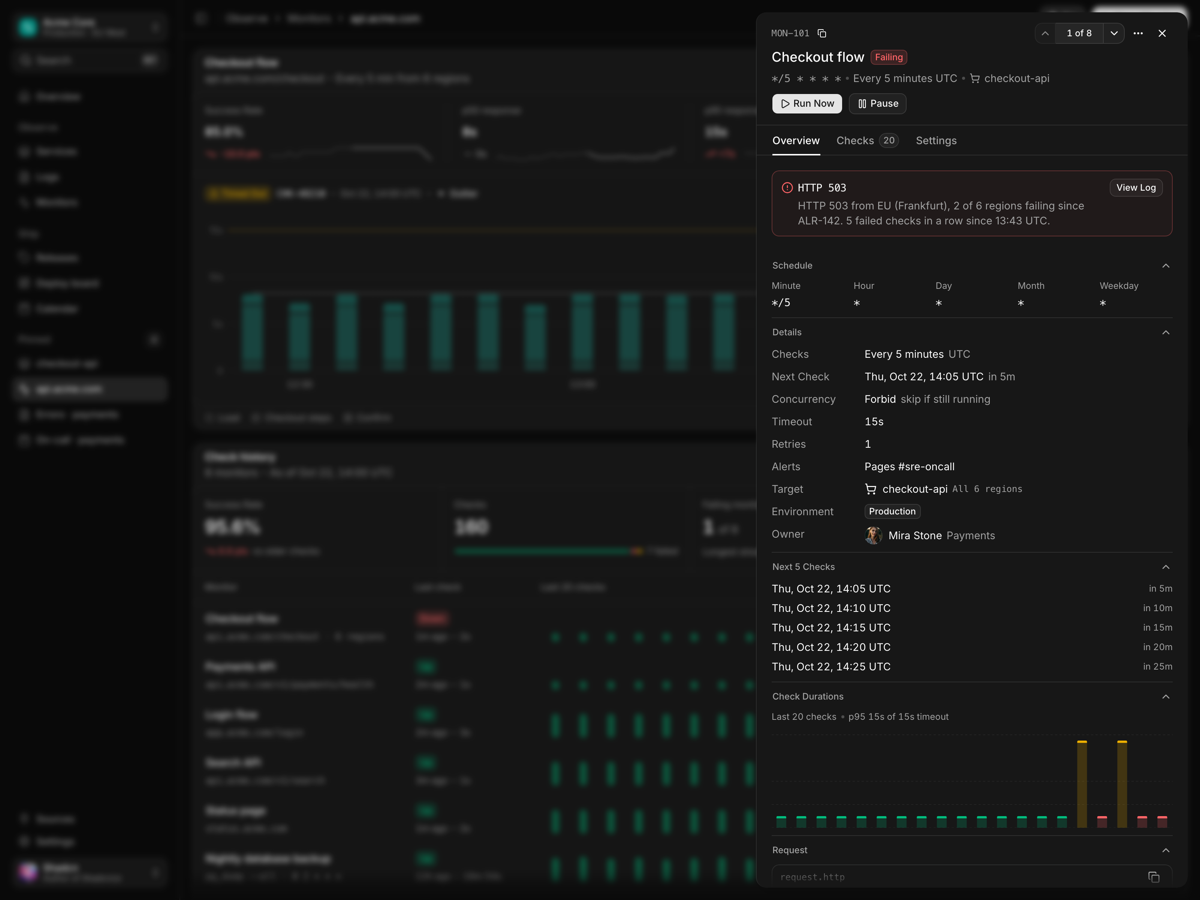
One incident on every page.checkout-api v3.5.0 ships at 13:40, and Services, Monitors, Logs and the Calendar each show what followed.
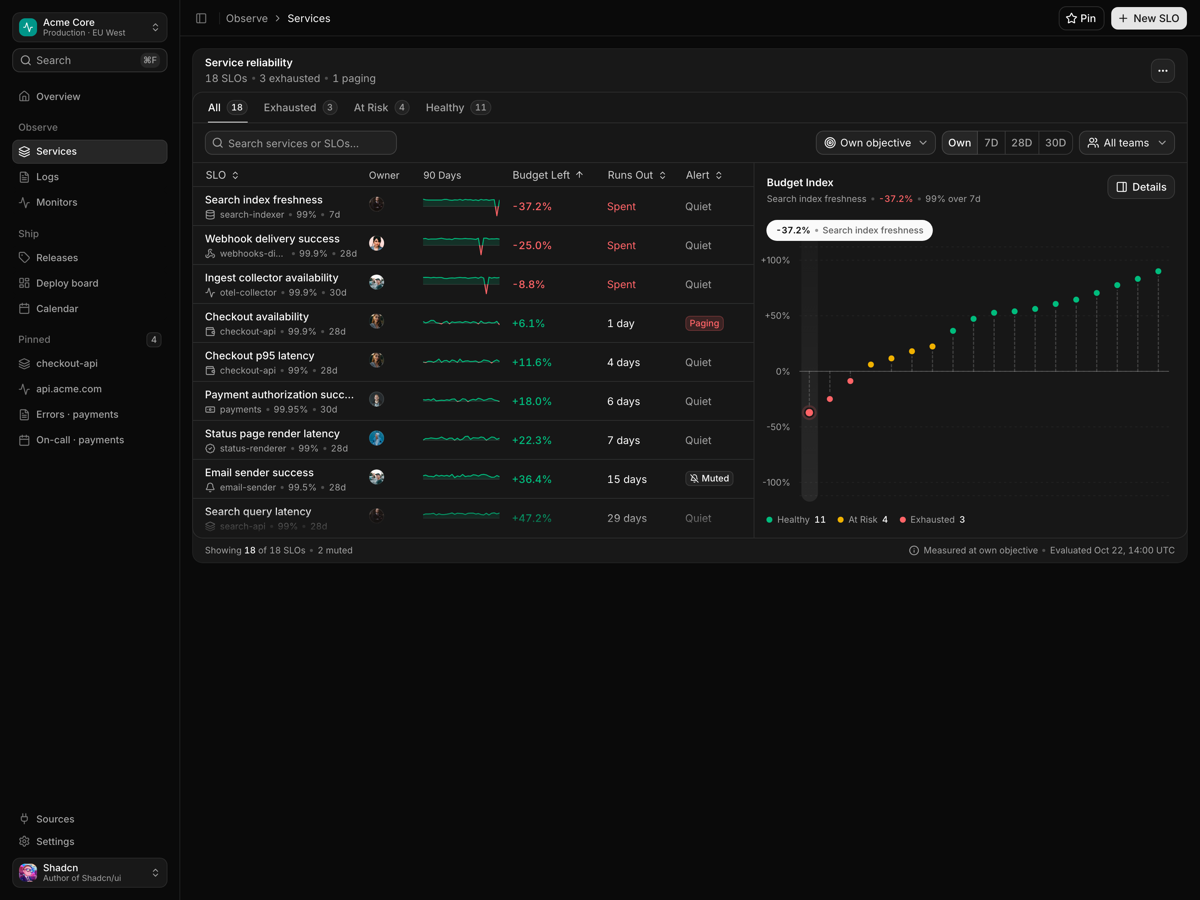
Error budgets are computed.Eighteen SLOs derive budget left, run-out date and burn alerts from their own events.
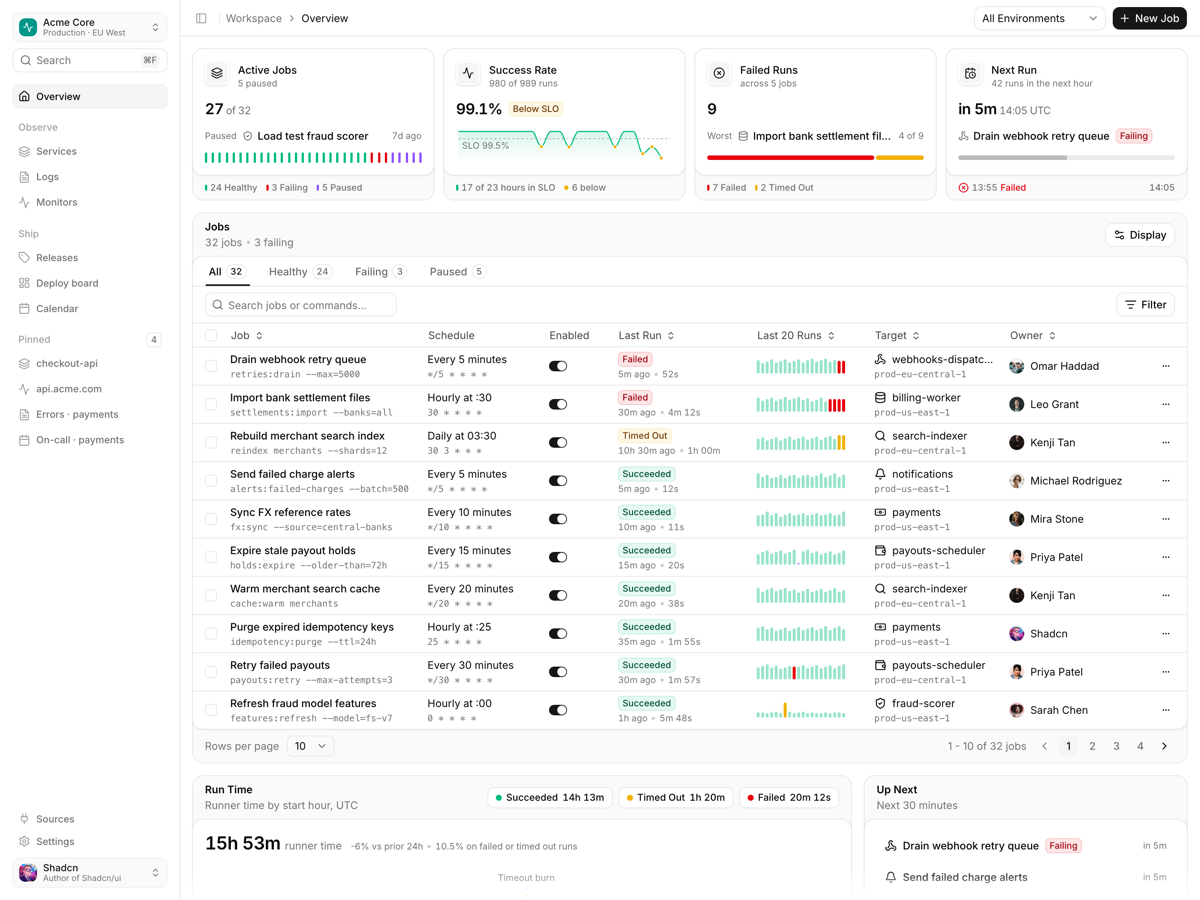
Cron schedules are parsed.New Job refuses a schedule that never fires.
Production deploys wait for you.Checks run, the code owner signs, then the deploy holds for your approval before its window.
A split-flap deploy board.Rows flip like a departures board on a 16x demo clock, with an optional click sound.
Releases resume where they stood.Promote, pause, retry or roll back a run, leave the page, and it picks up on return.
Logs export real files.Filtered or selected events download as CSV or JSON.
Who it is for
Platform teams building an internal status consoleSix pages already write through typed mock services, so the work left is pointing them at your API.
Adding error budgets to an existing productThe Services grid computes budget, burn and runway from events you can swap for your metrics.
Demoing a monitoring product to engineersEvery page tells the same Thursday afternoon incident, so a walkthrough has a plot.
Frequently asked questions
Does it include a backend, and do my edits survive a reload?
No backend and no database. Services, Monitors, Calendar, Sources, Releases and the Deploy board read and write through a mock service in each feature's lib folder, over one TanStack Query cache, so an edit survives navigation and resets on a full reload. The Overview's jobs, Logs and Settings keep their state inside the page. Every swap point carries a BACKEND: comment, 67 of them.
Is sign in real, and is the console guarded?
Sign in and sign up run against a mock service: new accounts are kept in the browser's localStorage, and a successful sign in writes a strata_session cookie. Nothing is guarded, so a signed-out visitor lands on the Overview, and proxy.ts only sends a signed-in visitor away from the auth pages. The comment in proxy.ts says how to widen its matcher to put the console behind sign in.
How is Strata different from Lucent, the other DevOps console?
Strata is the observability side, on Next.js: SLO error budgets, synthetic monitors, a log explorer and data sources, with releases, a deploy board and an on-call calendar around them. Lucent is a delivery and incident console on TanStack Start, with traces and an alert queue but no services page and no log stream. One thing to know first: every page reads a fixed now, 14:00 UTC on Oct 22, 2026, from lib/data/scenario.ts, so dates stay put until you replace it.
What do I get when I download a template?
The full source of a standalone project: every page, component, route, and style, ready to run locally. Templates are built entirely from ReUI blocks and components, so the code matches the registry you already use.
Do I need a plan to download templates?
Free templates only need a ReUI account, so sign in and download. Every other template is included with the Ultimate plan, alongside all blocks and Motion Icons.
Are templates sold individually?
No. Templates come with the Ultimate plan rather than as separate purchases, so one upgrade unlocks the whole catalog, including everything added later.
How do I install a template?
Download the source, install dependencies with your package manager, add your environment variables, and run the dev server. Each template ships a README with its own setup steps.
 Dashboard